Red Spider Mites in Hot Springs: Risks, Bites & How to Stay Safe

If you’ve ever planned a backcountry soak in Idaho or the Pacific Northwest, you may have heard whispers about tiny red creatures lurking near the water’s edge. Red spider mites in hot springs is a topic that every serious hot spring enthusiast should understand before heading out into the wilderness.
While these minuscule critters are more of a nuisance than a true health hazard, being unprepared can turn a blissful soak into a week of itching. This guide covers everything from what red spider mites are, where they live, how they affect you, and how to protect yourself so you can keep enjoying the world’s most restorative natural pools.
What Are Red Spider Mites?
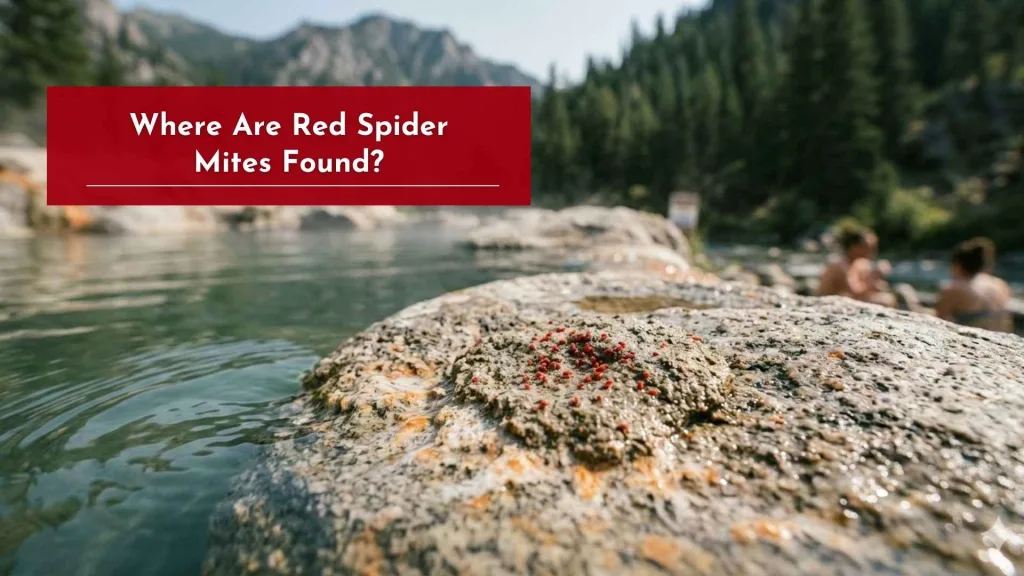
Red spider mites (often abbreviated as RSMs) are tiny arachnids — relatives of spiders and ticks — that inhabit the warm, moist environments found at natural geothermal springs. Barely visible to the naked eye, they appear as fast-moving orange-red dots darting across warm rocks, pool edges, and even the water’s surface itself.
Despite their name, these are not the same as the agricultural red spider mites (Tetranychus urticae) that damage garden plants. The hot springs variety thrives in a very specific microhabitat: the warm, mineral-rich margins of natural geothermal pools. They are most commonly reported in Idaho and across the broader Pacific Northwest, though confirmed sightings span multiple states including Oregon, Nevada, and California.
Why Do They Live Near Hot Springs?
The warm, stable temperatures around geothermal vents create an ideal microclimate for these mites. They are most frequently found at springs that don’t receive strong seasonal flushing from snowmelt or runoff, which would otherwise disrupt their colonies. Interestingly, they appear less often at sulfur-heavy springs, suggesting they prefer less acidic water chemistry.
How Red Spider Mites Affect Humans?
They Bite — But They Can’t Complete Their Life Cycle on You
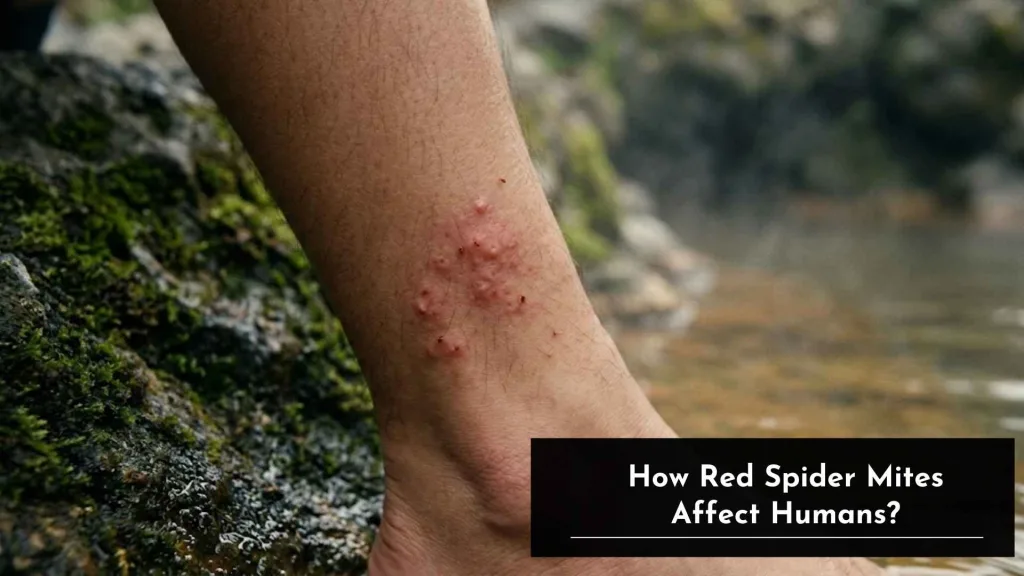
Red spider mites will cling to exposed skin and attempt to lay eggs by biting into the upper layers. However, the human immune system prevents the eggs from hatching and eventually eliminates the mites within a couple of days. Each bite leaves behind a small, itchy red welt that closely resembles a mosquito bite. Most healthy adults find the reaction manageable, though the itch can persist for one to two weeks if left untreated.
One important and often overlooked detail: scratching the bites — especially during the first few days after exposure — can agitate the mites and trigger additional biting. The physical irritation of scratching seems to stimulate further mite activity on the skin, compounding the problem. This makes early restraint and immediate treatment all the more important.
Who Is Most at Risk?
For the majority of healthy adults, red spider mites hot springs encounters represent more of an annoyance than a serious medical concern. That said, some people experience stronger reactions than others.
Children may be more sensitive, making it especially important to take precautions when soaking with young ones. Those with compromised immune systems or known skin sensitivities should exercise additional caution or consider avoiding confirmed high-activity springs entirely.
Where Are Red Spider Mites Found?
Red spider mites in hot springs are not evenly distributed. Their presence varies significantly by location, season, and water conditions. They tend to appear and disappear week to week, making real-time reports from fellow soakers invaluable.
The following Idaho hot springs have confirmed RSM activity, maintained as part of an ongoing community-reported listing that spans over a decade of observations:
High Activity Locations:
- Atlanta Hot Springs — confirmed by multiple sources, activity level: High
- Chattanooga Hot Springs — multiple confirmations, activity level: High
- Kirkham Hot Springs (upper pools) — activity level: High (lower pools reported as Low to None)
- Loftus Hot Springs — single-source confirmation, activity level: High
- Prince Albert Hot Springs — multiple confirmations, activity level: High
- Whitey Cox Hot Springs — multiple confirmations, activity level: High
Moderate Activity Locations:
- Boiling Springs Hot Springs — activity level: Moderate
- Molly’s Hot Spring — activity level: Moderate
- Rocky Canyon Hot Springs — activity level: Moderate to High
- Vulcan Hot Springs — activity level: Moderate (note: possible confusion with chiggers)
- Worswick Hot Springs — activity level: Moderate to High
Lower Activity Locations:
- Buckhorn Hot Springs — activity level: Low
- Granite Creek Hot Springs — activity level: Low
- Hot Springs Campground — activity level: Low to Moderate
- Secesh Hot Springs — activity level: Low
- Willow Creek Hot Springs — activity level: Low
- Bear Valley Hot Springs — activity level: High (but varies seasonally)
Additionally, reports from Oregon springs such as Bog Hot Springs and Little Borax indicate RSM presence beyond Idaho’s borders.
Planning a soak at any of these destinations? SoakDestinations.com offers curated guides to the best natural hot springs across the country, helping you find the perfect spot with up-to-date information on conditions
Spotting Red Spider Mites Before You Soak
Knowing how to identify RSM activity before you enter the water can save you significant discomfort. Fortunately, a quick visual scan is often all it takes.
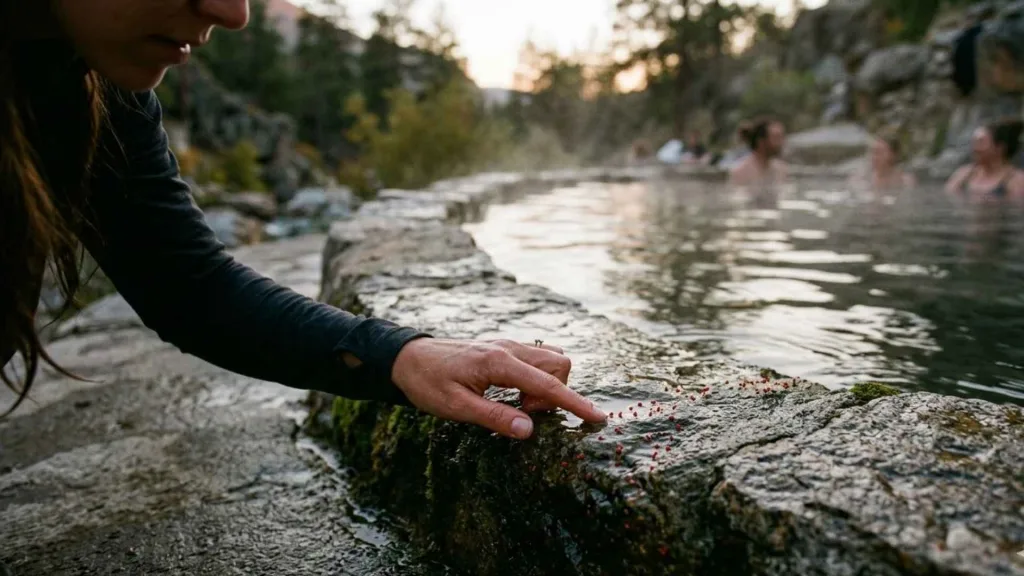
- Look at pool edges carefully. Mites congregate at the margins between warm rock and water. Tiny, fast-moving red or orange dots zipping along the rim are a telltale sign.
- Compare pools in a complex. At hot springs with multiple pools, RSM activity can vary dramatically from one pool to the next. One pool may be heavily inhabited while another nearby is completely clear.
- Check activity levels from other soakers. Community reports are the most reliable real-time indicator. Fellow visitors who soaked that same day or week can tell you whether they noticed activity.
- Time of year matters. RSM populations fluctuate with the seasons. Post-runoff periods tend to see higher activity, while early spring, when snowmelt flushes the pools, may bring relief.
Red Spider Mite Precautionary Measures
Prevention is far easier than treatment. The good news is that a few straightforward steps dramatically reduce your exposure risk when encountering red spider mites hot springs.
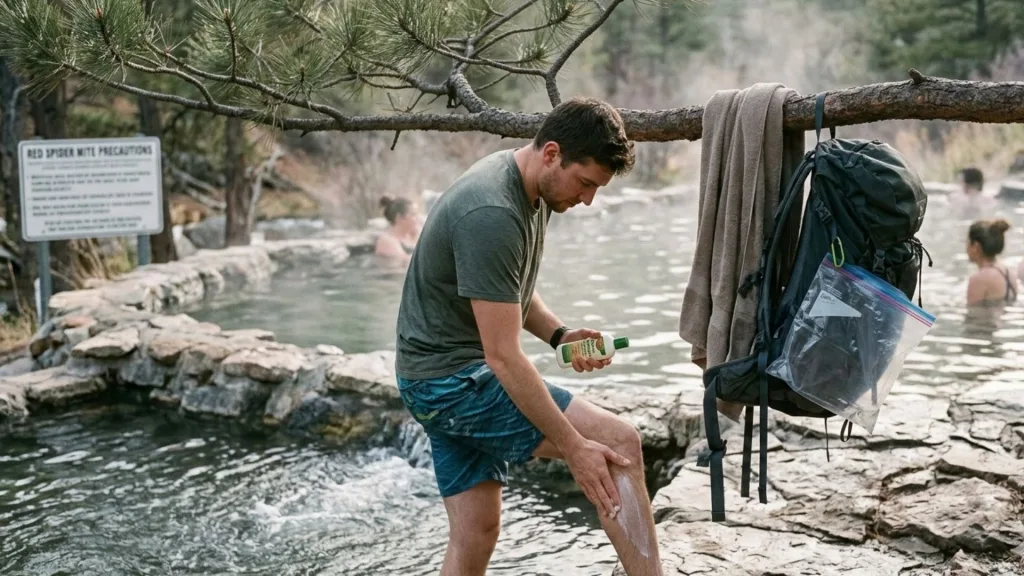
Before entering the water:
- Perform a visual scan of the pool edges for moving red dots.
- If activity is heavy, consider whether the soak is worth the risk, or look for a pool within the same complex with lower activity.
Managing your gear:
- Keep towels, clothing, and packs as far from the water and surrounding rocks as possible. Mites actively seek dry surfaces to lay eggs and will readily colonize gear left on the ground or poolside rocks.
- Hang your towel and pack from a tree branch rather than setting them on rocks or the ground. This simple step eliminates one of the most common vectors for post-soak bites.
- If no tree is available, store gear in a sealed plastic bag.
During your soak:
- Stay toward the center of the pool. Red spider mites congregate at the edges where water meets rock, so keeping to the middle of the pool greatly reduces direct contact.
- Soak near a gentle outflow if one is present — moving water helps deter mite activity.
- Keep the soak shorter if you observe active mites around the edges.
After your soak:
- Dry off quickly and thoroughly.
- Apply insect repellent or lotion after soaking — never before. Mites tend to bite most aggressively when your skin is dry, so applying bug repellent or lotion post-soak can reduce the likelihood of bites. Applying repellent before soaking merely pollutes the water unnecessarily.
- Inspect skin and gear for any stray mites before driving home.
- Shake out and wash all gear, towels, and clothing after the trip to prevent bringing mites home.
Treatment After RSM Bites
If you’ve been bitten by red spider mites, you’ll likely know it within a day or two as the welts become itchy and inflamed. Here’s how to manage the aftermath effectively:
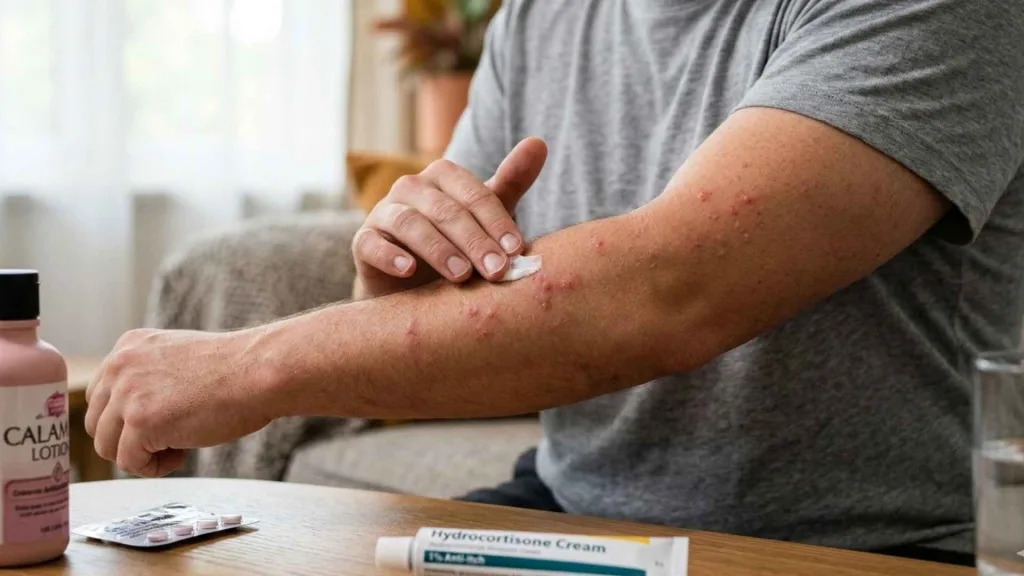
Anti-Itch Creams and Medications
The primary treatment is controlling the itch. Options include:
- Hydrocortisone cream — a mild over-the-counter topical steroid that reduces inflammation and itch
- Calamine lotion — a traditional skin-soothing option
- Oral antihistamines — helpful for more widespread reactions or when topical treatments aren’t sufficient
Rest and Recovery
Beyond topical treatment, the best approach is simply to rest, stay hydrated, eat well, and give your immune system time to do its work. The bites will typically heal completely within one to two weeks. Scratching is the single biggest mistake you can make — it not only delays recovery but may trigger additional biting during the first few days when mites are still present on the skin.
When to See a Doctor
For most people, RSM bites resolve without medical intervention. However, if you notice signs of a secondary infection (increasing redness, warmth, pus, or spreading inflammation), an unusually severe allergic reaction, or symptoms that worsen rather than improve after a week, it’s worth consulting a healthcare provider. This article is intended as general educational information only and is not a substitute for professional medical advice.
Common Questions About Red Spider Mites Hot Springs
Will mites follow me home?
Unlikely, as long as you bag your gear, shake it out thoroughly, and wash everything after returning. Mites don’t survive well away from the warm, humid environment of natural hot springs.
Do they inhabit all hot springs?
No. RSM activity varies significantly based on water chemistry, seasonal runoff patterns, and local microhabitat conditions. Some springs have never had a confirmed report; others have persistent, heavy populations year after year.
Does immunity develop over time?
Yes. Regular hot spring visitors report that the human immune system gradually builds up a response to RSM bites. Frequent soakers often find that repeat exposure leads to less severe reactions over time, as the body becomes more efficient at neutralizing the mites and their eggs.
Are red spider mites the same as chiggers?
Not exactly, though their effects are similar enough that some soakers may confuse the two. At certain locations like Vulcan Hot Springs, there is documented uncertainty about whether reports describe RSMs or chiggers. Both cause itchy bites, but they are distinct species. Chiggers (Trombiculidae larvae) are more common in grassy or wooded areas and not specifically associated with geothermal environments.
Planning a Hot Springs Trip: Staying Informed
Understanding red spider mites is just one piece of the puzzle when planning a backcountry soak. Water quality, access conditions, seasonal closures, and safety considerations all factor into a great hot spring experience. Whether you’re heading to a well-known destination in central Idaho or hunting for a remote, off-the-beaten-path pool, doing your research ahead of time makes all the difference.
For those looking to explore the broader hot spring landscape — from the stunning geothermal pools of the American West to lesser-known gems across the country SoakDestinations is an excellent resource for destination guides, trip planning tips, and insider knowledge on what to expect before you arrive.
The RSM Listing: A Community Resource
One of the most valuable assets for Northwest soakers is the community-maintained listing of hot springs with confirmed RSM activity. This catalog, built over more than a decade of contributions from individual soakers, is the only known comprehensive list of its kind. If you visit a spring and notice RSM activity at a location not currently listed, contributing your observation helps the entire soaking community plan safer, more enjoyable trips.
Final Thoughts
Red spider mites hot springs may sound alarming, but the right precautions keep your experience enjoyable. Idaho and the Pacific Northwest offer breathtaking natural soaks — don’t let RSMs stop you. Keep gear off rocks, stay pool-center, and apply lotion after soaking.
Always scan the edges before stepping in. When you’re ready to find your next perfect soak, SoakDestinations.com has destination guides, hot spring reviews, and everything you need to plan an unforgettable geothermal adventure.
Disclaimer: This article provides general educational information only and is not intended as a substitute for professional medical advice, diagnosis, or treatment. Always consult a healthcare provider for concerns about skin reactions or bites.