
Reykjadalur Hot Spring Thermal River: Guide to Iceland’s Natural Wonder

Iceland is a land shaped by fire and ice, a country where volcanic forces have gifted the landscape with some of the most extraordinary geothermal features on Earth. Among them, few experiences rival the magic of bathing in a naturally heated river while surrounded by steaming valleys, mineral-rich mud pools, and snow-dusted mountains. That experience belongs to the Reykjadalur hot spring thermal river, one of Iceland’s most beloved and accessible natural attractions.
Whether you are planning your first trip to Iceland or are a seasoned traveler searching for something truly off the beaten path, this guide covers everything you need to know — from how to get there and what to bring, to safety rules, temperature details, seasonal tips, and nearby attractions.
What Is Reykjadalur and Why Does It Matter?
Reykjadalur means “Steam Valley” in Icelandic — and the name says it all. The valley sits within the Hengill geothermal area, where the North American and Eurasian tectonic plates pull apart, pushing volcanic heat to the surface. This heats a river to bathing temperature year-round, creating one of Iceland’s most accessible and completely free hot spring experiences.
Unlike the Blue Lagoon or Sky Lagoon, the Reykjadalur hot spring thermal river has no entrance fee, no reservation system, and no staff. It is wild, earned by a hike, and entirely worth it. For more natural thermal bathing destinations worldwide, Soak Destinations is an excellent starting point.
Reykjadalur Hot Spring Thermal River: Location and How to Get There
The site is located just outside Hveragerði, approximately 45 km (28 miles) southeast of Reykjavík — roughly a 45-minute drive via Route 1.
Getting There by Car
From Hveragerði, take the third roundabout exit onto Breiðamörk and follow signs to Reykjadalur Hot Springs. The trailhead car park is a 5-minute drive from town. GPS: 64.0229° N, 21.2116° W. Search “Reykjadalur Car Park” in Google Maps.
The same parking lot can be used for campervans as well. If you plan to rent one for your visit, be sure to use a trusted site like Cozy Campers.
Getting There by Public Transport or Tour
- Strætó bus line 51 runs from Reykjavík to Hveragerði roughly every 3 hours, but adds a 4 km walk to the trailhead
- Guided tours from Reykjavík include transport, a local guide, and winter Northern Lights options — the most practical choice without a rental car
Entry Costs and Opening Hours
One of Reykjadalur’s greatest appeals is that the hot spring itself is entirely free to visit. There are no tickets, reservations, or entrance fees required.
- Parking fee: Approximately 200–250 ISK per hour (payable by app — EasyPark or Parka — or by machine at the car park; cash is not accepted)
- Opening hours: The area is open 24 hours a day, 7 days a week, all year round
- Winter access: Check Safetravel.is before visiting in winter, as ice or severe weather may temporarily affect trail safety
The Hike: What to Expect on the Trail
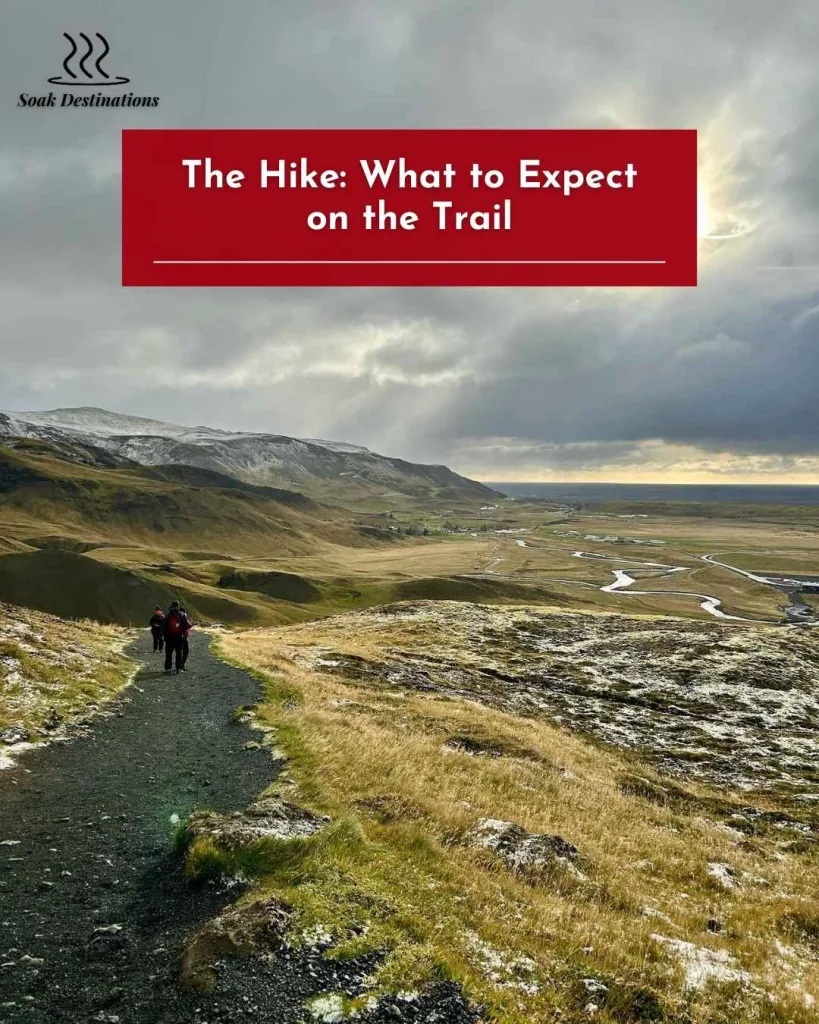
Trail Overview
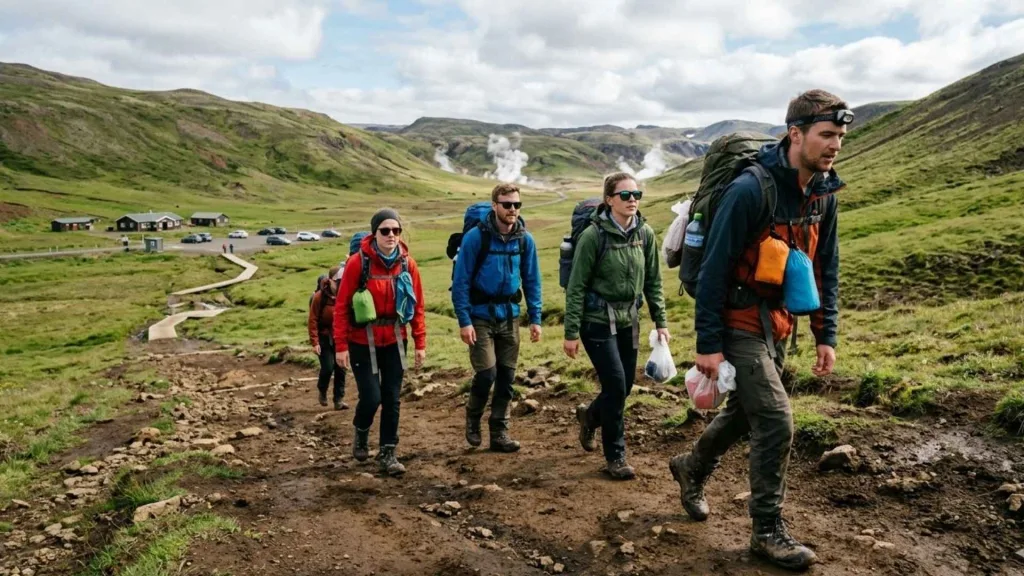
The hike to the Reykjadalur hot spring thermal river is approximately 3 to 3.5 kilometres one way from the trailhead car park, with a round trip distance of around 7 kilometres (4.3 miles). Most walkers take between 45 minutes and 1 hour 15 minutes to reach the bathing area, depending on pace and how many photos they stop to take. The return journey is primarily downhill and generally takes around an hour.
The elevation gain across the round trip is approximately 300 metres, with the steepest climbing concentrated in the first portion of the trail. The path is well-maintained and easy to follow, though it can become muddy and slippery in wet or winter conditions.
Stage 1: The Climb Through Ptarmigan Slopes
The trail begins at the car park with a bridge crossing over a small river, then ascends through the Rjúpnabrekkur (Ptarmigan) slopes. This initial section is the most demanding of the hike, with some steeper, narrow stretches. As you gain elevation, views open up behind you toward the coastline and the town of Hveragerði below.
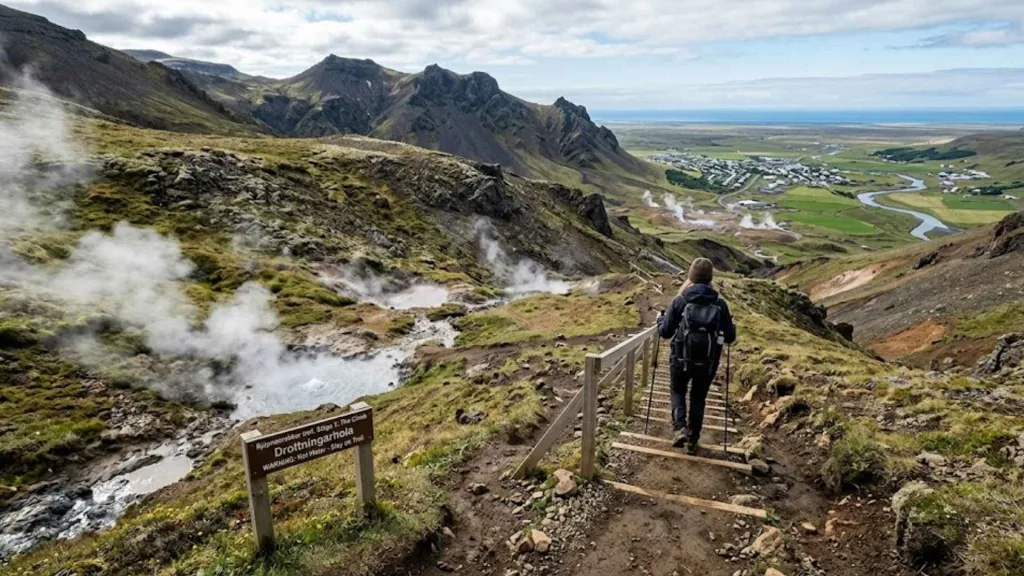
Keep a lookout here for small hot springs and mud pools to the left of the trail, as well as a geothermal borehole known locally as Drottningarhola (Queen’s Borehole). Stay on the path and do not touch the water in these pools — it is scalding hot.
Stage 2: The Geothermal Valley Opens Up
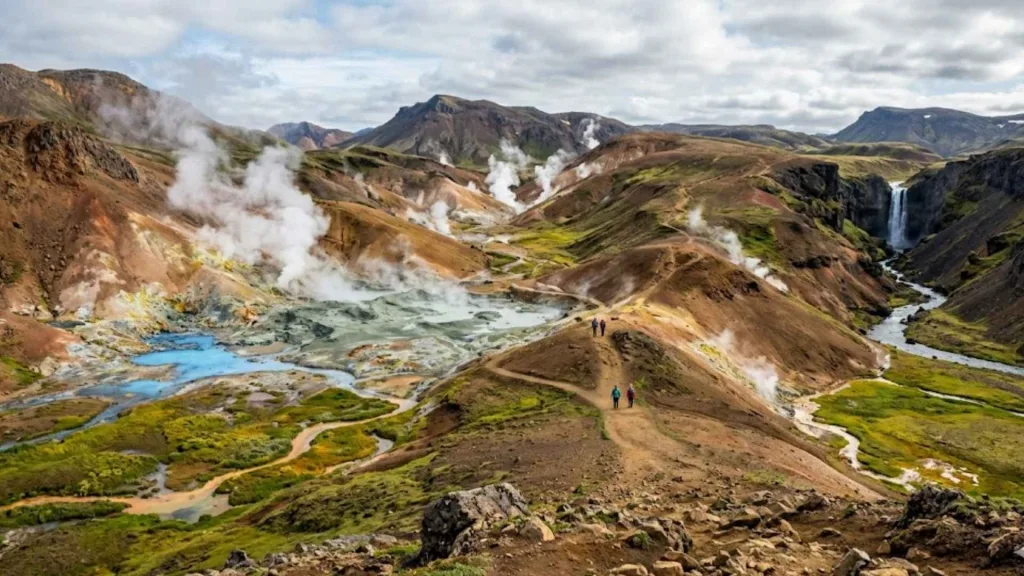
After cresting the main hill, the landscape transforms dramatically. The smell of sulfur drifts on the air, and steam rises in thick plumes from dozens of vents across the hillside. The valley unfolds before you in a vivid palette: electric-blue mineral pools, grey-green mud pots, patches of bright yellow sulfur, and lush green wetland vegetation fed by the warm, mineral-rich runoff.
Along this stretch, you will also pass the beautiful Djúpagilsfoss Waterfall, which cascades into the Djúpagil Canyon — a natural photo stop that is well worth a pause.
Stage 3: Arriving at the Bathing River
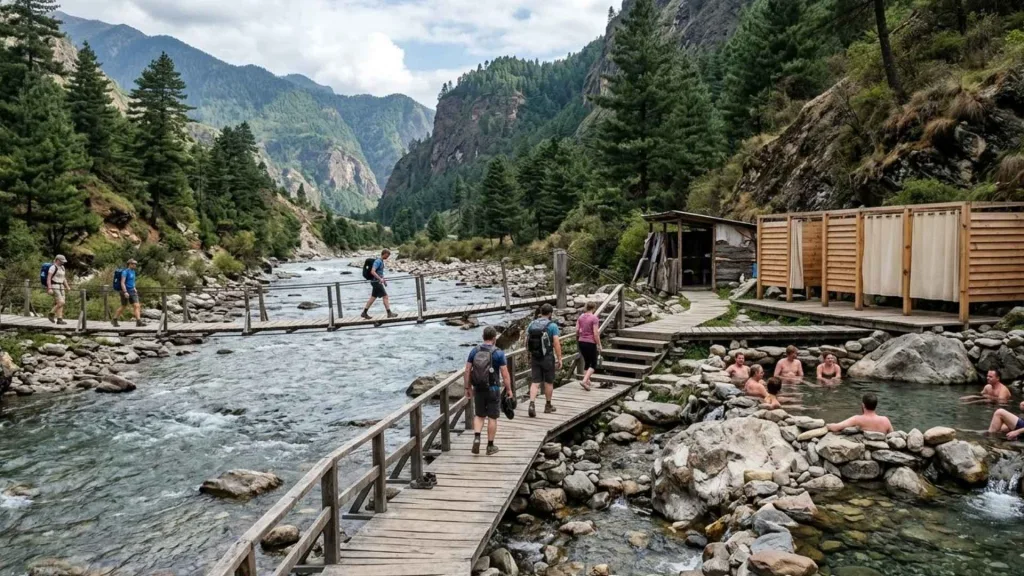
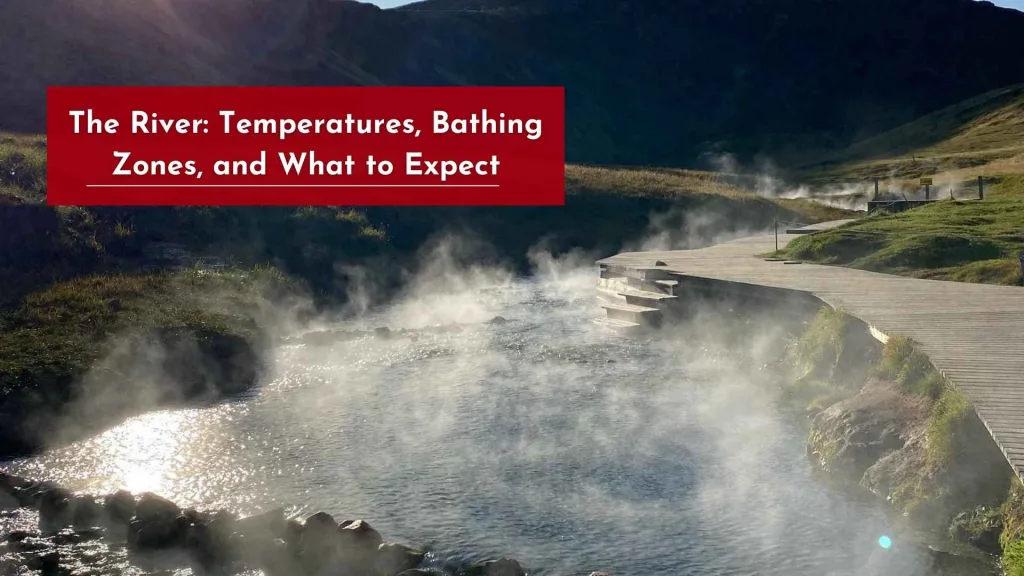
After approximately an hour of walking, you will cross a wooden bridge and arrive at the bathing area, marked by a system of wooden boardwalks, simple changing screens, and rock-divided pools along the river’s edge. You have officially reached your destination.
The River: Temperatures, Bathing Zones, and What to Expect
Water Temperature
The Reykjadalur hot spring thermal river maintains warm temperatures throughout the year, though the exact temperature varies depending on season and location along the river.
- The river temperature in the main bathing area generally ranges from 36°C to 40°C (96°F to 104°F) during the summer months (May through September)
- In winter, temperatures in the lower bathing section can cool to a lukewarm level; hiking further upstream will find warmer pockets
- One naturally heated pool near the river reaches approximately 40°C (104°F), making it the most popular soaking spot
- The river’s general flow temperature is around 15°C (59°F), with geothermal springs heating specific sections significantly higher
A Crucial Rule: Hotter Upstream, Cooler Downstream
A key principle for bathing at Reykjadalur is that the water becomes progressively hotter the further upstream you travel. The lower sections near the wooden boardwalk platforms offer the most balanced and comfortable temperatures for general bathing. Further upstream, unmixed geothermal springs can produce pockets of water that are dangerously hot — always test the water with your hand or foot before entering.
Identifying the Safe Bathing Zone
This is one of the most important safety points for first-time visitors. As you approach the end of the trail, you will encounter areas of boiling water, bubbling mud pools, and geothermal vents with clear warning signs bearing thermometer symbols. These sections are not safe for bathing.
You have reached the safe bathing area only when you arrive at the wooden boardwalk platforms with the rock-divided pools and makeshift changing screens. These markers clearly delineate the zone where the geothermal and cold water have mixed to a safe and enjoyable temperature.
Facilities and What to Bring
On-Site Facilities
Facilities at Reykjadalur are deliberately minimal, preserving the wild and natural character of the site:
- At the car park: Paid parking, public restrooms, free Wi-Fi, and the Reykjadalur Café/Lodge offering coffee, snacks, and basic supplies
- On the trail: No facilities whatsoever — no toilets, no rubbish bins, no shops
- At the river: Wooden boardwalk platforms and basic changing screens (not enclosed), but no showers, lockers, or staff
Use the restrooms at the car park before beginning your hike. There are no facilities anywhere along the 3.5-kilometre trail or at the river itself.
Parking Costs
Parking at the trailhead is paid and managed via the EasyPark or Parka apps (free Wi-Fi is available at the café to download these before you set off). Cash is not accepted. The parking fee also covers access to the restrooms. Arriving before 9 AM or after 5 PM during summer is strongly recommended to secure parking close to the trailhead, as the car park can fill rapidly on busy days.
What to Pack
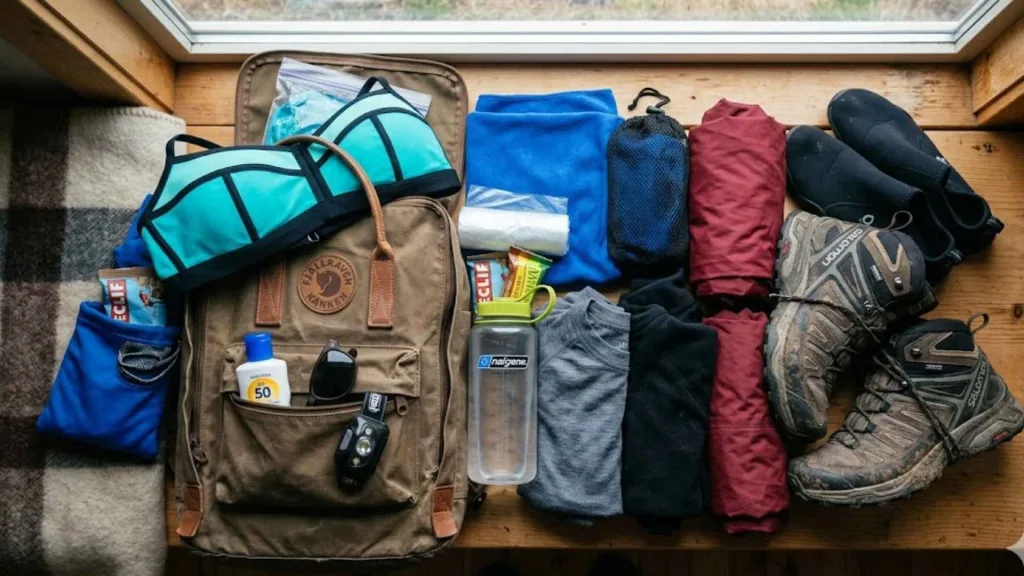
- Swimsuit — absolutely essential; there are no rental options on site
- Quick-dry towel — standard towels take much longer to dry in Iceland’s cold air
- Waterproof hiking shoes with good grip — the trail includes muddy, uneven, and rocky sections
- Layered clothing — an inner thermal layer, a mid-layer fleece or wool, and a waterproof outer shell
- Water and snacks — there are no shops or refreshment points along the trail or at the river
- Plastic bags — for wet clothes and any rubbish you bring in
- Sunscreen and sunglasses — UV rays are surprisingly strong in Iceland during summer; snow reflection poses a similar risk in winter
- Headlamp or torch — essential for winter visits when daylight is extremely limited
- Water shoes — the riverbed is rocky; water shoes significantly improve comfort while soaking
Best Time to Visit Reykjadalur Hot Spring Thermal River
Summer (June to August)
Peak season. Long daylight hours and the Midnight Sun make any time of day workable, and the valley is lush and colorful. Crowds are the main drawback — arrive before 9 AM or after 5 PM to beat the busiest periods.
Spring and Autumn (April to May / September to October)
A strong choice for most visitors. Fewer crowds, beautiful seasonal light, and the contrast between cool air and warm water makes soaking feel particularly rewarding. Rain is frequent — pack waterproof gear.
Winter (November to March)
Bathing under the Northern Lights in a snow-covered valley is genuinely unforgettable. The trail can be icy and visibility is low, so crampons or microspikes and a headlamp are non-negotiable. First-time winter visitors should consider a guided tour.
Safety Rules and Responsible Visiting
Reykjadalur is a powerful and active geothermal environment. Respect for the landscape is not optional — it is essential for both your safety and the preservation of this extraordinary place.
- Stay on marked paths at all times — stepping off the trail risks stepping into dangerously hot ground or disturbing fragile geothermal crust
- Never touch or enter boiling water — follow all posted warning signs without exception
- Do not use soap, shampoo, or other products in the river — these damage the delicate geothermal ecosystem
- Leave no trace — carry all rubbish back to the car park; there are no bins along the trail
- Do not remove rocks, minerals, or any natural material from the site
- Wild camping is strictly forbidden in the Reykjadalur area and across the entire South Coast; use designated campsites only
- Check Safetravel.is before visiting, particularly in winter or unsettled weather — trail conditions can change rapidly
For visitors interested in discovering more of the world’s finest natural hot springs responsibly, Soak Destinations offers curated guides to thermal bathing destinations that prioritize both the visitor experience and environmental stewardship.
What Makes Reykjadalur Different from Iceland’s Other Hot Springs?
What makes the Reykjadalur hot spring thermal river different from every other geothermal experience in Iceland is simple: you earn it. There is no luxury infrastructure, no wristband, no tiered pricing. Just a trail, a valley, and a river that has been warm for thousands of years.
Iceland has polished options — the Blue Lagoon, Sky Lagoon, Seljavallalaug — but none deliver this combination of wild landscape, free access, and genuine remoteness. For travelers who love nature-first hot spring experiences globally, Soak Destinations is worth bookmarking for your next adventure.
Nearby Attractions Worth Combining
Reykjadalur’s location makes it an ideal anchor for a broader South Iceland day trip or multi-day itinerary:
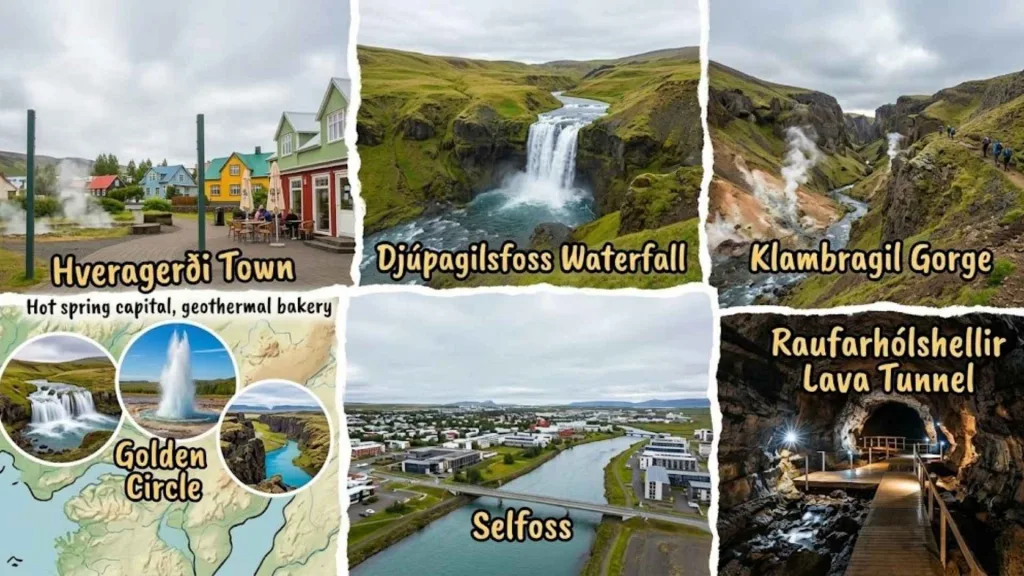
- Hveragerði Town — often called the “Hot Spring Capital of Iceland,” this charming town has a geothermal park, cafés, restaurants, a supermarket, and a unique geothermal bakery where traditional rye bread is slow-baked underground using natural earth heat
- Djúpagilsfoss Waterfall — located approximately 2 kilometres from the trailhead, this striking waterfall is easily incorporated into the Reykjadalur hike
- Klambragil Gorge — a more challenging extension of the main trail that leads to a dramatic gorge with fumaroles, boiling springs, and sweeping valley views; suitable for experienced hikers
- The Golden Circle — Reykjadalur sits at the eastern end of the famous Golden Circle route, making it a natural final stop after visiting Thingvellir National Park, the Geysir geothermal area, and Gullfoss waterfall
- Selfoss — a short drive east, offering additional dining, accommodation, and cultural options
- Raufarhólshellir Lava Tunnel — one of Iceland’s longest and most accessible lava tubes, located a short drive from Reykjadalur and offering a dramatically different perspective on Iceland’s volcanic landscape
- Hengill Area Hiking Trails — beyond the river, an extensive network of trails spreads across the broader Hengill area, featuring mountains, craters, lakes, and additional geothermal zones for more committed hikers
Final Thoughts
The Reykjadalur hot spring thermal river is more than an attraction — it is an experience that encapsulates everything extraordinary about Iceland. A moderate hike through a steaming valley of volcanic color, a naturally heated river flowing between mountains, and the freedom to soak in one of nature’s finest geothermal gifts at no cost. Few places in the world offer this combination.
Whether you visit in the long golden light of a summer evening, the crisp stillness of an autumn afternoon, or the inky darkness of a winter night with the Northern Lights rippling overhead, Reykjadalur will stay with you long after you have dried off and driven back to the city.