
Dave quit his engineering job at 43. Not because he’d hit some magic number everyone argues about on forums, he just ran the math three different ways one weekend and it kept landing in the same place: he could stop. So he did. Sold the townhouse outside Denver, took the severance, and bought eleven acres in a county I honestly couldn’t find on a map without help. Two years on he’s got a well, a little barn he half-built himself, solar panels he wired over one long, sunburned August, and zero mortgage. He also claims he spends less now than when he had a paycheck coming in every two weeks. I believe him, mostly because he showed me the spreadsheet.
He’s not some outlier. More and more people are leaving full-time work somewhere between their late 30s and mid-50s and, instead of downsizing into a condo or a golf community, they’re buying land. Sometimes raw, sometimes with a shed already on it. Part of it’s money. A lot of it isn’t. Here’s where they’re actually going, what it tends to cost once you get past the sticker price, and what nobody mentions about the first couple years.
Why Land Is Winning Out Over the Suburbs
Interest in early retirement has jumped fast, from around a quarter of Americans a year ago saying they were pursuing some version of it to closer to 37% now. That’s a big swing for twelve months. And land is riding along with it. Land value data compiled by the Farm Credit Administration shows rural prices basically holding steady through 2025 into this year, even while city housing kept climbing. Draw your own conclusion about where the money’s actually flowing.
But it’s not only about the price tag. A quarter acre with an HOA that has opinions about your fence color is a fundamentally different kind of ownership than twenty acres where you’re the one making the rules, or not making any at all. After you’ve just walked away from a boss, that difference lands harder than it would have at 28.
The Coast FIRE Math Behind a Land Purchase
Here’s a wrinkle a lot of these buyers don’t fit the classic retiree mold at all. Plenty haven’t technically retired. They’ve hit something in the FIRE community called Coast FIRE instead, meaning whatever’s already invested will, if left completely alone, compound into enough for a normal retirement without another dollar going in.
If that’s new to you, this walks through Coast FIRE with an actual worked example, and it’s worth reading before forty acres eat a chunk of savings. Buying land quietly resets your monthly costs in ways that don’t show up until the first property tax bill, or the first time a well pump dies on a Tuesday.
Picture somebody hitting that number at 38 with, say, $450,000 already sitting invested. They might not need to touch a dime of it for twenty years. Whatever they’re earning now, or whatever came out of selling their old house, can go straight into land and a plain, honest build instead of another three decades chained to a mortgage on a house in a subdivision they never actually wanted.
Where Early Retirees Are Buying Land for Space and Freedom
A few of these places get talked about constantly. A couple barely show up outside of niche forums. All seven kept coming up, though, whether I was looking at land sale listings or reading through early-retiree message boards where people argue about well depth for fun.
Loxahatchee, Florida
West of West Palm Beach sits Loxahatchee and its neighbor, The Acreage, which somehow still offers real space in South Florida. Barely any HOA rules, land zoned for horses and chickens, and you’re still under an hour from a major airport. Acreage homes here run around $913,000 on average, with the range stretching from roughly $520,000 up past $2.9 million depending on the parcel, and raw land alone can price out near $277,000 an acre once you factor in drainage work.
Not cheap, not by a long shot, but Florida has no state income tax and a growing season that basically never ends, and that combination keeps this corner of Palm Beach County near the top of a lot of search lists. Worth checking current Loxahatchee, FL real estate listings if you’re weighing it against anywhere else in the Southeast, since prices swing a lot between the soggier lots out west and the higher, more buildable ground closer to town.
Luna County, New Mexico
Swing all the way to the other end of the spectrum and you land here. Two or three hundred dollars buys an acre of desert, and even the parcels with decent water rights rarely crack seven hundred. The whole state averages around $725 an acre, which as far as anyone can tell makes it the cheapest in the country. What you’re actually buying is isolation. Heat. A longer drive to a real grocery store than you’d like. Somebody retiring on a modest nest egg who’d rather own fifty acres outright than five with a mortgage still attached, though, this is where that plan actually pencils out.
The Ozark Foothills, Arkansas
A lot of counties through here still sell for one to three grand an acre, sometimes less if you’re patient. What New Mexico doesn’t have and this place does is water. Rain that actually falls. Rivers you can fish without a four-hour drive first. If the plan involves a garden or a couple of goats rather than just solar panels and silence, this is the region that keeps coming up. Ask around and you’ll hear the same two things over and over: everything’s cheap day to day, and a twenty-acre parcel with its own pond is still realistic on a portfolio well under seven figures.
Carbon County, Wyoming
Wyoming runs close to a thousand dollars an acre on average, and this particular county has quietly become a favorite among people who want real room to hunt, run a few cattle, or just never see another roofline. Zero state income tax sweetens things once the paycheck’s gone and you’re pulling from savings instead. Nobody should sugarcoat the winters, though. Four-wheel drive and a generator aren’t optional extras here, they’re the entry fee.
The Cumberland Plateau, Tennessee
Call this the middle-ground pick. Wooded or mixed-use land runs $3,500 to $6,000 an acre, give or take, and every so often a small rural lot pops up for under five grand total, though those go fast. No state income tax here either, and the climate is a lot friendlier than what you’d deal with in Wyoming or Michigan. Knoxville and Chattanooga are both a short drive away too, unlike most of the remote spots on this list. It splits the difference nicely between New Mexico’s rock-bottom prices and whatever Florida’s charging for the privilege of no state income tax and year-round sun.
The Big Bend Region, Texas
Prices swing wildly out here, but plenty of remote parcels near the national park still go for under $1,500 an acre. Price isn’t really why people come, though. It’s the absence of everything else. No light pollution. No zoning board with opinions. No neighbor close enough to hear your generator. Texas not taxing income helps too, obviously. Just know what you’re signing up for: the nearest real town can be an hour away, summer heat is no joke, and this only works for people who’ve already made peace with being alone most of the time. For anyone planning to go off-grid from the very first day, though, there aren’t many easier places left in the Lower 48.
The Upper Peninsula, Michigan
Fifteen hundred to three grand an acre gets you into the U.P., and what you’re buying is four real seasons, more lakes than anyone could see in a lifetime, and a level of privacy that’s genuinely hard to find this far east for the money. Call it the cold-weather cousin of the Ozarks or Tennessee picks above. Mostly it draws people who grew up somewhere in the Midwest and aren’t ready to leave the region behind entirely just because the job is done.
What It Actually Costs to Build or Homestead From Scratch
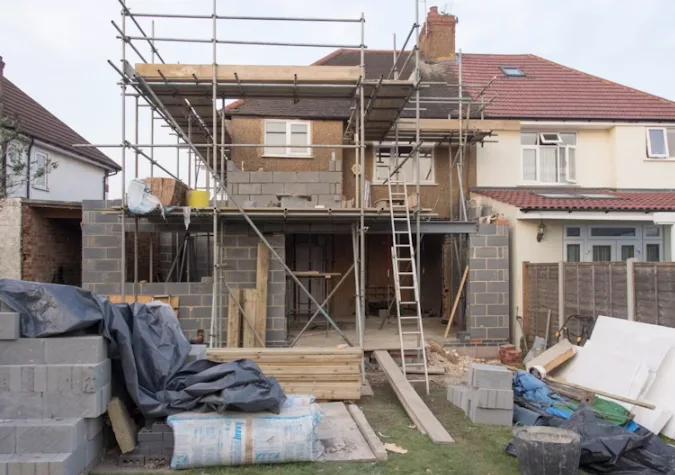
Buying the dirt is the simple part. Everybody knows that going in, and everybody still gets surprised anyway. Construction is where a tidy plan starts to fray.
Take the well. Dave’s cost him just under nine grand, but a neighbor down the road hit granite and paid closer to fifteen. That’s the range you’re looking at, roughly $5,500 to $15,000, and the rock underneath your specific patch of dirt decides which end you land on, not you. Septic is its own line item on top of that, usually another five to fifteen thousand.
Solar, if you’re going off-grid, lands somewhere in the fifteen-to-forty-thousand-dollar range installed. Dave did a good chunk of his own wiring, which is not something I’d recommend to everyone reading this, but it knocked his number down quite a bit. And then there’s the actual house. A modest 1,200 to 1,600 square feet, stick-built, still runs $150 to $250 a square foot in most rural markets as of right now. Go the kit or barndominium route and do some of the finish work yourself, and you can land closer to $90 or $130 instead. It adds up either way, just at different speeds.
None of those figures hold still for long, which is basically the whole argument for why getting the math right matters this much for long-term financial planning, especially when the land purchase and the build are both pulling from the exact same retirement account at the exact same time. The people who’ve done this without blowing their whole plan up tend to budget the build cost, then just tack on another 20% for whatever surprise shows up. A ledge of rock under the septic field. A well that has to go twice as deep as the guy’s next door.
Money Moves Worth Making Before You Sign Anything
Land loans are not mortgages. A lot of first-timers find that out the hard way, usually right around the point a lender asks for 30% or 40% down instead of the familiar 10 or 20.
Terms run shorter too, often 10 to 15 years rather than 30, and the rate sits higher than a typical home loan, since there’s a lot less for the bank to repossess if a borrower walks away from bare dirt than from a finished house. Plenty of early retirees skip all of this by paying cash, usually from the proceeds of selling a primary home. That solves the loan problem. It just creates a different one, since it means a much bigger share of the portfolio is now sitting in something you can’t sell quickly if you suddenly need the money.
It’s also worth getting a handle on how money actually flows once a regular paycheck stops showing up. How digital finance platforms have changed personal money management is a decent read on this, since tracking uneven income from a small homestead project or a side gig against a fixed withdrawal number is a different skill than budgeting off the same direct deposit every other Friday.
Land Isn’t a Shortcut, But It Is an Option
None of it works if the numbers don’t hold up first, that part’s non-negotiable. But for the ones who do make it work, and there seem to be more every year, the point was never really about avoiding people or dodging an HOA’s opinion on paint. It’s time. An acre, or forty of them, doesn’t care what time you show up tomorrow. After twenty years of caring exactly what time you showed up, that ends up mattering a lot more than most people expect going in.