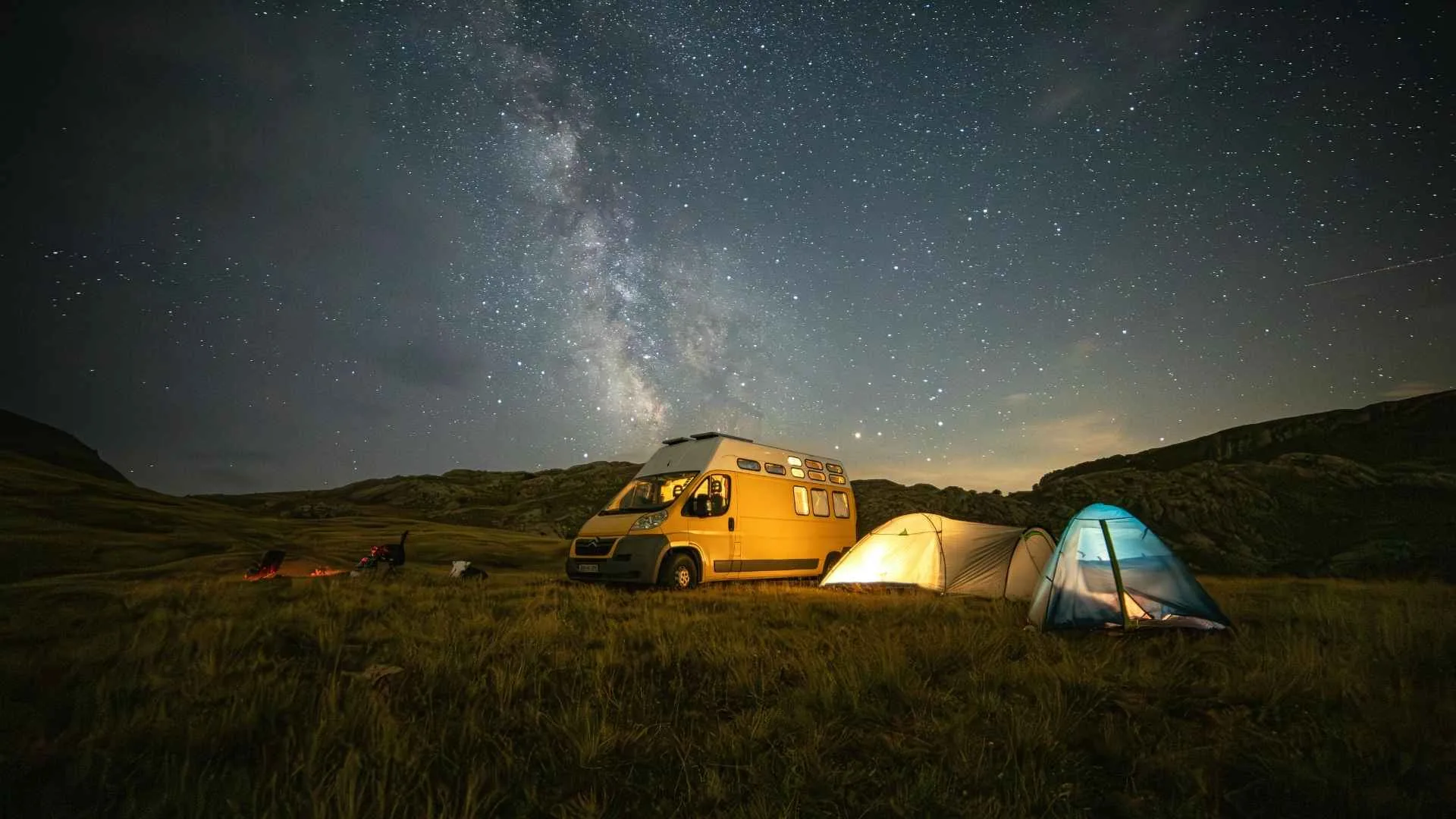
There is a specific kind of magic in van camping near hot springs. You soak under the stars until your fingers wrinkle, walk fifty yards back to your own bed, and wake up to steam rising off the water while your coffee brews. No checkout times, no driving mountain roads at midnight, no crowds, because the crowds went home at sunset and you did not.
But that magic comes with a catch that trips up almost every first timer: the rules for overnight parking near hot springs in the United States are a patchwork. The same soak that welcomes van campers on one side of a boundary line can get you a ticket and a knock on the door at 2 a.m. on the other side. This guide breaks down exactly where hot springs camping is legal, which states and springs are best for a soak and sleep trip, and how to do it without damaging the fragile places that make it all worthwhile.
Why Land Management Determines Everything
Whether you can legally sleep near a hot spring in the US comes down to one question: who manages the land? Learn to answer that question and you will never guess wrong again.
BLM land: the van camper’s best friend
The Bureau of Land Management oversees roughly 245 million acres, mostly across the western states, and it is the most van friendly land in America. Dispersed camping is generally allowed on BLM land for up to 14 days at no cost, and a remarkable number of primitive hot springs sit on it. The official rules, stay limits, and how to find field offices are laid out on the BLM’s camping page, and it is worth ten minutes of reading before your first trip, because rules can vary by field office and some heavily used springs now carry site specific restrictions.
National forests: usually yes, with local exceptions
The US Forest Service allows dispersed camping across most national forest land, typically with a 14 day limit and a requirement to camp a certain distance from water sources and developed areas. Many beloved soaks, especially in Idaho and Oregon, sit inside national forests. The catch is that individual ranger districts can close specific areas to overnight use when a spring gets loved to death, so a quick call to the local district before you drive out is the difference between a perfect night and a forced midnight relocation.
National parks and state parks: assume no
Inside national parks, sleeping in your vehicle outside a designated campground is prohibited, full stop. State parks follow the same pattern almost everywhere. If the hot spring you want sits inside a park, plan on booking a campsite in the park’s campground or staying outside the boundary and driving in for a day soak.
Private hot springs: the underrated option
A growing number of private hot springs resorts in the West welcome van campers with dedicated sites, usually in the $20 to $60 per night range with soaking included. Places like Mystic Hot Springs in Utah, Norris Hot Springs in Montana, and Summer Lake Hot Springs in Oregon have built real followings among van travelers. You trade a little solitude for guaranteed legality, hot showers, and often 24 hour soaking access for overnight guests, which is a privilege day visitors never get.
The Best States for Van Camping Near Hot Springs
Every western state has geothermal water, but a few stand far above the rest for combining great soaks with legal places to sleep.
Idaho
Idaho has more usable natural hot springs than any state in the country, and a huge share of them sit on national forest land where dispersed camping is allowed nearby. The Boise National Forest corridor along Highway 21 is practically a hot springs trail, with roadside soaks like Kirkham Hot Springs sitting next to established campgrounds. Further north, the springs scattered along the Salmon River country reward travelers willing to drive gravel. If you only get one hot springs road trip in your life, Idaho makes a strong case.
Nevada
Nevada is the wild, empty heart of American hot springs culture. Spencer Hot Springs near Austin is the classic example: free tubs on BLM land, wide open dispersed camping, and some of the darkest night skies in the lower 48. Nevada soaking means self sufficiency, since services can be 100 miles apart, but for van campers who want solitude, nothing else compares.
Colorado
Colorado blends both worlds. You get primitive riverside soaks like Radium Hot Springs on BLM land near Kremmling and Penny Hot Springs along the Crystal River, plus a deep bench of developed springs in towns like Buena Vista, Salida, and Pagosa Springs where nearby campgrounds and dispersed forest roads make overnighting easy. The San Luis Valley adds quirky options where funky resorts offer van sites with all night soaking.
Montana
Montana’s springs range from raw river soaks to historic pool complexes. Norris Hot Springs pairs a spring fed pool with live music and van camping on site, while more primitive options hide in the southwest corner of the state near Whitehall and Jackson. Distances are long and winters are serious, which keeps the crowds thin.
Oregon
Oregon’s Cascade and desert springs are legendary, though popularity has brought tighter rules at famous soaks like Umpqua Hot Springs, where camping restrictions now apply at and near the trailhead. The state’s eastern desert delivers the best van camping: Alvord Hot Springs sits on private land at the edge of a vast dry lakebed and welcomes overnight vehicles, and Summer Lake Hot Springs offers van sites with unlimited soaking under some of the quietest skies in the state.
California and Utah
California’s Eastern Sierra, especially the Long Valley area outside Mammoth Lakes, holds a famous cluster of free tubs surrounded by open land where dispersed camping has traditionally been allowed, though rules have tightened as visitation exploded, so check current signage carefully. Utah counters with Mystic Hot Springs in Monroe, one of the most van camper friendly destinations in the country, and free rustic soaks like Meadow Hot Springs on private land where respectful visitors remain welcome.
Why Couples Are Trading Tents for Camper Vans on Soak Trips
Hot springs trips have a rhythm that punishes tent camping. You get out of 104 degree water into 30 degree air, and the gap between the soak and your sleeping bag is where the misery lives. Wet swimsuits, frozen towels, fumbling with a camp stove in the dark: van campers skip all of it. You step from the water into a heated space with dry clothes, a real mattress, and a kettle.
This is exactly why the soak and sleep trip has become such a couples phenomenon. Two people can share driving across the long empty stretches between Nevada and Idaho springs, split the soaking gear, and turn a weekend into a genuinely romantic getaway instead of an endurance event. If you find yourselves planning more than a trip or two per season, it is worth understanding how much layout matters: browsing camper vans designed for two shows how features like a fixed bed, indoor heat, and a wet gear area change the experience of cold weather soaking trips, even if you end up renting something similar rather than buying.
Whatever you drive, the core requirements for hot springs van camping are the same: a reliable heater for shoulder season and winter nights, somewhere to hang dripping suits and towels where they will not soak your bedding, water storage for the desert springs where there are no services, and enough battery capacity to run the heater fan all night.
The Rules of the Soak: Etiquette That Keeps Springs Open
Every van camper needs to understand something uncomfortable: hot springs access in the US is shrinking, and the springs that close almost always close because of overnight visitors who behaved badly. If you sleep near a spring, you are the guest with the most power to protect it or ruin it.
- Camp the legal distance from the water. Most dispersed camping rules require you to set up at least 100 to 200 feet from water sources. This protects fragile geothermal ecosystems and keeps the soaking area itself open for everyone.
- Pack out everything. Every scrap of trash, every orange peel, and yes, all human waste where no toilets exist. Carry a portable toilet or wag bags in the desert. Nothing closes a spring faster than a sanitation problem.
- No soap, no glass, no exceptions. Even biodegradable soap wrecks the mineral chemistry and biology of a natural spring. Glass and bare feet in dark water are a bloody combination that ends with search and rescue.
- Keep quiet after dark. Sound carries absurdly far in desert basins and mountain canyons. The person soaking at midnight came for silence, and so did you.
- Respect posted closures and private property. Many beloved soaks sit on private land where access survives purely on the owner’s goodwill. One ignored fence line can end access for everyone, permanently.
Practical Tips for Your First Soak and Sleep Trip
- Arrive before dark. Finding a legal dispersed site, judging the road surface, and locating the spring itself are all ten times harder by headlamp. Plan to be parked with two hours of daylight left.
- Verify road conditions in shoulder season. The dirt roads to many springs turn to axle deep mud in spring thaw and drift shut in winter. A quick call to the ranger district or field office saves a very expensive tow.
- Carry more water than you think you need. Desert springs in Nevada and eastern Oregon can be 60 to 100 miles from the nearest reliable services. A good rule is two gallons per person per day, plus a reserve.
- Soak smart. Natural springs are untested and unregulated. Check temperatures before entering, keep your head above water in still, warm pools, skip alcohol until after your last soak of the night, and never soak alone in remote areas.
- Have a backup spot. Popular springs fill up on weekends, and dispersed sites are first come, first served. Mark a second legal camping option 20 to 30 minutes away before you lose cell signal.
A Sample Soak and Sleep Weekend
Here is how a realistic first trip looks. Friday afternoon, drive to a developed spring with guaranteed overnight sites, somewhere like a private resort with van camping, and enjoy an easy evening soak with facilities nearby. Saturday morning, resupply water and fuel in town, then head for a primitive spring on BLM or forest land, arriving mid afternoon to claim a legal dispersed site. Soak at sunset, again under the stars, and once more with coffee at sunrise, which is the soak everyone remembers. Sunday, pack out everything, leave the site cleaner than you found it, and take the scenic route home past one more roadside spring for a farewell dip.
That structure, one guaranteed night and one wild night, teaches you everything about your setup and your tolerance for remoteness before you commit to a longer route.
Frequently Asked Questions
Can you sleep in your van at a hot spring?
It depends entirely on who manages the land. Many hot springs on BLM land and in national forests allow free dispersed camping nearby, while hot springs inside national parks, state parks, and day use areas usually prohibit overnight parking. Always check the managing agency’s rules for that specific spring before you commit to staying the night.
Is camping near hot springs free?
Often, yes. Dispersed camping on most BLM land and in most national forests is free, typically with a 14 day stay limit. Private hot springs resorts that allow van camping usually charge $20 to $60 per night, which often includes soaking access.
What are the best states for van camping near hot springs?
Idaho, Nevada, Colorado, Montana, Oregon, California, and Utah offer the best combination of natural hot springs and legal overnight options. Idaho and Nevada stand out for free primitive springs with dispersed camping close by, while Colorado and Utah offer more developed springs with dedicated van and RV sites.
Do you need a permit to camp near hot springs?
Most dispersed camping on BLM and Forest Service land requires no permit, though stay limits and seasonal fire restrictions apply. Some popular springs have shifted to reservation or permit systems due to crowding, so verify current rules with the local ranger district or field office before your trip.
Is it safe to van camp near hot springs in winter?
Winter is one of the best seasons for soaking, but access roads to many springs are unplowed and some require four wheel drive or become impassable. A van with a proper heater, insulation, and a freeze protected water system makes winter trips far safer and more comfortable. Always check road conditions and carry traction devices.
The Bottom Line
Van camping near hot springs is the best version of both hobbies: the freedom of the road and the ritual of the soak, combined into trips you will talk about for years. The formula is simple. Learn who manages the land, follow the 14 day dispersed camping rules on BLM and Forest Service ground, book private resorts when you want certainty, and treat every spring like access could disappear tomorrow, because it can.
Do that, and the American West opens up into a network of steaming pools with your bedroom parked right beside them. The water has been waiting for a few thousand years. It can wait until you get there.