The question that catches out most first-time hot springs travellers is not which pool to visit. It is where to sleep afterwards.
A surprising number of America’s best natural springs are day use only. Gates close at dusk, overnight parking is prohibited, and in some areas you cannot legally pull over anywhere nearby. Arrive at 8:00 PM planning to soak under the stars and sleep in the lot, and you will find yourself driving back down a dark forest road looking for somewhere to stop.
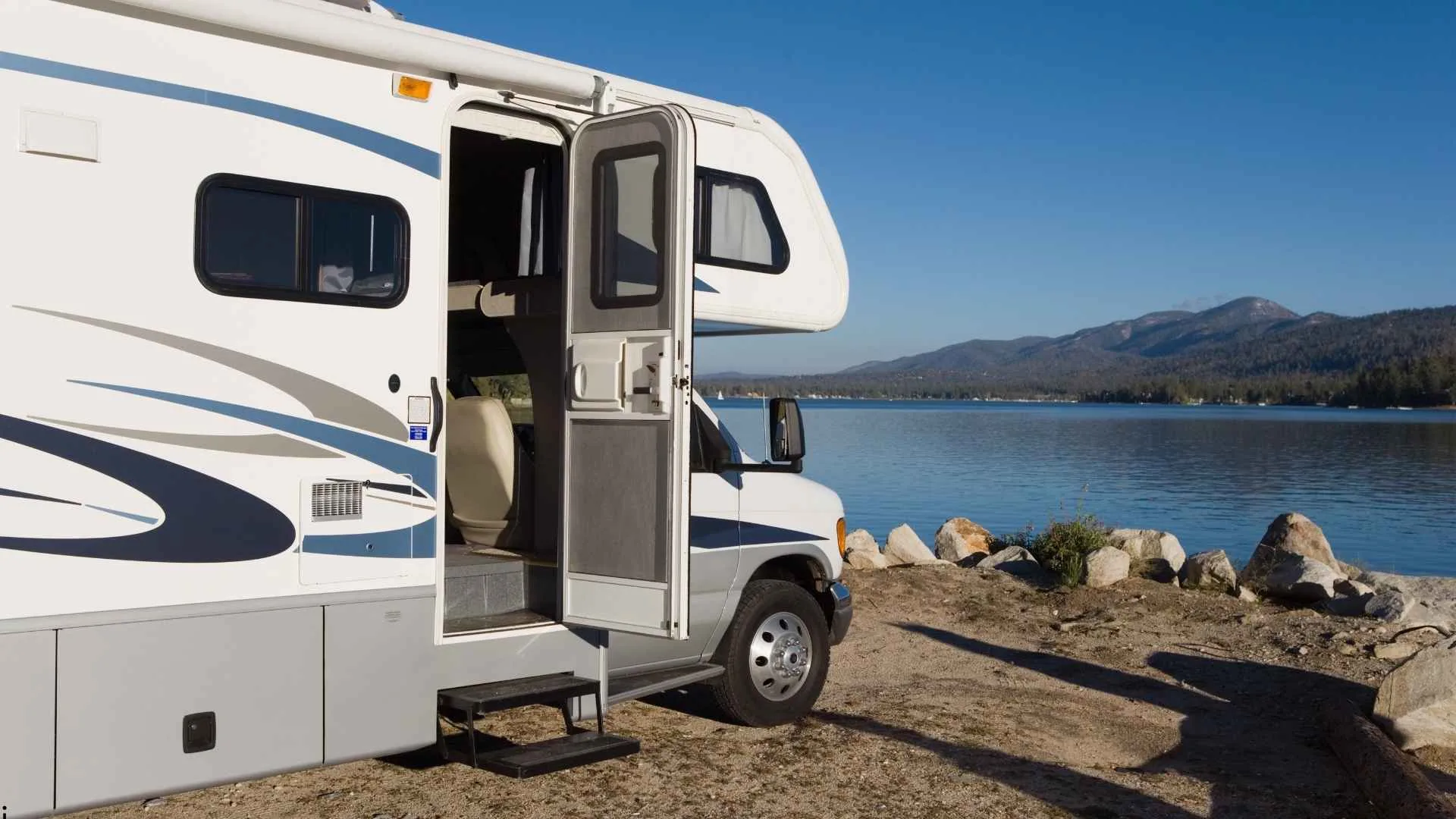
Travelling in an RV or campervan solves this beautifully once you understand the rules. Here is how overnight access actually works at US hot springs, which sites have camping on the doorstep, and how to plan a trip around the gaps.
Can You Camp at Hot Springs?
Sometimes, but rarely at the pools themselves. Overnight access depends entirely on which agency manages the land, and the three main categories behave very differently.
- Forest Service day-use sites. Usually gated, with posted opening and closing times and no overnight camping at the springs. Camping is permitted at designated campgrounds nearby, often within a few miles.
- Bureau of Land Management land. Generally the most permissive. Dispersed camping is allowed across large areas under a standard 14-day limit, though camping directly at the pools is normally prohibited to protect the ground around them.
- Private resorts. Rules are whatever the owner sets. Some have full RV sites, some have cabins only, and some do not allow overnight vehicles at all.
The practical takeaway is that your soak and your campsite are usually two separate locations. Plan them as two separate decisions.
Overnight Rules at Popular US Hot Springs
| Hot spring | State | Sleeping on site | Access notes |
| Kirkham | Idaho | No, day use only | Gate closes 9:00 PM, $5 per vehicle |
| Terwilliger (Cougar) | Oregon | No, dispersed camping banned nearby | Closed sundown to sunrise |
| Wild Willy’s (Crowley) | California | Not at the pools, dispersed camping on surrounding BLM land | Free, unpaved access road |
| Paulina Lake | Oregon | Yes, campground at the trailhead | Seasonal, no hookups |
| Chena | Alaska | Yes, camping and RV sites on the property | Pool passes sold separately |
| Strawberry Park | Colorado | Lodging on site, no RV camping | Cash only, reservations required |
Day-Use Gates Worth Planning Around
Kirkham Hot Springs in Idaho is the clearest example of why timing matters. The site sits five miles east of Lowman on the South Fork Payette River, and it is open for day use only from 7:00 AM to 9:00 PM with a $5 per vehicle fee. The gate closes at 9:00 PM and overnight camping is not permitted, so an evening soak has to end with a drive. Fortunately Highway 21 has Forest Service campgrounds along the corridor, most taking both tents and RVs without hookups.
Terwilliger Hot Springs in Oregon, known locally as Cougar, is stricter still. It is closed from sundown to sunrise, closed on Thursday mornings for cleaning, capped at 15 people in the pools at a time, and alcohol is prohibited. A per-person fee is collected on site.
In both cases the answer is the same. Soak in the morning, then move on. Early visits are quieter anyway.
Where Dispersed Camping Is Banned
This is the detail that catches people out most often, because the assumption is that national forest means free camping. It does not always.
At Cougar Reservoir in Oregon, a Forest Service order prohibits dispersed camping outside designated campgrounds throughout the Cougar Recreation Area, which covers a strip along the road either side of the approach to Terwilliger. You cannot legally park up for the night near the springs. Book a designated campground in advance instead, particularly in summer.
Always check the managing forest or district for current orders before you rely on pulling over. Restrictions also appear temporarily during fire season.
Free Camping Near Hot Springs on BLM Land
The Eastern Sierra is where an RV genuinely pays for itself. Wild Willy’s, also called Crowley Hot Springs, sits in the Long Valley Caldera off Benton Crossing Road, reached by an unsigned dirt road and then a flat boardwalk of roughly 0.3 miles. Two pools sit between about 95°F and 105°F with uninterrupted mountain views, and access is free.
Dispersed camping is permitted on the surrounding BLM land under the usual 14-day limit, but not directly at the pools. There are no toilets, no trash service, and fires are not permitted. Cell service is unreliable and the nearest supplies are in Mammoth Lakes, so arrive with full fresh water and an empty waste tank.
The same pattern repeats across much of Nevada, Idaho and Utah. Free camping, zero facilities, complete self-sufficiency required.
Hot Springs With Camping On Site
A handful of places let you park within walking distance of the water, which is worth planning a route around.
- Paulina Lake, Oregon. Little Crater Campground sits at the trailhead inside the Newberry caldera, with sites for tents, RVs and trailers and no hookups. The springs are a 2.4-mile round-trip walk along the lakeshore. The season is short, so check dates before committing.
- Chena Hot Springs, Alaska. The resort outside Fairbanks has camping and RV sites on the property, with hot springs passes sold separately from the campsite fee. Most sites are dry camping, so plan power accordingly.
- Forest Service campgrounds along Idaho’s Highway 21. Several sit within a short drive of multiple pools, making the corridor an easy multi-night base.
Water, Waste and Power on a Hot Springs Trip
Geothermal regions are rural by nature, so services are thinner than on a standard national park route.
- Fill up in gateway towns. Assume the last reliable potable water is where you last saw a supermarket.
- Dump before you head into the hills. Forest campgrounds near hot springs frequently have vault toilets and no dump station at all. Private RV parks in the nearest town are the usual solution.
- Expect dry camping. Hookups are the exception rather than the rule near natural springs, so a decent battery setup matters more than a long extension cord.
- Carry cash. Several sites and campgrounds are cash only with no ATM nearby.
Vehicle Size and Road Access
Access roads decide which springs you can reach, and it is worth being honest about this before booking.
The approach to Terwilliger along Cougar Reservoir is narrow, winding and partly gravel, which is manageable in a compact van and stressful in a large motorhome. The turn to Wild Willy’s is unpaved. Trailhead lots at natural springs are typically small and unstriped.
Winter adds a harder limit. To reach Strawberry Park Hot Springs near Steamboat Springs in Colorado, Routt County law requires four-wheel drive with snow tires from November 1 to May 1, and the final two miles are unpaved, steep and winding. That rules out most standard rental campervans, which is why shuttles run from town. The property also requires advance pool reservations, takes cash only, and is clothing optional and adults only after dark.
As a rough guide, compact campervans and Class B vans of roughly 18 to 21 feet reach almost everything in summer. Class C motorhomes of 23 to 28 feet give you a proper shower and more space for a family, and work well when your route sticks to town-based resorts and paved campground access.
Since the same vehicle class varies a lot in price by season and pickup city, comparing suppliers is worth the ten minutes. Campstar compares RV rentals across the USA in a single search, and for a Colorado trip, RV rentals in Denver puts you within a few hours of several soaks. Check the mileage policy before booking, because hot springs routes cover ground quickly and a capped-mileage deal rarely stays cheap by day seven.
Etiquette That Keeps These Places Open
Natural springs stay accessible because visitors look after them. Pack out everything including food scraps, never use soap or shampoo in a pool, and leave pools as you found them without digging new ones. Glass is prohibited at most sites. Check clothing policies in advance, since plenty of natural springs are clothing optional and it is better to know before arriving with children. Test the water with a hand first, because source temperatures at many springs are hot enough to scald.
FAQs
Can you sleep in your RV at a hot spring?
Only where overnight parking is permitted, which is uncommon at managed day-use sites. BLM areas are the most likely to allow it, and resorts with RV sites are the most convenient.
How long can you camp on BLM land near hot springs?
The standard limit is 14 days in one location, after which you are expected to move on. Facilities are usually nonexistent, so full self-sufficiency is required.
Do hot springs campgrounds have hookups?
Rarely. Most Forest Service campgrounds near natural springs offer vault toilets, fire rings and sometimes potable water, but no electric or sewer connections.
Do you need four-wheel drive?
Not for most sites in summer. It becomes a legal requirement at some in winter, including Strawberry Park in Colorado between November 1 and May 1.
What is the best season for a hot springs RV trip?
Late spring through early autumn, when forest roads and seasonal campgrounds are open. Autumn is the sweet spot for cool air, warm water and fewer people.