Mineral Bath at Home: DIY Recipes, Benefits & Hot Spring Tips

There is something almost magical about stepping into a mineral-rich hot spring. The warm, earthy water seems to dissolve tension from your muscles and leave you feeling like a completely different person. Aching joints? Gone. Fatigue? Lifted. Stress? Evaporated. If you have ever soaked in a natural geothermal pool, you already know exactly what that feels like, and if you have not, the experience is hard to overstate.
The good news is that you do not need to travel far to enjoy those same benefits. With a few affordable, natural ingredients, you can create a mineral bath at home that closely replicates the therapeutic effects of soaking in a natural hot spring. This guide covers everything you need to know, from understanding why minerals matter to step-by-step recipes, expert tips, and how to build a calming ritual around your soak.
Why Minerals Matter: The Science Behind the Soak
Minerals are inorganic substances that originate from the Earth’s crust. Our bodies depend on them for an enormous range of cellular processes from nerve and muscle function, to skin health, to hormonal regulation. Key minerals include magnesium, calcium, potassium, sodium, sulfur, silica, selenium, zinc, iron, and phosphorus.
The problem? Most of us are running low on them. Modern agricultural practices have stripped much of the mineral content from our soil, and heavily processed food strips even more. Even people who eat a whole-foods diet and supplement regularly can struggle to absorb minerals properly if their gut health is compromised, which is the case for a significant portion of the population.
This is where transdermal mineral therapy comes in.
What Is Transdermal Mineral Absorption?
When you soak in mineral-rich water, your skin, the body’s largest organ, absorbs those minerals directly into the bloodstream. This bypasses the digestive system entirely, making it an effective route for people who struggle with nutrient absorption.
This is precisely why people have soaked in natural hot springs for thousands of years, and why modern science, through a field called balneology (the study of therapeutic bathing), continues to validate what ancient cultures understood intuitively. A well-made mineral bath at home taps into this same principle.
The Key Ingredients for a Mineral Bath at Home
The following ingredients form the foundation of any effective home mineral soak. Each one brings something distinct to the experience, and they work synergistically when combined.
Epsom Salt (Magnesium Sulfate)
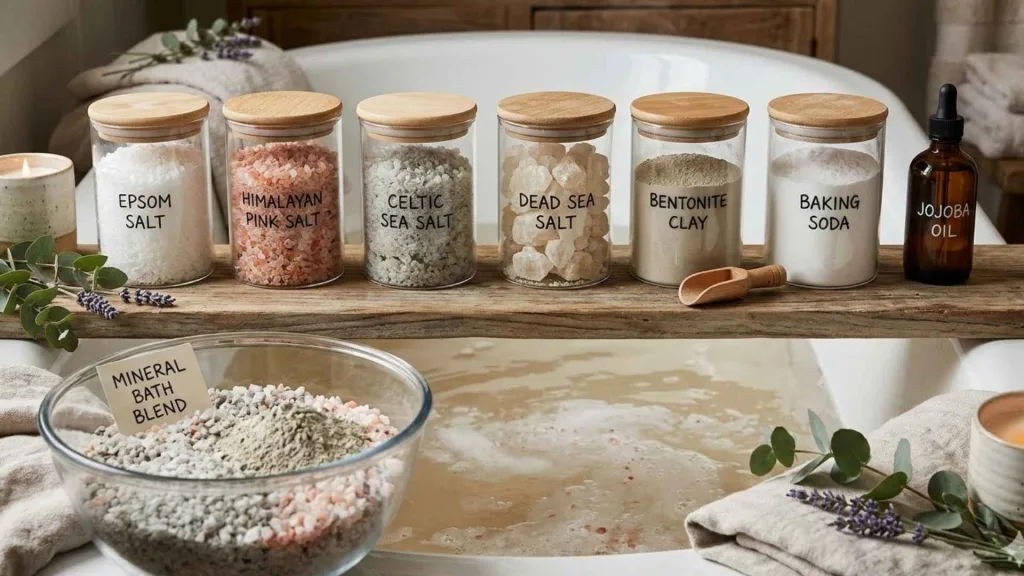
Epsom salt is arguably the most well-known bath ingredient, and for good reason. Despite the name, it is not actually a salt — it is a naturally occurring compound of magnesium and sulfate. Magnesium supports healthy nerve and muscle function, may help reduce inflammation, ease stress, soothe aching muscles, and improve sleep quality. Many people are unknowingly deficient in magnesium, which is one reason a warm Epsom salt soak can feel so restorative.
Himalayan Pink Salt
Himalayan pink salt is mined from ancient sea beds and contains a rich array of trace minerals including calcium, potassium, and iron. In a bath, it works alongside Epsom salt to bring in those additional minerals that magnesium alone cannot provide. It also helps soften skin and supports healthy circulation.
Celtic Sea Salt (Grey Salt)
Celtic sea salt is harvested using traditional methods and retains its natural grey color due to its mineral content. It is rich in sodium, magnesium, and a spectrum of trace minerals. Combined with Epsom and Himalayan salts, it creates a more complete mineral profile that more closely mirrors the composition of natural mineral springs.
Dead Sea Salt
If you want to replicate the famous therapeutic qualities of the Dead Sea, this is the ingredient to reach for. Dead Sea salt is exceptionally high in magnesium, sodium, calcium, and bromide — a mineral particularly known for its muscle-relaxing properties. You can use Dead Sea salt as a stand-alone base (replacing Epsom and Himalayan salts) or blend it in as part of a larger formula.
Bentonite Clay
Bentonite clay is where a mineral soak transitions into a genuine detox experience. Formed from volcanic ash, bentonite clay carries a strong negative electrical charge. When dissolved in water, it attracts positively charged toxins, heavy metals, and impurities, pulling them away from the body while simultaneously releasing its own mineral content — including silica, calcium, magnesium, sodium, iron, and potassium. One important note: never stir bentonite clay with a metal spoon, as metal contact reduces its detoxifying ability. Use wood or plastic instead.
Baking Soda (Aluminum-Free)
Baking soda softens bath water and may help neutralize skin irritants. It supports a slightly alkaline bath environment that is gentle on sensitive skin and can help soothe conditions like eczema and dryness. Always use an aluminum-free variety.
Jojoba Oil
Unlike most bath oils, jojoba oil closely mirrors the natural sebum that your skin produces. It regulates moisture without leaving a greasy residue, and it is naturally high in vitamin E, giving it antimicrobial and anti-inflammatory properties. In a bath, it acts as a carrier for essential oils and prevents the salts from over-drying your skin.
Mineral Bath at Home: Recipes to Try
The Classic Detox Mineral Bath
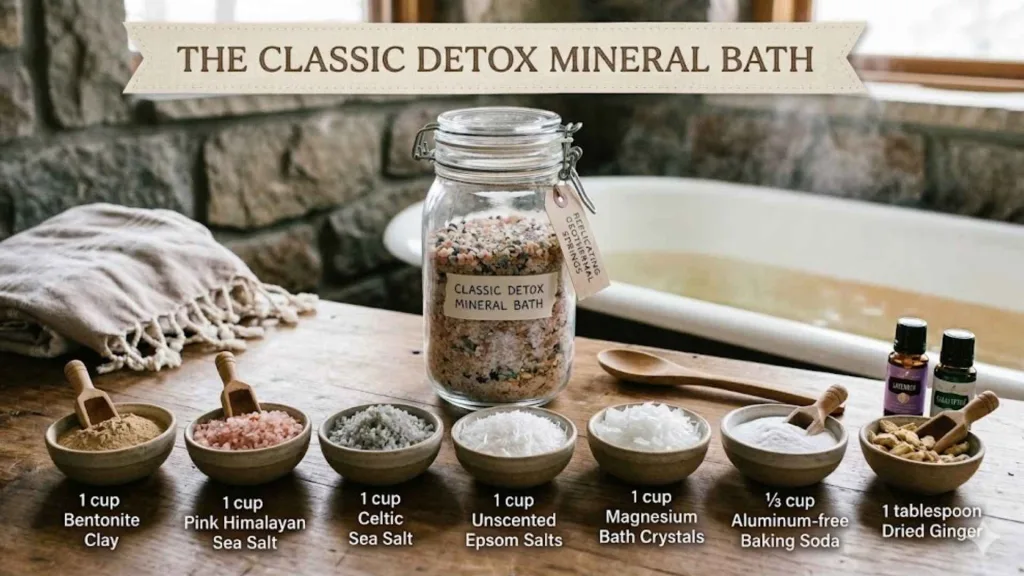
This is a comprehensive formula designed to replicate the mineral-rich quality of a natural geothermal soak — similar to what you might experience visiting a natural hot spring destination.
Ingredients:
- 1 cup bentonite clay
- 1 cup pink Himalayan sea salt
- 1 cup Celtic sea salt (grey)
- 1 cup unscented Epsom salts
- 1 cup magnesium bath crystals
- ⅓ cup aluminum-free baking soda
- 1 tablespoon dried ginger (optional — promotes sweating and detoxification)
- 10–15 drops of essential oil of choice (optional)
Instructions: Combine all ingredients in a large bowl and stir with a wooden or plastic spoon. Store in a glass jar with a lid. Add approximately 1 cup of the mixture to a hot bath. Soak for 20–30 minutes. This batch makes enough for approximately 5 baths.
The Simple 5-Minute Mineral Soak
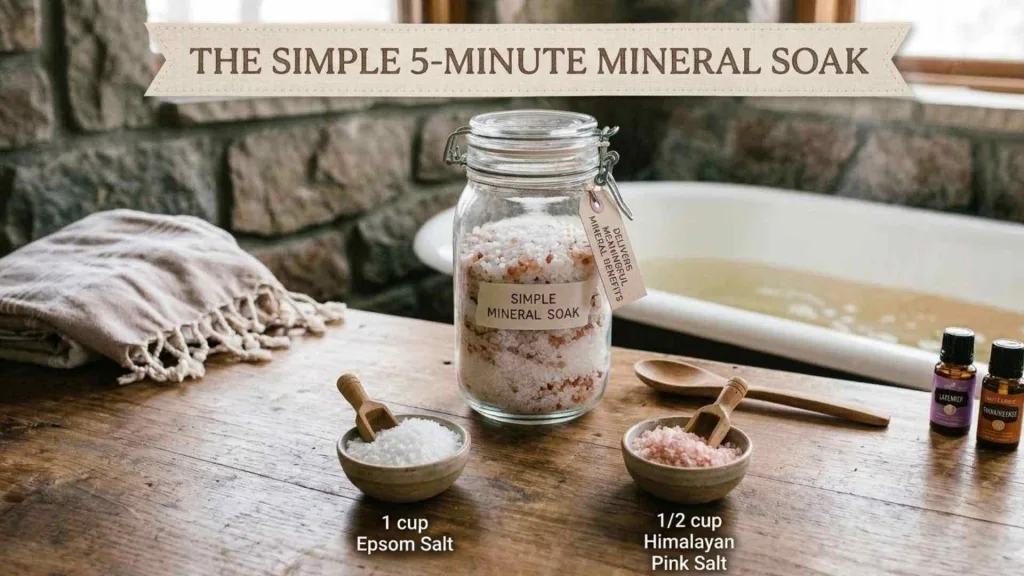
Short on time or ingredients? This streamlined recipe still delivers meaningful mineral benefits.
Ingredients:
- 1 cup Epsom salt
- ½ cup Himalayan pink salt (or replace both with 1½ cups Dead Sea salt)
- 2 teaspoons jojoba oil
- 5–10 drops of essential oils
Instructions: Combine salts in a bowl. Mix essential oils into the jojoba oil, then stir the oil blend into the salts. Store in a sealed jar. Add ¼ to ½ cup to bath water and soak for 20–30 minutes. For a foot soak, add 4 tablespoons to a warm basin and soak for 15 minutes.
The Hot Spring Inspired Mineral Bath
This three-ingredient formula was designed specifically to mimic the mineral composition of natural hot springs and is a great starting point for beginners.
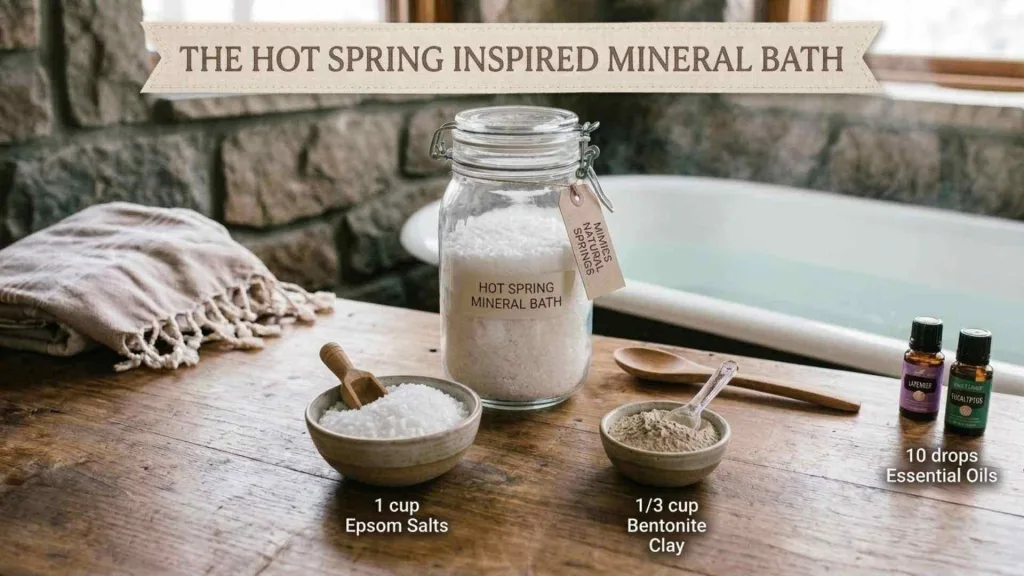
Ingredients:
- 1 cup Epsom salts
- ⅓ cup bentonite clay
- 10 drops essential oils of choice
Instructions: Mix all ingredients in a bowl using a non-metal spoon. Add the mixture to a full, hot bath and stir to dissolve. Soak for 20–30 minutes.
5 Customizable Bath Salt Blends by Mood
One of the great joys of making a mineral bath at home is customization. Your soak can be tailored to how you are feeling on any given day.
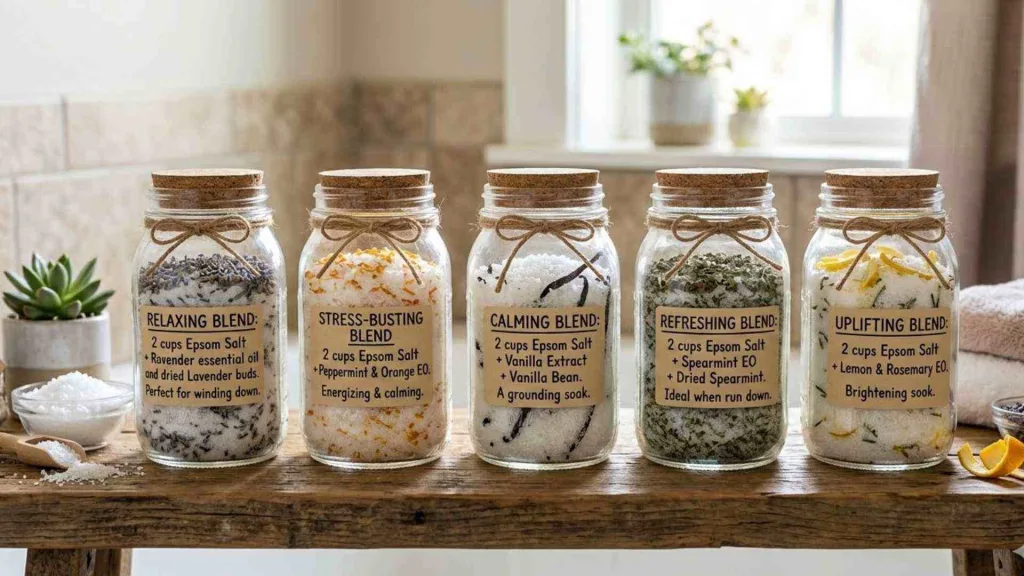
- Relaxing blend: 2 cups Epsom salt + rosemary essential oil + dried lavender. Perfect for winding down after a long week.
- Stress-busting blend: 2 cups Epsom salt + peppermint and/or orange essential oil. Energizing and calming at once.
- Calming blend: 2 cups Epsom salt + vanilla extract + vanilla bean. A grounding soak for high-intensity days.
- Refreshing blend: 2 cups Epsom salt + spearmint essential oil + dried spearmint leaves. Ideal when you feel run down or depleted.
- Uplifting blend: 2 cups Epsom salt + lemon and rosemary essential oils. Brightening for low-mood days.
Health Benefits of a Regular Mineral Bath at Home
Research in balneology has validated many of the traditional health claims around therapeutic bathing. Here is what a consistent mineral soak practice may support:
- Muscle and joint relief — Magnesium and sulfate penetrate muscle tissue and may reduce inflammation and cramping, making mineral baths particularly valuable for athletes, those with arthritis, or anyone with chronic pain.
- Stress and anxiety reduction — Magnesium plays a direct role in regulating the nervous system. Low magnesium is associated with heightened anxiety and poor sleep; replenishing it transdermally can promote a calmer state.
- Skin health — The combination of salts, clay, and oils can soften rough skin, reduce the appearance of eczema and psoriasis flare-ups, support healthy pore function, and leave skin feeling nourished.
- Lymphatic support — Warm water promotes circulation and may encourage lymphatic flow, helping the body move out waste products more efficiently.
- Detoxification — Bentonite clay actively draws toxins through the skin, while the warm water helps open pores and encourage the release of impurities.
- Improved sleep — A warm bath taken 1–2 hours before bed, combined with magnesium absorption, can support deeper and more restful sleep.
- Mineral replenishment — For those with gut health issues that impair nutrient absorption, transdermal mineral uptake offers an alternative path to correcting deficiencies.
How to Recreate the Hot Spring Experience at Home
If you have ever visited a natural soaking destination and wondered how to capture that feeling between trips, the key lies in both the ingredients and the environment you create. Here are a few tips:

Set the Temperature Right
Natural hot springs range from warm to very hot, typically between 98°F and 104°F (37–40°C). Fill your tub as hot as you comfortably can without straining your cardiovascular system. The heat helps dilate blood vessels, opens pores for mineral absorption, and deepens the relaxing effect.
Limit Your Soak Time
Aim for 20–30 minutes per session. Beyond that, the benefits plateau and some people begin to feel lightheaded from the heat and mineral activity. Drink a glass of water before and after your soak to stay hydrated.
Create the Ambiance
Part of what makes a hot spring feel so healing is the environment — open air, natural sounds, stillness. Recreate that at home with low lighting, candles, soft music or nature sounds, and a phone-free zone. The mental shift is part of the medicine.
Rinse After, But Gently
After your soak, rinse your body with warm (not cold) water to remove any clay residue. Pat dry rather than rubbing, and apply a light moisturizer or body oil while your skin is still slightly damp to lock in hydration.
Tips, Safety Notes & Storage
- Always stir bentonite clay with a wooden or plastic spoon — metal reduces its efficacy.
- If you add dried herbs to your bath, scoop them out when finished to avoid plumbing buildup.
- Essential oils should always be diluted in jojoba or another carrier oil before adding to bathwater, especially for those with sensitive skin.
- Pregnant women, breastfeeding mothers (who may want to avoid mint essential oils), people with heart conditions, and those on medication should consult a healthcare provider before using intensive mineral baths.
- Homemade bath salts store well in glass jars in a cool, dry location. For best potency, use within 6 months.
- If any ingredient causes skin irritation, discontinue use and substitute with a gentler alternative.
Final Thoughts
A mineral bath at home is one of the most accessible, affordable, and genuinely therapeutic self-care rituals available to anyone with a bathtub. Rooted in thousands of years of balneological tradition and backed by modern science, a well-formulated mineral soak works on multiple levels — replenishing nutrients, easing physical tension, supporting detoxification, and calming the nervous system all in a single 20-minute session.
Whether you build a complex five-ingredient blend or keep it simple with Epsom salt and a few drops of essential oil, the fundamentals remain the same: warm water, the right minerals, and a little intentional time for yourself.
And if a mineral bath at home leaves you craving the real thing, there is no better motivation to plan a visit to a natural soaking destination near you.