Seven days, five states of mind, one common thread: warm mineral water pulling road-weary travelers out of their cars and into something older than any itinerary. This route strings together some of the best hot springs in the US, starting in Colorado’s Rocky Mountains and finishing in Idaho, with detours reaching into Oregon, California, and Montana.
The plan favors natural hot springs over chlorinated spa circuits, though a few developed resorts earn their spot for convenience and reliable soaking pools. Expect a mix of geothermal river pools, private tubs, and family-friendly resort decks, each with its own rhythm and rules.
Pack layers, a headlamp for after-dark soaks, and patience for mountain roads. What follows covers water temperature ranges where published, best seasons, access notes, and a nearby place to sleep.
Key Takeaways
- This 7-day route links five of the best hot springs in the US across Colorado and Idaho, with side stops in Oregon, California, and Montana.
- Each stop includes water temperature, best season, access notes, and a nearby place to stay.
- You’ll learn how to plan drive times, avoid crowds, and soak safely along the way.
- A comparison table lets you scan location, temperature, and amenities before you pack the car.

Plan Your Route: Mapping the Colorado-to-Idaho Soak Circuit
This road trip covers roughly 700 miles one way, threading through the Rocky Mountains before dropping into southeastern Idaho. Budget seven days minimum, with two nights at the Colorado anchor stops.
Glenwood Springs to Mount Princeton Hot Springs runs about 3 to 4 hours depending on route and stops. Strawberry Park adds a full mountain day, ideally with an overnight break rather than a rushed same-day push.
Many travelers pair this circuit with nearby national park detours, since Colorado’s high country sits close to several. Building in one buffer day protects against weather delays and crowded trailheads at backcountry hot springs.
Quick-Reference Table: Temperatures, Fees, and Amenities Across the Route
Use this table to compare access rules and pricing before finalizing your road trip stops. Several official temperature figures were not publicly available at the time of research, so verify current conditions before departure.
| Spring | Location | Access | Day Pass |
| Glenwood Springs | Colorado | Daily, 8 a.m.–10 p.m. | $38–$58 adults |
| Mount Princeton | Colorado | Daily, 9 a.m.–9 p.m., no reservation | $40–$65 adults |
| Strawberry Park | Colorado | Reservation required, cash only | $20 (2-hour block) |
| Lava Hot Springs | Idaho | Open 363 days a year | $8–$10 |
Day 1-2: Glenwood Springs, Colorado
Glenwood Hot Springs Resort sits along the Colorado River, backed by canyon walls and easy interstate access. It’s the most family-friendly stop on this route, with a dedicated splash zone included at no extra fee.
Access and Season
The pools stay open daily from 8 a.m. to 10 p.m., though the resort occasionally closes for maintenance. Spring through fall brings the liveliest atmosphere, while winter offers a quieter, steam-rising soak against snow.
Where to Stay
Book lodging within walking distance of the resort to skip parking hassles. Several nearby cabins and hotels cater specifically to hot springs resort guests, with early check-in options worth requesting.
Day 2-3: Mount Princeton Hot Springs, Colorado
Mount Princeton Hot Springs Resort sits at the base of a 14,000-foot peak in the Arkansas Valley, with the Chalk Creek tumbling past the pools. The setting mixes developed soaking pools with rougher rock-lined creek pools upstream for those wanting a wilder soak.
The resort keeps the hot springs open year-round, and guests can leave and re-enter from 9 a.m. to 9 p.m. without losing their spot. An infinity pool runs Friday through Sunday, 10 a.m. to 5 p.m.
Access and Season
No reservation is required for day passes, though published 2026 pricing varies by source, so confirm current rates before arrival. Weekdays draw fewer crowds than summer weekends, when the water slide and lodge fill quickly.
Where to Stay
The resort’s own lodging and cabins put guests steps from the pools, useful for a second early-morning soak before departure.
Day 3-4: Strawberry Park Hot Springs, Colorado
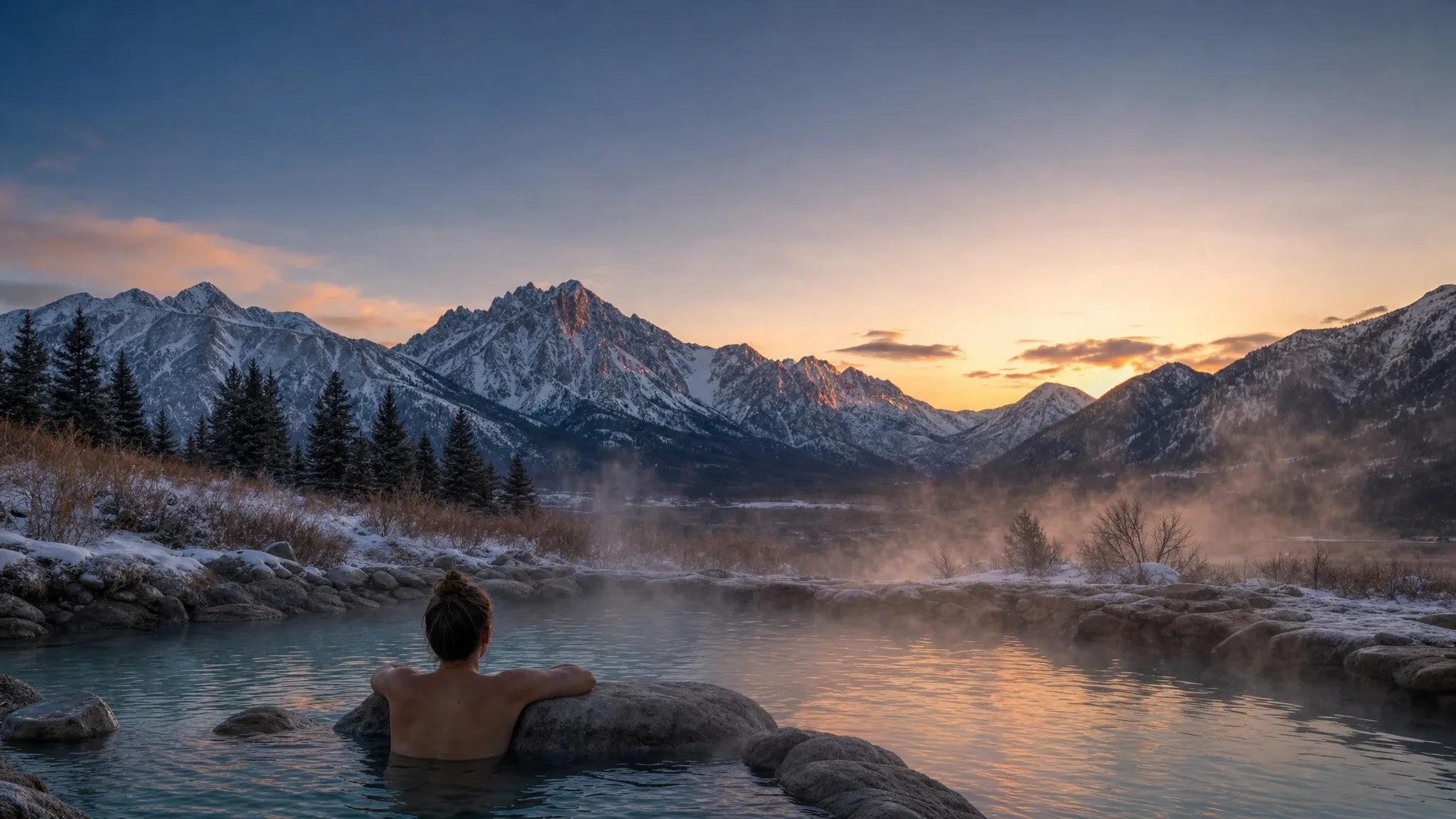
Tucked in the hills above Steamboat Springs, Strawberry Park trades resort polish for rock-lined pools fed by a mountain creek. It is one of Colorado’s most photographed natural hot springs, especially with snow on the banks.
The springs stay open 365 days a year. Sunday through Thursday hours run 10 a.m. to 10 p.m., with last entry at 8 p.m.; Friday and Saturday extend to midnight, last entry 10 p.m.
Access and Season
Reservations are mandatory through the official website, admission runs a flat rate for a two-hour block, and payment is cash only with no ATM on site. After dark, the springs turn adults-only. Winter access often requires four-wheel drive or a shuttle.
Where to Stay
Rustic cabins and covered wagons near the springs suit travelers who want to skip the drive back to town after a late soak.
Day 5: Crossing Into Idaho via Wyoming and Utah
Leaving Colorado’s high country, the route runs north through Wyoming before dropping into Utah and up into southeastern Idaho. It is a long driving day with sweeping basin-and-range scenery rather than soaking stops.
Fuel up and rest well; this stretch trades hot springs for highway miles, setting up the final leg of the road trip into Idaho’s geothermal country.
Day 5-6: Lava Hot Springs, Idaho
Lava Hot Springs sits in a small Idaho town built almost entirely around its mineral-rich waters. The public hot pool complex feels more communal plaza than backcountry escape, with several linked soaking pools of varying heat.
The complex stays open to the public 363 days a year, closing only for Thanksgiving and Christmas.
Access and Season
High season hours run 8 a.m. to 11 p.m., May through September; winter hours shift to 9 a.m. to 10 p.m. One-time entry pricing ranges roughly $7.50 to $10 depending on age and day of the week. No day pass reservation system currently applies to the public pools.
Where to Stay
Downtown Lava Hot Springs offers walkable lodging and cabins, letting travelers soak, eat, and sleep within a few blocks after a long drive.
Day 6-7: Nearby Detours Worth the Extra Miles (Oregon, California, Montana)
Travelers with an extra day or two can stretch this road trip into a wider loop through three more geothermal regions. Each offers a different flavor of soaking than Colorado or Idaho, from backcountry pools to coastal mineral pools.
Oregon’s Backcountry Soaks
Central and eastern Oregon hold some of the most remote backcountry hot springs in the West, often reached by gravel roads and short hikes. These are undeveloped soaking pools with no facilities, so travelers should pack water, a headlamp, and a plan for changing weather.
California’s Coastal Mineral Pools
Northern California pairs redwood forest with clothing-optional mineral pools near the coast, drawing a wellness-minded crowd rather than families. Several small hot springs resort properties there lean into spa treatments, making this detour better suited to couples than kids.
Montana’s Rocky Mountain Hot Springs
Montana’s stretch of the Rocky Mountains hides developed pools and rustic soaking pools alike, many near fly-fishing rivers. Combined with Yellowstone’s geothermal features nearby, this detour turns a soak-focused trip into a broader national park itinerary.
Safety, Health Precautions, and Who Should Skip the Soak
Natural hot springs feel restorative, but the same minerals and heat that soothe sore muscles can strain a body that isn’t prepared for them. Anyone with heart conditions, low blood pressure, or who is pregnant should talk to a doctor before soaking, since high water temperature raises heart rate and can cause dizziness.
Alcohol and hot water are a poor combination, and dehydration sets in faster than most soakers expect. Limiting sessions to fifteen or twenty minutes, with breaks to cool down, keeps the experience relaxing rather than risky.
Algae and Bacteria Risks
Warm, mineral-rich water can host organisms like naegleria, a rare but serious amoeba linked to some undeveloped hot springs. The risk rises when water enters the nose, so keeping your head above water in untreated pools is a sensible precaution.
- Avoid submerging your head in backcountry or untreated soaking pools.
- Skip the soak entirely with open wounds, fever, or a compromised immune system.
- Check posted water temperature signs; anything above 104°F warrants shorter sessions.
Permits, Reservations, and Avoiding Crowds at Popular Springs
Several stops on this route now require advance planning rather than a spontaneous pull-off. Strawberry Park operates on a mandatory reservation system with a fixed two-hour block, and arriving without one means turning around. Building reservations into the itinerary before departure avoids a wasted afternoon.
Mount Princeton and Lava Hot Springs currently welcome walk-ins, but summer weekends still bring long waits at the gate. A weekday visit or an early-morning day pass purchase generally means shorter lines and a quieter soak.
Backcountry Hot Springs Etiquette
Undeveloped pools run on an honor system rather than a ticket booth. Sharing space quietly, limiting group size, and avoiding glass containers near the water protects both the experience and the resource for the next traveler.
Leave No Trace: Protecting Fragile Hot Spring Ecosystems
Hot springs support delicate microbial life and mineral formations that took centuries to form, and heavy foot traffic damages both quickly. Staying on marked trails between soaking pools prevents erosion around fragile geothermal features.
Pack out everything brought in, including food scraps that draw wildlife toward popular soaking areas. Avoid soap, sunscreen, or lotion in natural pools, since these chemicals disrupt the mineral balance that gives each spring its character. Small habits, repeated across thousands of visitors, decide whether these places stay open to the public.
Best Hot Springs in the US: Honorable Mentions Beyond This Route
Two stops fall outside this itinerary’s geography but deserve a place on any serious list of the best hot springs in the US. Hot Springs National Park in Arkansas protects thermal water inside a historic bathhouse district, blending geothermal heritage with a genuine national park setting. In West Texas, Big Bend National Park offers a riverside soak against desert cliffs, a striking contrast to Colorado’s alpine backdrops. Both merit their own future road trip.
Where Serious Soakers Go Next
Once the Colorado-to-Idaho loop feels familiar, many travelers start eyeing the world’s legendary thermal regions. Iceland’s geothermal lagoons, Japan’s onsen towns, Hungary’s thermal bathhouses, and Turkey’s ancient mineral pools each offer a different soaking culture worth experiencing firsthand. For some devoted soakers, the hobby eventually becomes a lifestyle rather than an annual trip, with extended stays built around Europe’s spa regions. Anyone weighing a longer-term base near that world’s thermal heartland may want to speak to Global Residence Index about what that transition could look like. The road trip habit, it turns out, rarely stays confined to one continent.