A hot spring holiday can offer more than a choice of pools. In Tengchong, western Yunnan, bathing can sit alongside an introduction to geothermal landscapes and the stories of a historic trading town.
For travellers planning a China escape around warm water and quieter days, Tengchong provides a useful focus. Choose accommodation that suits the way you want to bathe, then leave room for a few outings that explain the setting.
A four-night stay is one possible starting point: an arrival afternoon, three full days and a departure morning, with enough flexibility to adjust plans around the weather and your interests.
Begin With the Landscape Behind the Water
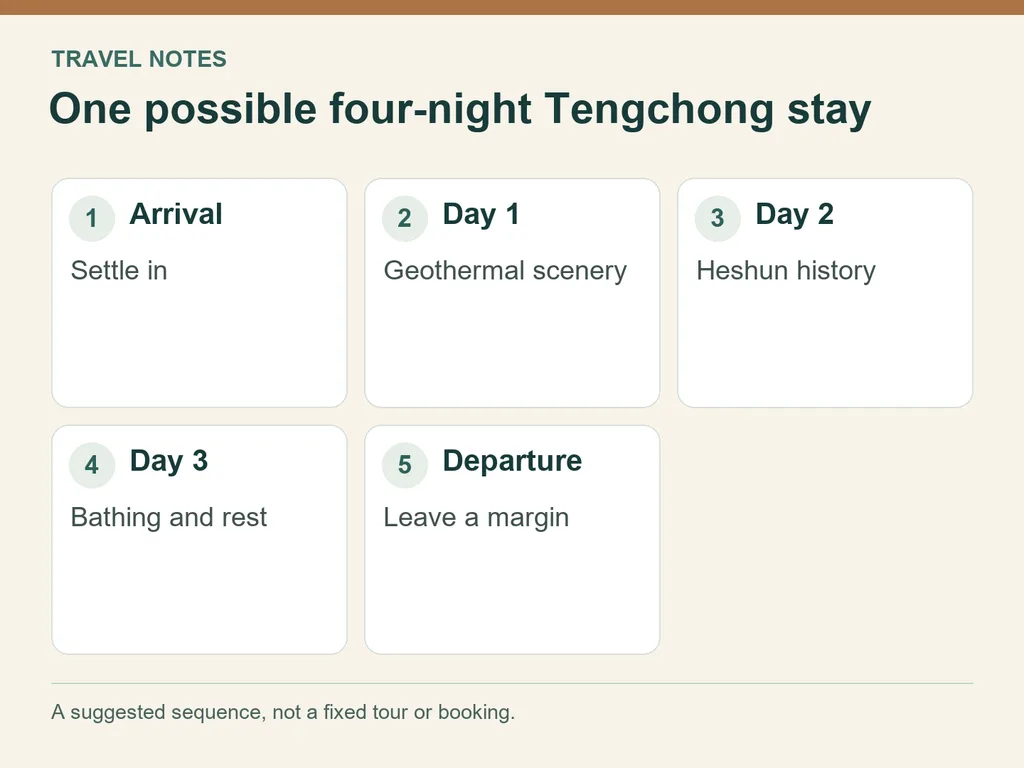
A hot-spring holiday can combine scenery, managed bathing and time to rest.
Tengchong’s hot springs are connected to the area’s volcanic and geothermal activity. Rehai, one of its best-known geothermal scenic areas, contains steaming ground, hot springs and boiling-water features.
Understanding that variety helps when planning a visit. A spring you admire from a viewing path serves a different purpose from a managed bathing pool. Seeing geothermal activity up close can make a later soak more interesting, but sightseeing and bathing should be arranged as distinct experiences.
Ask your accommodation to explain the local options. Find out which places offer bathing, which are primarily scenic visits and what each booking includes. That conversation can prevent you from arriving with a swimsuit at a place you intended to explore on foot.
Choose Your Bathing Style Before Booking
Start with a practical preference: would you enjoy shared facilities, a private pool attached to your accommodation or a combination of both?
Banyan Tree Tengchong, in the Mayugu hot spring area, is one option for travellers considering a private bathing stay. Its accommodation includes a Hot Spring Garden Villa with a garden pool and architecture drawing on traditional local forms.
Compare the exact room category rather than relying on the property’s general description. Ask where the pool is located, how it is filled, what temperature controls are available and whether use is included in the room rate.
For shared facilities elsewhere, confirm opening arrangements, changing areas, towel provision and any reservation requirements. If you are travelling with children, check age restrictions and access rules directly.
These details shape the experience as much as the setting. Privacy, convenient access and a comfortable place to sit between baths may matter more to you than a long list of facilities.
Give Rehai a Morning of Its Own
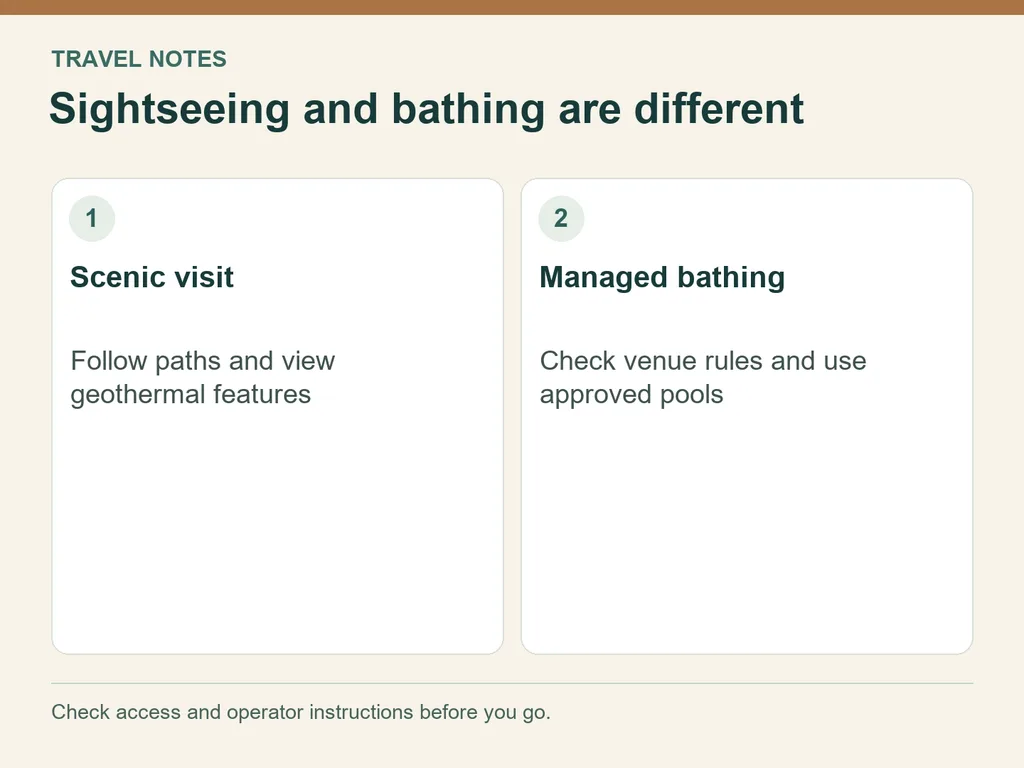
Check where bathing is permitted before entering the water.
Reserve one morning for Rehai’s geothermal scenery. The local tourism authority describes an area of high-temperature springs and steam vents, offering a striking introduction to the forces beneath Tengchong.
Follow the designated visitor paths and respect barriers around geothermal features. Use only areas explicitly provided for bathing; the appearance of a natural pool does not establish that it is suitable to enter.
Before travelling, check the current visitor route, admission arrangements and the amount of walking involved. Ask whether steps or steep sections will affect anyone in your party.
Keep the afternoon lightly planned. You might return to your accommodation for lunch, read for a while or simply enjoy having no immediate appointment. A hot spring trip benefits from time outside the water, too.
Spend Another Day With Heshun’s History
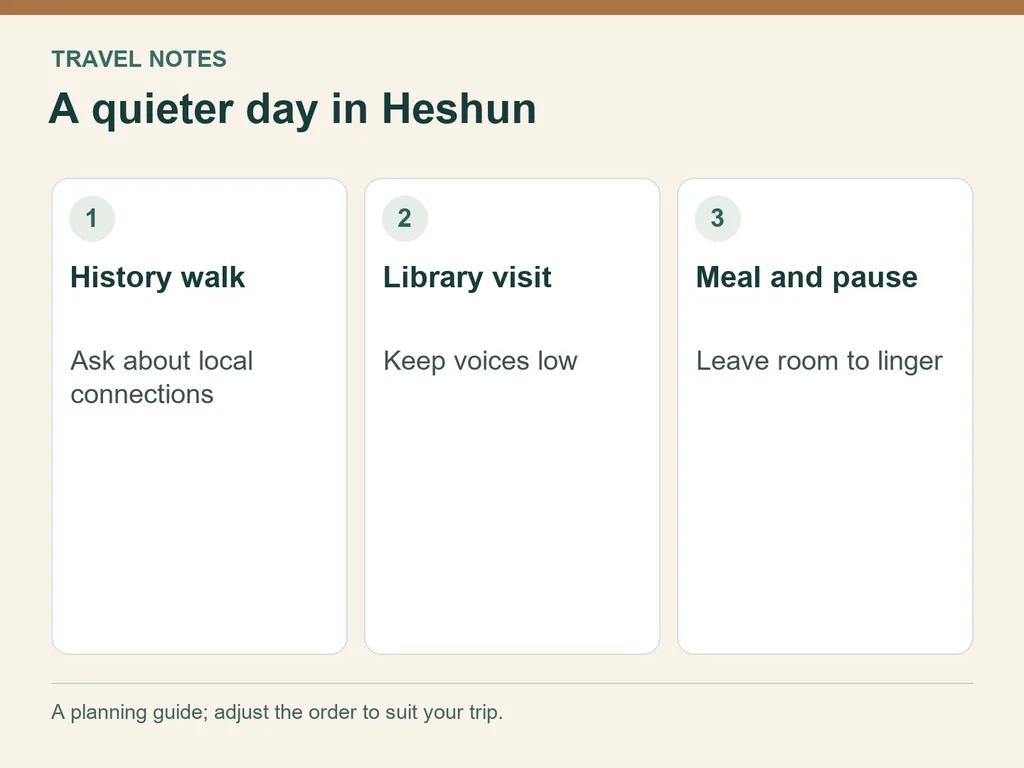
Plan a quiet Heshun visit around history, reading and a meal.
Heshun Ancient Town adds a cultural dimension to a bathing holiday. Its lanes, historic homes and community buildings reflect connections between local residents and Chinese communities overseas.
One particularly interesting stop is Heshun Library. Established in 1928 with support from overseas Chinese associated with Myanmar, it provides a tangible example of people investing in education in their hometown.
Ask a guide about those connections and how they influenced local architecture and everyday life. A short, informed walk can give you more to notice than trying to cover every landmark.
Check current access to the buildings you want to enter, and remember that the library remains a place for readers. Keep conversations quiet and follow its photography instructions.
Leave time for a meal and a pause before returning. The change from geothermal scenery to a lived-in historic town gives the stay welcome variety.
Keep the Bathing Routine Simple
Pack swimwear suitable for the venue, non-slip footwear where permitted, a water bottle and a bag for damp items. Confirm whether your accommodation supplies robes and towels before filling your luggage with extras.
Follow the operator’s instructions on showering, pool use and time in the water. Take breaks and avoid turning the visit into an attempt to try every pool.
If you want a massage or another spa service, book it separately and ask exactly what it includes. Keep photography considerate, particularly around changing areas and other guests.
Prepare the China Journey Early
Review current entry requirements for each traveller’s passport, purpose, length of stay and route. Use the Chinese embassy or consulate guidance relevant to your circumstances to confirm whether a visa or an applicable exemption covers the journey.
For a Tengchong holiday that requires an L visa, eligible applicants can arrange tourist visa assistance in Los Angeles through China Visa Depot. Confirm that your residence falls within the Consulate’s jurisdiction, and ask what the preparation and document-review service includes before planning around passport return.
Then settle arrival transfers, mobile connectivity and payment arrangements. Keep accommodation details accessible in Chinese as well as English.
With the practical work done, Tengchong offers a satisfying rhythm: an outing that sparks curiosity, a meal worth lingering over and time to return to the water without rushing towards the next stop.