Hot spring travel exposes your body to high temperatures, raw minerals, and unpredictable environments. You get in the water. Your core temperature rises. Pathogens and sulfur interact with your eyes. You risk dehydration, ruined camera gear, and bacterial infections if you ignore basic preparation. Natural geothermal pools are highly active chemical environments, not sterilized hotel bathtubs. Travelers who treat them like municipal swimming pools end up with ruined electronics, severe eye irritation, and a miserable hike back to the car.
The Geothermal Equation
Nature is not a controlled spa. That is the first mistake. Travelers see a curated photo of a steaming pool in the mountains and expect a perfectly sanitized luxury experience. The reality is raw geology. Ground water heated by magma. Microorganisms. Unfiltered sulfur. You sit in this water. Your pores open. Your body absorbs the chemical makeup of the earth.
When you spend hours tracking down the best hot springs in the States, you are signing up for an untamed biological encounter. The water contains high concentrations of silica, calcium, and sodium bicarbonate. These elements strip oils from your skin and hair. They alter your internal temperature regulation. The steam carries mineral particulate directly into your respiratory system and ocular cavities. You feel relaxed because the heat dilates your blood vessels, lowering your blood pressure and forcing your muscles to release tension. But the environment is actively challenging your body’s homeostasis.
You need specific gear. You need exact hydration protocols. You need to understand the microbiology of the water you are sitting in.
Why Do Hot Springs Cause Eye Irritation?
Geothermal steam is a volatile mix. It carries sulfur dioxide and hydrogen sulfide. These compounds mix with the moisture in your eyes. The result is mild sulfuric acid. Your eyes turn red. They itch. They water profusely.
Amateurs panic. They assume permanent damage. But the red eyes myth dictates that most of this redness is simple, reversible conjunctival irritation rather than irreversible optical destruction. The blood vessels in your sclera expand to bring more oxygen and antibodies to the surface to fight off the foreign mineral particulate. It looks terrible. It feels uncomfortable. It is a standard physiological defense mechanism.
However, natural pathogens are a separate issue entirely. Geothermal pools in the wild are stagnant warm water sources. They breed bacteria. According to data on waterborne pathogens, recreational water illnesses cause up to 7.2 million infections annually in the United States. Naegleria fowleri, Acanthamoeba, and Pseudomonas aeruginosa thrive in warm freshwater. If you dunk your head underwater in a wild spring, you invite these organisms directly into your corneas and nasal passages.
Keep your head above the surface.
Do not touch your eyes with wet hands.
Flush your eyes with sterile saline immediately after soaking.
Bacterial conjunctivitis requires antibiotics. Chemical conjunctivitis from sulfur requires time and artificial tears. Know the difference.
How Do You Safely Record Your Trip Without Ruining Your Gear?
You want photos. Everyone does. The marketing machine of the travel industry runs on visual proof. But holding a $1,200 smartphone over a boiling, acidic pool is amateur hour. One slip, and the phone is a brick. The ambient humidity near a hot spring sits near 100%. Condensation forms inside the camera lens. The sulfur in the air corrodes exposed charging ports within hours.
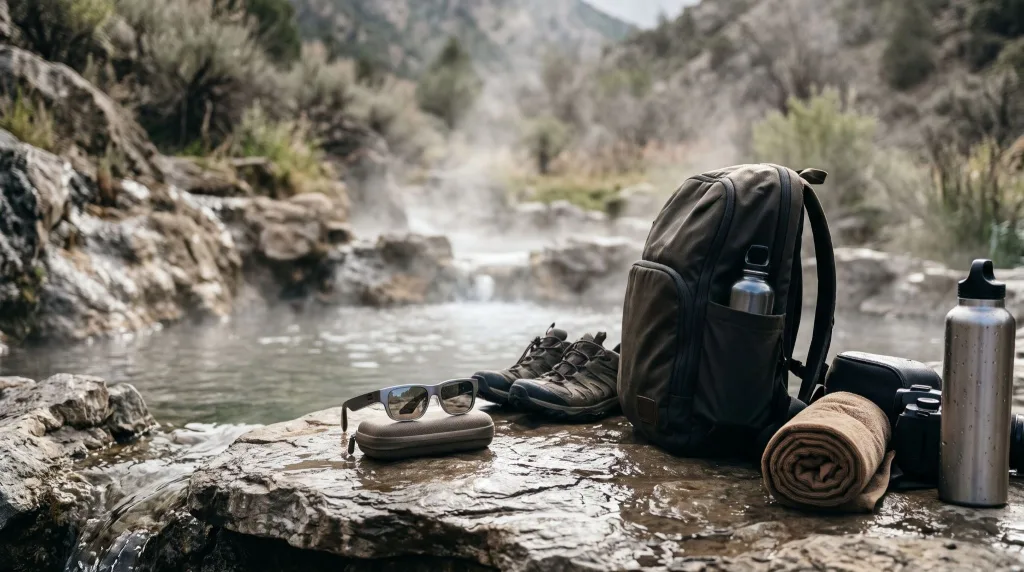
You need hands-free capture mechanisms that protect your primary communication device. Wearables solve this. You secure your phone in a waterproof dry bag on the shore. You wear AI glasses with a camera for travel. These devices allow you to document the environment without risking your primary hardware. You look at the mountains. The glasses record the exact POV. You speak a command. The glasses snap a photo.
This is the only logical way to capture geothermal environments. Your hands remain free to grip slippery rocks. Your expensive smartphone stays dry and protected from corrosive steam. The tech operates seamlessly in the background.
Wearable recording devices are not novelties. They are risk mitigation tools for hostile travel environments.
What Minerals Are Actually in the Water?
Balneotherapy is the clinical study of disease treatment through bathing. It sounds like pseudoscience. It is not. The mineral composition of geothermal water dictates exactly how your body will react.
Silica: Rough on the eyes, excellent for the skin. Silica smooths rough dermal layers and acts as a mild exfoliant.
Sulfur: Smells like rotting eggs. Highly antibacterial. It reduces joint inflammation but rapidly accelerates the tarnishing of silver jewelry.
Calcium and Sodium Bicarbonate: These increase circulation. They help lower blood pressure temporarily.
The absorption rates are measurable. Clinical studies on balneotherapy confirm that mineral absorption through the skin significantly impacts inflammatory markers. The heat opens the pores. The hydrostatic pressure of the water forces the minerals into the epidermal layers. This is why you feel physically exhausted after a thirty-minute soak. Your body just ran a chemical marathon while you sat perfectly still.
You do not rinse off immediately after leaving a mineral spring. You let the water dry on your skin. You let the minerals sit.
What Are the Biggest Mistakes Novice Soakers Make?
The mistakes are predictable. They stem from arrogance and poor planning.
Drinking Alcohol in the Water
Alcohol is a vasodilator. Hot water is a vasodilator. Combine them, and your blood pressure crashes. You stand up. The blood drains from your head. You pass out and hit your skull on a wet, jagged rock. Stick to water. Drink a liter before you get in. Drink a liter when you get out.
Ignoring Baseline Eye Conditions
If you already have dry eye syndrome or wear soft contact lenses, a hot spring will exacerbate the issue rapidly. Soft contacts act like sponges. They will absorb the sulfur, the bacteria, and the heat. The American Academy of Ophthalmology recommends strict hygiene and specific eye care routines when traveling to harsh environments. Remove your contacts before you get in. Wear prescription sunglasses instead. Global vision impairment statistics emphasize that minor preventable infections often cascade into serious visual deficits if ignored.
Overstaying the Thermal Limit
Your body cannot sweat underwater. Your core temperature rises continuously. Twenty minutes is the maximum recommended time for water over 102°F (38.8°C). Get out. Sit on the edge. Cool down. Get back in. The heroes who try to sit in a 106-degree pool for an hour usually require medical evacuation.
How Should You Prepare for Remote Geothermal Locations?
Most commercial springs have lockers, cafes, and paved parking lots. Wild springs have none of these. They demand rigorous logistical preparation. You are walking into the wilderness to sit in a puddle of hot water. Act accordingly.
Force yourself to answer uncomfortable questions about your physical readiness. Can you hike three miles uphill in the snow? Can you change a tire on a dirt road without cell service?
Your packing list must be ruthlessly efficient.
Two towels. One for sitting on dirty rocks. One for drying off.
Heavy-duty trash bags. Pack out everything you bring in. Including your wet, sulfur-smelling swimsuit.
Waterproof headlamp. Hiking out in the dark after a sunset soak is dangerous without illumination.
Slip-on water shoes. The ground around natural springs is usually a mixture of sharp stones, broken glass from previous irresponsible visitors, and slippery algae.
Sterile eye drops. To flush the sulfur immediately upon exiting the water.
You build the itinerary around the limitations of the environment. You arrive early to beat the crowds. You check the weather for flash flood warnings. You inform someone of your exact coordinates before you lose cell service.
Nature owes you nothing. The water will boil you if you let it. Protect your eyes. Secure your tech. Respect the geology.