
Crispy Roasted Root Vegetables Recipe – Easy Holiday Sides

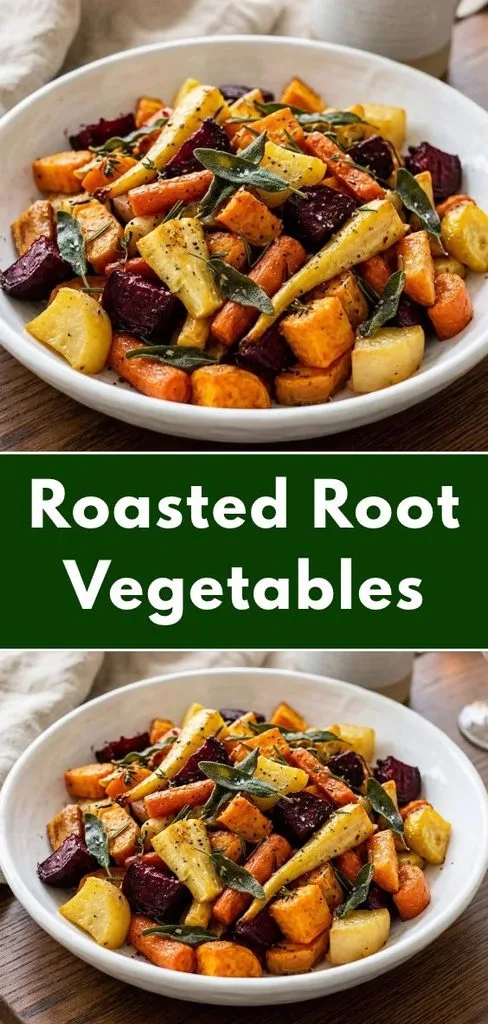
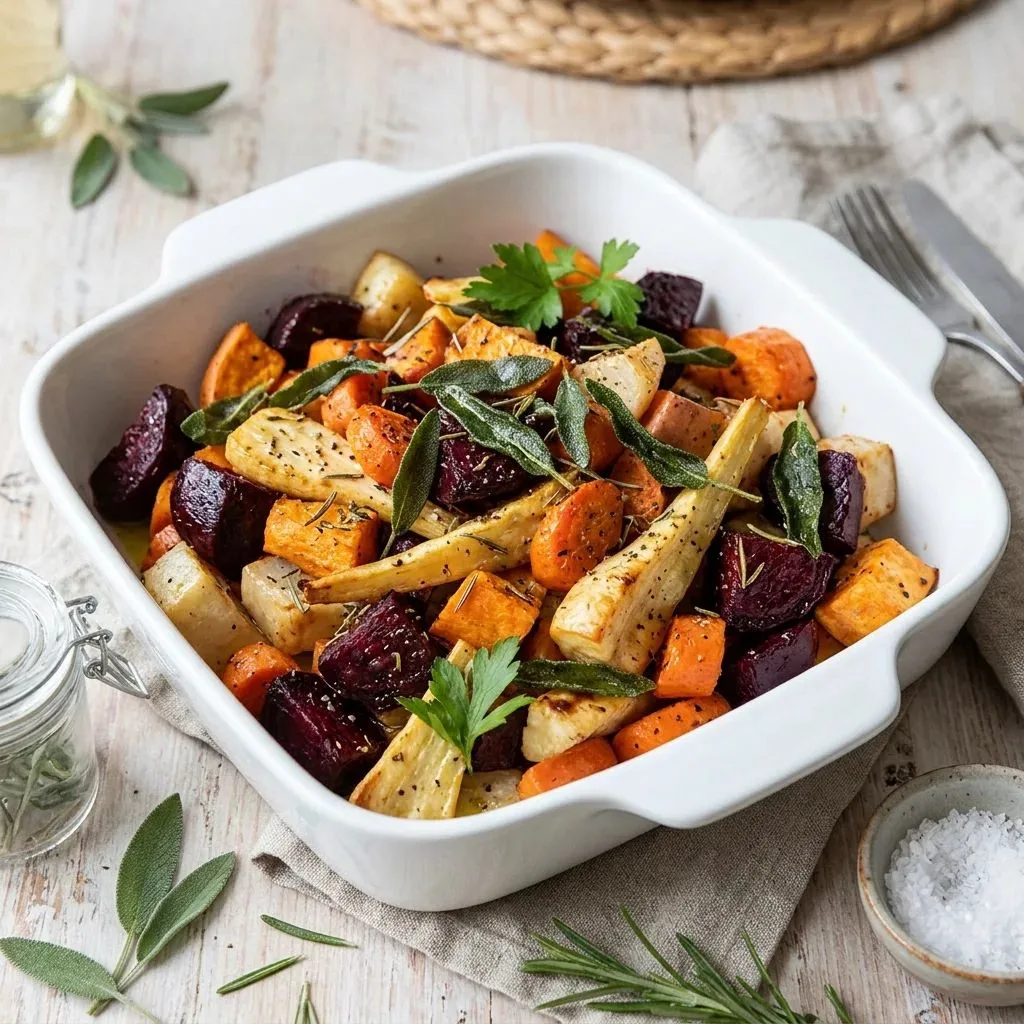
I made this Roasted Root Vegetables Recipe last weekend, and my kitchen smelled like a cozy autumn dream. The carrots, beets, and parsnips came out sweet, tender, and beautifully browned at the edges. A little sage oil and a handful of crispy sage leaves took them from simple to special.
I went back for seconds, and so did everyone at my table. If you want a roasted root vegetable medley that looks fancy but feels easy, this is the one I’d make again and again.
Cooking Time
Here is how long this recipe takes from start to finish, so you can plan your meal with ease.
- Prep Time: 15 minutes
- Cooking Time: 45 minutes
- Total Time: 1 hour
Ingredients
Everything here is simple, affordable, and easy to find at a regular grocery store. Each ingredient plays a clear role, so I’ve added a quick note beside it.
- 2 beets, ideally 1 red and 1 golden, peeled and cut into 1-inch chunks: They add deep color and earthy sweetness.
- 1 large carrot, roll cut into 1-inch chunks: Roll cuts give you more surface area for browning.
- 3 parsnips, cut into 1-inch chunks: They turn nutty and sweet in the oven.
- 1 medium sweet potato, cut into 1-inch chunks: It brings creamy softness and a caramelized edge.
- 1 turnip, cut into 1-inch chunks: It adds a mild, slightly peppery bite.
- Extra-virgin olive oil, for drizzling: Coat the veggies well, since oil helps them brown instead of dry out.
- 1 tablespoon chopped fresh rosemary: Fresh herbs taste far better than dried here.
- 1 tablespoon chopped fresh sage leaves: Sage gives the dish its cozy, savory depth.
- 1 tablespoon fresh thyme leaves: Thyme adds a light, floral note that balances the earthy veggies.
- Sea salt and freshly ground black pepper: Season generously so the flavors really pop.
- 2 tablespoons extra-virgin olive oil (for the sage oil): This becomes your fragrant finishing drizzle.
- 10 fresh sage leaves: Fry them whole until crisp for a crunchy garnish.
Note: serves several (4 to 6 people)
Equipment You Need
You don’t need fancy tools for this recipe. A few basics will do the job.
- Two rimmed baking sheets: Two pans give the veggies room to roast instead of steam.
- Parchment paper: It prevents sticking and makes cleanup quick.
- Sharp chef’s knife: It helps you cut even, 1-inch chunks.
- Cutting board: A sturdy base for all that chopping.
- Vegetable peeler: It removes the beet skins fast.
- Large mixing bowl or the pans themselves: Use them to toss the veggies with oil and herbs.
- Small saucepan: You’ll fry the sage leaves and make the sage oil in it.
- Paper towels and a plate: They drain the crispy sage so it stays crunchy.
- Tongs or spatula: Handy for tossing and moving the veggies to a platter.
How to Make Roasted Root Vegetables Recipe?
This recipe moves in a few easy stages. You’ll chop, season, roast, and then finish with a quick sage oil. Follow the steps below and you’ll get tender centers and crisp, golden edges every time.
Preheat the Oven and Prep the Pans
Set your oven to 425°F so it’s fully hot before the vegetables go in. Line two baking sheets with parchment paper. This simple step saves you from scrubbing stuck-on caramelized bits later.
Wash and Chop the Vegetables
Scrub all the vegetables well. I peel the beets but leave the skins on the other roots, though peeling is totally your call. Cut everything into roughly 1-inch chunks so they cook at a similar pace.
Group the Veggies by Cooking Time
Not all root vegetables cook at the same speed. Put the beets and carrots on one pan since they take longer. Place the parsnips, sweet potato, and turnip on the second pan, because they soften faster.
Season the Vegetables
Drizzle each pan with olive oil and sprinkle on the rosemary, sage, thyme, salt, and plenty of black pepper. Toss everything with your hands or a spatula until every piece is coated. Then spread the veggies in a single layer with a little space between them.
Roast Until Golden
Slide both pans into the oven and roast for 25 to 50 minutes. Start checking at the 25-minute mark. The sweet potato pan usually finishes first, and the beets can take up to 50 minutes, so pull each pan out when its veggies are tender inside and browned outside.
Fry the Sage Leaves
While the vegetables roast, line a plate with paper towels. Heat 2 tablespoons of olive oil in a small saucepan until it bubbles, then add the 10 sage leaves. Stir and cook for about 1 minute until crisp, then move the leaves to the plate and save the oil.
Finish and Serve
Take the vegetables out of the oven and toss them with 1 tablespoon of the warm sage oil. Pile them onto a platter. Scatter the crispy sage leaves on top and serve right away while everything is warm.
Additional Tips for Making This Recipe Better
These are the small things I learned after making this dish more than once. They make a big difference in flavor and texture.
- I always use two baking sheets. When I tried one crowded pan, the veggies steamed and turned soft instead of browning.
- I check the pans at 25 minutes, not later. This helps me catch the sweet potatoes and parsnips before they get too dark.
- I cut all the pieces to the same size. Uneven chunks cook unevenly, and I end up with some hard bites and some mushy ones.
- I peel the beets but scrub the other vegetables well and keep their skins on. It saves time and adds a little rustic texture.
- I use fresh herbs only. Dried herbs just don’t give the same bright, earthy flavor here.
- I add the sage oil and crispy leaves at the very end. That way the leaves stay crunchy and the oil tastes fresh.
- I toss the beets separately if I want to keep the other veggies from turning pink. It’s an easy trick for a prettier platter.
Common Mistakes to Avoid
Root vegetables are forgiving, but a few slip-ups can leave you with pale or burnt veggies. Here’s what I’ve learned the hard way.
- Crowding the pan: I once piled everything on one tray and got soggy veggies. Use two pans and keep a single layer.
- Cutting uneven pieces: I used to chop by eye and ended up with mixed textures. Aim for 1-inch chunks.
- Roasting everything together: Beets need more time than sweet potatoes. I now group them by cooking speed.
- Waiting too long to check: I burned some parsnips once by walking away. I now start checking at 25 minutes.
- Frying the sage ahead of time: Early crispy sage goes soft. I make it just before serving for the best crunch.
How to Serve Roasted Root Vegetables?
This dish is as pretty as it is tasty. A few simple touches can turn it into a centerpiece, and it fits many meals, from weeknight dinners to big holiday spreads.
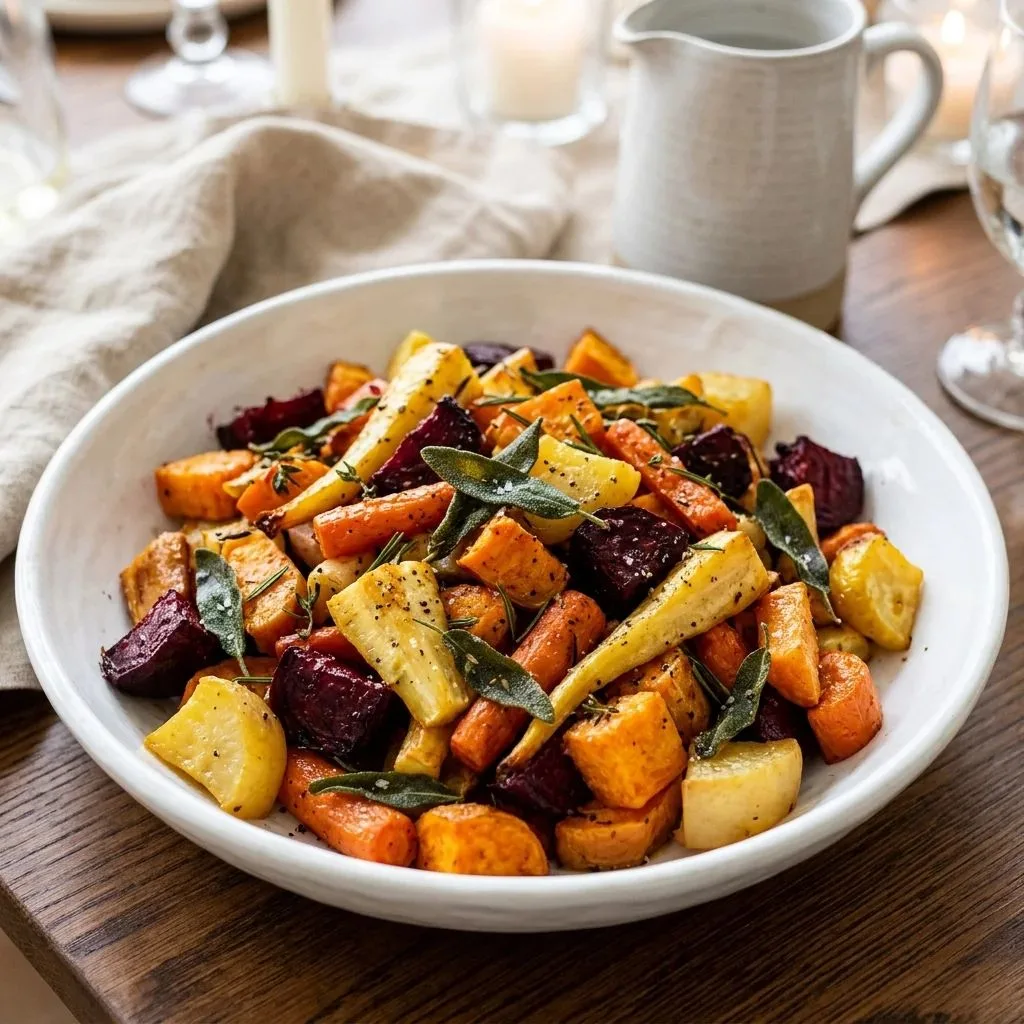
- Presentation: Pile the veggies onto a large platter so the red and golden beets, orange carrots, and pale parsnips show off their colors.
- Garnish: Top with the crispy sage leaves and a final drizzle of sage oil for shine and crunch.
- Holiday table: I love serving it with mashed potatoes and gravy, stuffing, green bean casserole, cranberry sauce, or homemade mac and cheese.
- Cozy dinners: Pair it with mushroom polenta, stuffed shells, or butternut squash risotto for a comforting weekend feast.
- Weeknight meals: Serve it next to your favorite protein for an easy, satisfying plate.
- Warm or room temperature: It tastes great either way, so it works well for buffets and potlucks.
If you’ve been wondering what to serve with roasted root vegetables, these ideas are a great place to start.
Variations
Once you have the basic method down, it’s easy to switch things up. These swaps fit different diets and tastes.
- Vegan and dairy-free: The recipe is already both, so there’s nothing to change.
- Gluten-free: It’s naturally gluten-free, as long as you check your seasonings and serving sides.
- Skip the beets: Use more parsnips, sweet potatoes, or squash, such as honey nut or delicata, if you prefer.
- Add celery root: I’d roast it on the pan with the beets and carrots since it takes longer.
- Use butternut squash or onion: These work well as extra roasting veggies, and they taste great with the herbs.
- Balsamic twist: For a roasted root vegetables recipe with balsamic, toss the cooked veggies with a splash of balsamic vinegar before serving.
- Mediterranean style: For Mediterranean roasted root vegetables, add lemon zest, garlic, and a sprinkle of oregano at the end.
- Skip the sage oil: If you can’t find sage, just leave it out, and the dish will still taste great.
Nutritional Information
Here’s a rough idea of what’s in each serving. These are my own estimates for one of six servings, so the exact numbers can shift with your vegetable sizes and how much oil you use.
- Calories: about 180
- Protein: about 3 g
- Carbohydrates: about 28 g
- Fat: about 7 g
Make Ahead and Storage
This dish is best fresh, but it holds up well when you plan ahead. Here’s how I handle leftovers and prep.
Make Ahead: I roast the vegetables a few hours before dinner and serve them warm or at room temperature. I wait to make the sage oil and crispy leaves until just before serving. That keeps the garnish crunchy.
Storage: Let the veggies cool, then keep them in an airtight container in the fridge. They stay fresh for about 3 to 4 days. Store any extra sage oil and leaves separately so the leaves don’t soften.
Reheating: I reheat the vegetables in a 350°F oven until heated through. The microwave or an air fryer also works well. The oven gives the best texture, especially if you’re warming them for a holiday meal.
Freezing: You can freeze the roasted veggies in a freezer-safe container for up to 2 months. They’ll be softer after thawing, so I like using them in soups, mash, or casseroles. I don’t freeze the crispy sage.
Why You’ll Love This Recipe?
There are plenty of reasons this dish earns a spot on my table. Here are my favorites.
- It’s easy to make. You chop, season, and roast, with very little hands-on work. The oven does the hard part, and you can focus on the rest of your meal.
- It looks gorgeous. The mix of red, golden, orange, and cream veggies makes any platter look festive. Add the crispy sage, and it feels restaurant-worthy.
- It’s budget-friendly and nutritious. Root vegetables are affordable and packed with natural goodness. You get a colorful, wholesome side without spending much.
- It fits many diets. It’s vegan and gluten-free, so most guests can enjoy it. That makes it a smart choice for gatherings.
- It’s flexible. You can swap vegetables, change herbs, or add balsamic or lemon. It works as a simple root vegetable recipe for a main course too when you pair it with grains or a creamy side.
FAQs
Do I need to peel root vegetables before roasting?
It’s up to you. I peel the beets and scrub the other vegetables well, leaving their skins on. The recipe works fine either way.
Why are my roasted root vegetables soggy?
They are probably crowded on the pan. Use two baking sheets and spread them in a single layer so they brown instead of steam.
Can I make roasted root vegetables ahead of time?
Yes. Roast them a few hours ahead and serve warm or at room temperature. Add the sage oil and crispy leaves right before serving.
Can I use other vegetables in this recipe?
Yes, you can. Celery root, butternut squash, and onions all work well. Put longer-cooking veggies like celery root on the pan with the beets.
Is this similar to Jamie Oliver’s roasted root vegetables?
Both styles rely on big chunks, olive oil, and herbs, but this version is my own with sage oil and crispy sage. I haven’t based it on his recipe, so the flavors and method differ.