Hot Springs Arkansas Weather: Best Time to Visit by Season

Hot Springs, Arkansas, is one of the South’s most captivating destinations — a city where a storied National Park, iconic bathhouses, and stunning mountain scenery converge. But before you pack your bags, understanding hot springs arkansas weather is essential. The climate here shifts dramatically across the four seasons, and knowing what to expect ensures you get the most out of every trail, thermal bath, and lakeside moment.
I’ve already covered a detailed guide on the hot springs in Arkansas — if you’re planning a soak at Bathhouse Row or exploring the region’s legendary thermal pools, that’s your starting point. This guide focuses specifically on the weather, breaking down every season so you can plan your visit with confidence.
Hot Springs, Arkansas: Climate Overview
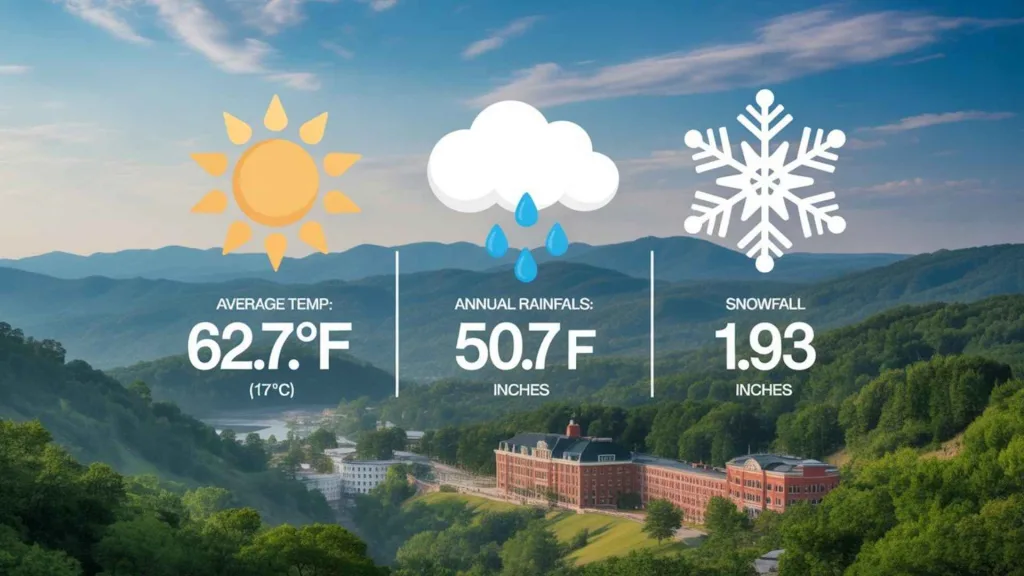
Hot Springs sits at an elevation of approximately 472 feet in the Ouachita Mountains, roughly 55 miles southwest of Little Rock. According to the Köppen climate classification, the city experiences a humid subtropical climate (Cfa) — characterized by hot, humid summers, mild winters, and year-round rainfall with no true dry season.
Key annual averages to know:
- Average annual temperature: 62.7°F (17°C)
- Annual precipitation: approximately 50.7 inches (1,287 mm)
- Annual snowfall: about 1.93 inches (49 mm) — rare and brief
- Yearly sunshine: approximately 3,017 hours
- Temperature range: from around 33°F in winter to 92°F in summer
The city receives roughly 147 days of rain per year, so a waterproof layer is never a bad idea regardless of the season. According to the National Park Service, hot springs arkansas weather is “generally fairly mild throughout the year,” though sudden weather changes — including severe thunderstorms and occasional tornadoes — are possible, especially in spring.
Spring Weather in Hot Springs, Arkansas (March – May)
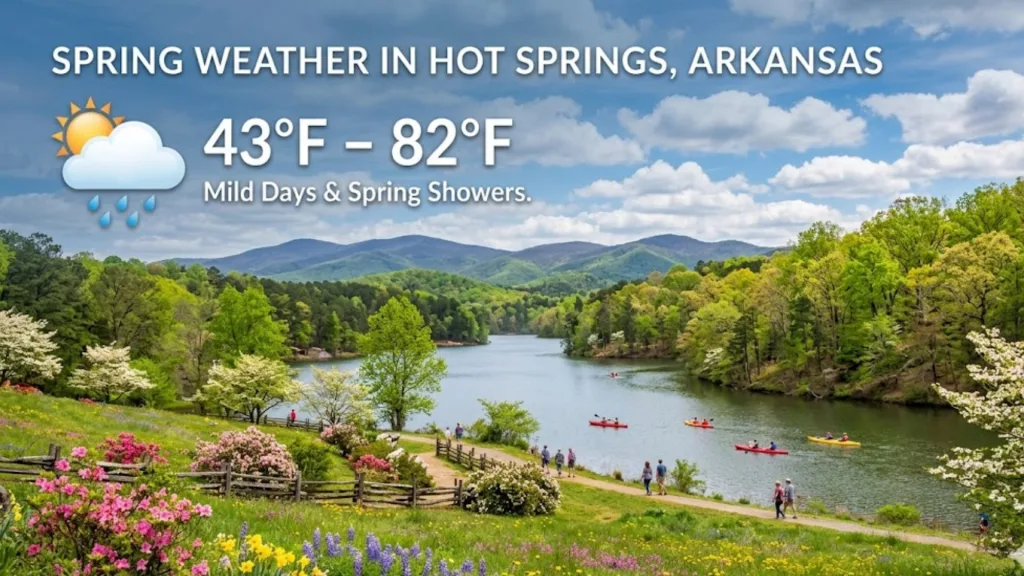
Spring is the most scenic time to visit Hot Springs. Temperatures range from lows of 43°F to 61°F and highs between 65°F and 82°F, with days growing noticeably warmer as the season progresses. May is the wettest month, receiving up to 5.9 inches of rain and around 12–13 rainy days, so a waterproof jacket is a must.
Key highlights:
- Wildflowers and Ouachita Mountain foliage burst into bloom
- Horse racing peaks at Oaklawn, anchored by the Arkansas Derby in early April
- Kayaking, paddleboarding, and outdoor pools reopen across the city
- Humidity averages around 80% in March — light, breathable layers are ideal
Pack: rain poncho, light layers, and grip-soled walking shoes.
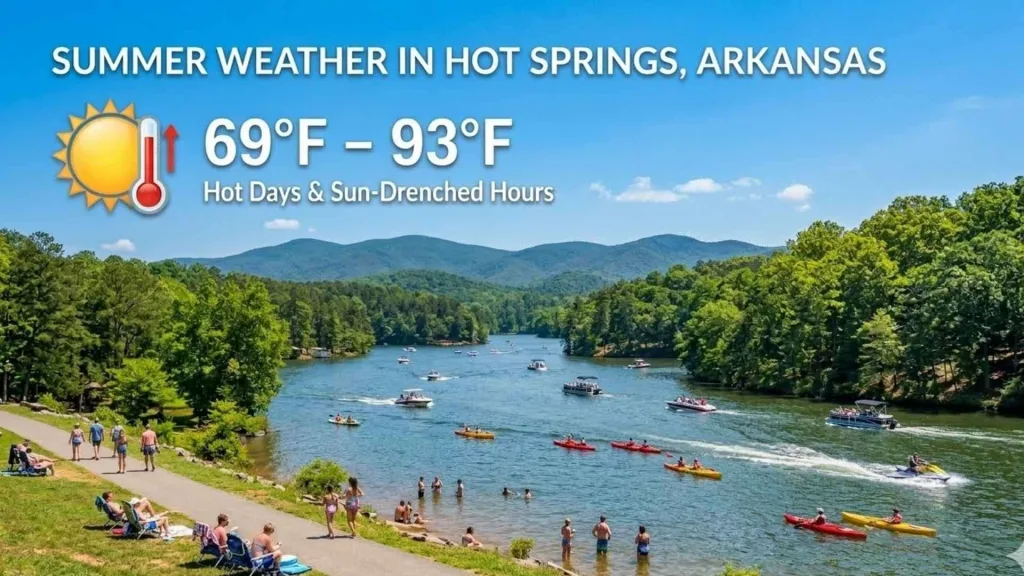
Summer Weather in Hot Springs, Arkansas (June – August)
Summer is hot, humid, and busy. Temperatures run from lows of 69°F to 72°F and highs of 90°F to 93°F, with July being the warmest month at an average high of 91.9°F. Humidity levels of 70%–90% push the heat index above 110°F on peak days — the NPS advises carrying plenty of water at all times.
Key highlights:
- August is the driest summer month (approx. 2.7 inches of rain)
- Lake Hamilton and Lake Ouachita are ideal for boating and swimming
- Magic Springs Water Park is a family favourite throughout the season
- Plan outdoor activities early morning or evening; use bathhouses to escape afternoon heat
Pack: high-SPF sunscreen, breathable fabrics, reusable water bottle, and insect repellent.
Fall Weather in Hot Springs, Arkansas (September – November)
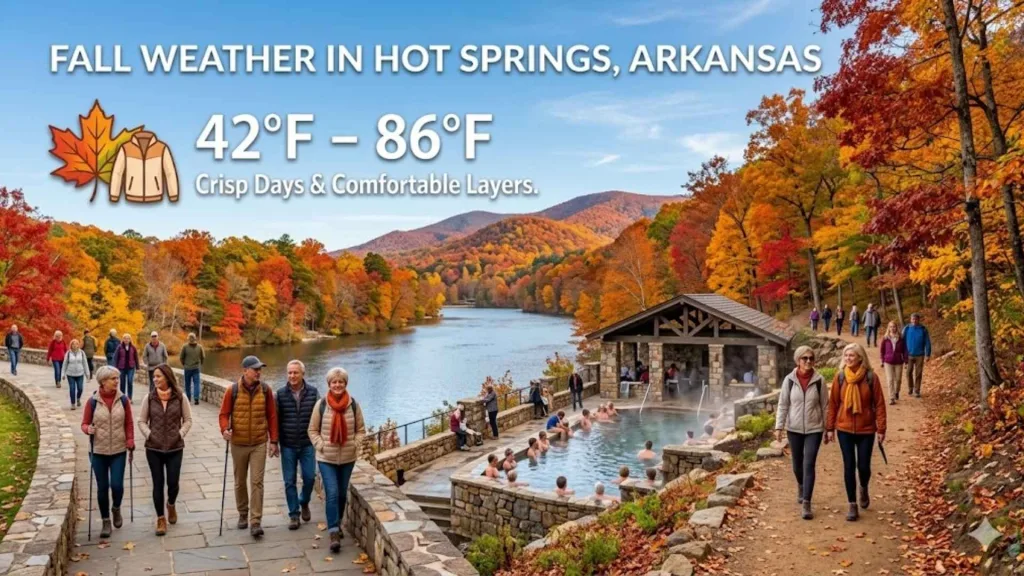
Fall is arguably the best season in Hot Springs. Temperatures ease to lows of 42°F–64°F and highs of 63°F–86°F, with October delivering the most comfortable and least humid days of the year. September is also the driest month of the year, averaging just 1.93 inches of rainfall.
Key highlights:
- Fall foliage peaks in late October through November with stunning reds and golds
- The Grand Promenade and National Park trails are at their most pleasant
- Shoulder season means fewer crowds and lower hotel rates
- Cooler evenings make soaking in a thermal bath especially rewarding — explore options at Soak Destinations
Pack: light jacket or fleece, layering pieces, and sturdy hiking boots.
Winter Weather in Hot Springs, Arkansas (December – February)
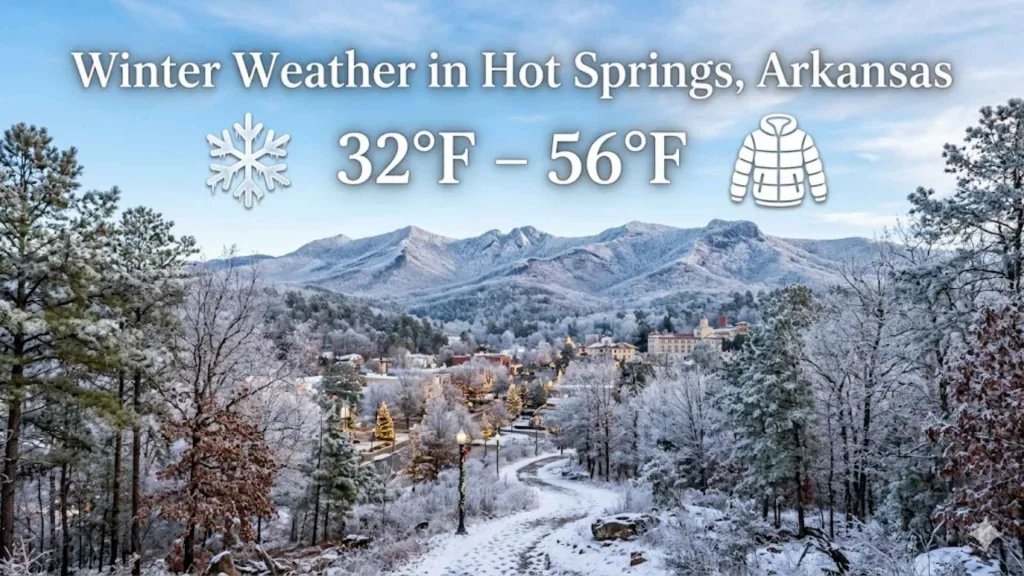
Winter is mild overall but can feel sharp with wind chill. The NPS reports highs of 52°F to 56°F and lows near 32°F, with wind chills occasionally dropping as low as 15°F. Snow is rare — the city averages just 1.93 inches annually, with most falling in February.
Key highlights:
- January is the coldest month (avg. high 49.3°F, avg. low 33.4°F)
- December offers the fewest daylight hours and lowest hotel rates of the year
- The Buckstaff and Quapaw bathhouses are especially popular in cold weather
- Garvan Gardens and downtown host impressive Christmas light displays
Pack: warm jacket, waterproof boots, scarf, gloves, and moisturiser for dry winter air.
Hot Springs Arkansas Weather by Month: Quick Reference Table
| Month | Avg High (°F) | Avg Low (°F) | Rainfall | Notes |
| January | 49 | 33 | Moderate | Coldest month; occasional snow |
| February | 53 | 36 | Moderate | Peak snowfall; Valentine spa deals |
| March | 65 | 43 | High | Most humid month; spring blooms begin |
| April | 73 | 51 | High | Horse racing season; wildflowers peak |
| May | 81 | 60 | Very High | Wettest month; warmest spring days |
| June | 90 | 69 | Moderate | Summer heat begins; longest days |
| July | 92 | 71 | Moderate | Hottest month; high heat index |
| August | 93 | 71 | Low | Driest summer month; intense heat |
| September | 86 | 64 | Low | Driest month; pleasant temps return |
| October | 75 | 52 | Low | Fall foliage; least humid month |
| November | 63 | 42 | Low | Leaves peak; cooling nights |
| December | 52 | 35 | Moderate | Fewest daylight hours; holiday lights |
Severe Weather Awareness
Hot springs arkansas weather includes the potential for severe conditions throughout the year. The NPS advises visitors that “calm, sunny mornings can abruptly turn into fierce, stormy days.” Key risks include:
- Spring thunderstorms: Heavy rain and lightning are common from March through May. Spring also carries the highest tornado risk in the region.
- Summer heat emergencies: Heat index values above 110°F are possible. Dehydration and heat exhaustion are real risks on exposed trails.
- Winter ice events: Wind chills and freezing rain can make trails slippery and roads hazardous in January and February.
The NPS recommends always checking weather conditions before heading into the field, watching for building storm clouds, and returning to the trailhead immediately if thunder is heard. No outdoor place is safe when lightning strikes. If hiking during approaching storms, move off ridges and open areas and seek shelter in thick, equally-sized forest rather than exposed meadows.
Best Time to Visit Hot Springs Based on Weather
For Outdoor Enthusiasts
Spring (April–May) and fall (September–October) deliver the most comfortable conditions for hiking, biking, and exploring Hot Springs National Park’s 26 miles of trails. Temperatures sit between 60°F and 82°F, humidity is manageable, and the landscapes are at their most vivid — whether blooming or turning.
For Water and Spa Seekers
There is truly no bad time of year to visit the thermal baths. The spring water flowing through Bathhouse Row emerges from the ground at a constant temperature and is cooled before bathing, making it enjoyable in any season. That said, slipping into a hot mineral pool on a crisp fall or winter evening is an experience few forget. Discover more about the best hot springs experiences in Arkansas to plan your perfect soak.
For Budget Travelers
January and February offer the most affordable hotel rates and smallest crowds. Avoid the period immediately around Christmas, when prices spike. The shoulder seasons of spring and fall balance affordability with excellent weather.
For Families
Summer is peak season for family travel, with Magic Springs Water Park, lake activities, and a full festival calendar keeping everyone entertained. Just plan outdoor exploration for the morning and let the afternoons unfold at the water park or in the cooler bathhouses.
♨ Hot Springs, AR — Visit Timing Planner
Select your travel priority to instantly find the best season for your trip
What matters most on your trip?
Packing Guide for Every Season
No matter when you travel, these essentials apply to all visits:
- Sun protection: Sunscreen, hat, and sunglasses are useful even in winter given 3,000+ hours of annual sunshine
- Rain gear: With 147+ rainy days annually, a compact rain jacket is always worth bringing
- Comfortable walking shoes: Bathhouse Row and the National Park trails reward good footwear
- Swimsuit: Essential year-round for thermal baths, lakes, and water parks
For more destination planning tips and to explore the full range of soaking experiences across the Natural State, visit Soak Destinations — your go-to resource for hot spring travel across the country.
Final Thoughts
Understanding the hot springs, Arkansas weather is the foundation of a well-planned trip. From the vibrant blooms of a rainy spring morning to the blazing heat of a July afternoon on Lake Hamilton, from the gold-drenched trails of October to the quiet intimacy of a January soak in a century-old bathhouse, every season here has its own distinct personality and its own particular rewards.
The city of Hot Springs sits in one of America’s most beautiful natural settings, and the weather, changeable as it can be, is part of what gives this place its character. Know what’s coming, pack accordingly, and let the hot springs arkansas weather be part of the adventure rather than a surprise.