The Best Homemade Gravy Recipe: Rich, Silky & Ready in 5 Minutes

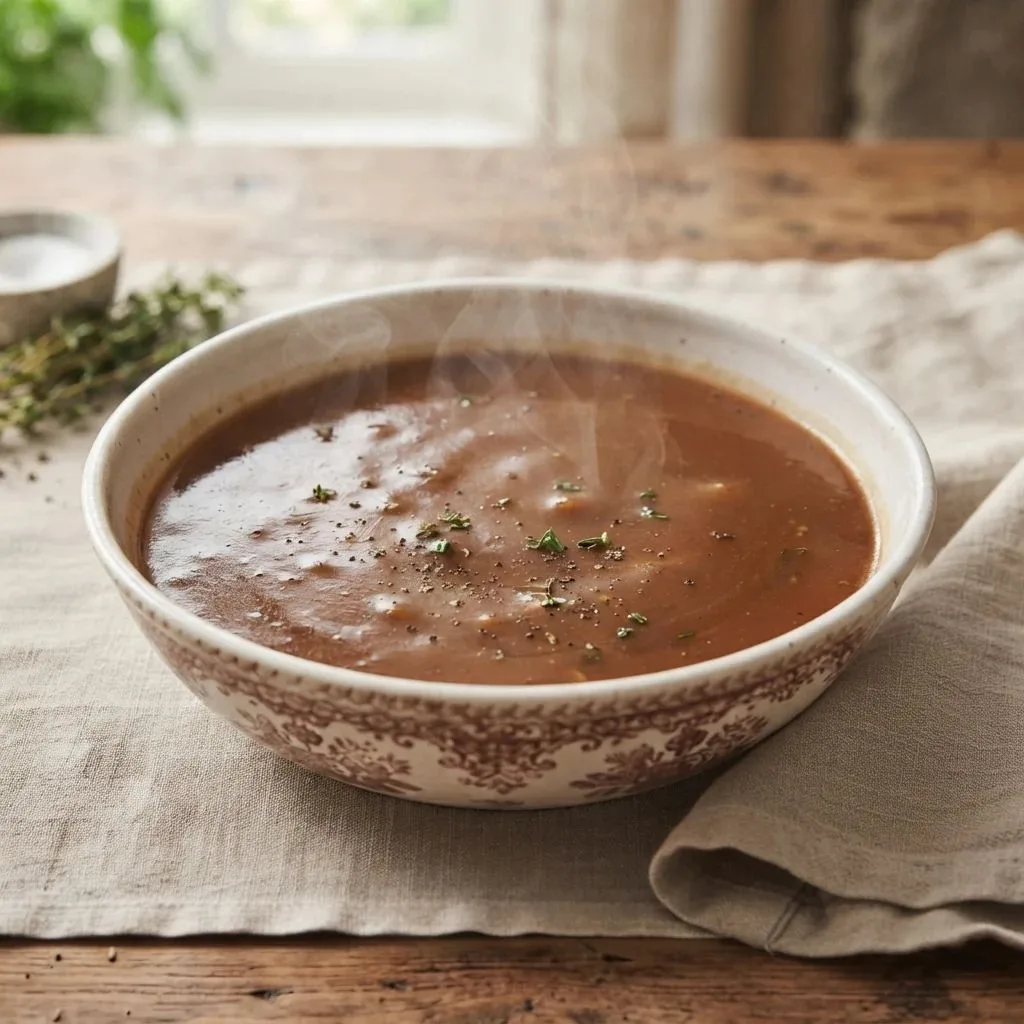
I made this simple Homemade Gravy Recipe on a busy weeknight, and I was amazed at how fast it came together. I had no pan drippings and no homemade stock, just two stock cubes, butter, and flour. In a few minutes, I had a glossy, deep brown gravy that tasted like it had simmered all afternoon.
My family poured it over mashed potatoes, roast chicken, and even plain steamed veggies. If you want an easy homemade gravy with flour that never lets you down, I think this one will become your go-to.

Cooking Time
Here is how little time you need. This is one of the fastest sauces I make.
- Prep Time: 1 minute
- Cooking Time: 3 minutes
- Total Time: 4 minutes
Ingredients
Every item here is a pantry staple. I keep them stocked at all times.
- 1 chicken stock cube (or 2 tsp powder): Builds the savory base flavor.
- 1 beef stock cube (or 2 tsp powder): Adds depth and a rich brown color.
- 2 1/4 cups (565 ml) boiling water: Dissolves the cubes, and hot water means faster thickening.
- 4 tbsp (60 g) unsalted butter: Forms the roux, and unsalted lets you control the salt.
- 4 tbsp all-purpose flour: Thickens the gravy, so measure it level.
- 1/2 tsp onion powder: Adds a gentle savory hint, and garlic powder works too.
- 1/4 tsp finely ground black pepper: Gives mild warmth, so use fine pepper for a smooth finish.
- Salt, only if needed: Stock cubes are salty, so taste first.
Note: serves several (about 6 people)
Equipment You Need
You don’t need anything fancy for this one.
- Medium saucepan: Hold the roux and the gravy as it thickens.
- Whisk or wooden spoon: Mix the flour into the butter and keep the gravy smooth.
- Heatproof jug or bowl: Dissolves the stock cubes in boiling water.
- Kettle: Bring the water to a boil quickly.
- Measuring cups and spoons: Keeps the butter, flour, and liquid ratio accurate.
How to Make a Homemade Gravy Recipe?
This gravy is a classic roux-based sauce, made by cooking butter and flour together before adding liquid. The stock is already hot and full of flavor, so there is no long simmering. Follow these steps in order and you will get smooth, silky gravy every time.
Step 1: Dissolve the Stock Cubes
Crumble both stock cubes into a jug and pour in the boiling water. Stir until every bit of cube has dissolved. Crumbling first makes this go much faster.
Step 2: Melt the Butter
Place a medium saucepan over medium heat and add the butter. Let it melt fully until it looks glossy and slightly bubbly. Don’t let it brown, because we want a mellow flavor.
Step 3: Add the Flour and Seasonings
Tip in the flour, onion powder, and pepper all at once. Stir with a whisk or wooden spoon until you get a thick, paste-like mixture. This is your roux, and it is the secret to thickening.
Step 4: Pour in Half the Stock
While stirring constantly, slowly pour in about half of the hot stock. The mixture will tighten up fast, and that is normal. Keep stirring until it looks smooth with no flour lumps.
Step 5: Add the Remaining Stock
Pour in the rest of the liquid and keep mixing. The gravy will look thin at first, but don’t worry. Keep the heat at medium and let it begin to bubble gently.
Step 6: Simmer Until Thick
Stir for about 1.5 to 2 minutes until the gravy coats the back of a spoon. Because the water was already hot, it thickens quickly. Remember that it will thicken a little more as it sits.
Step 7: Taste, Adjust, and Serve
Take a small taste and add salt or pepper only if needed. If it is too thick, whisk in a splash of hot water. Pour it over your meal right away while it is steaming and smooth.
Additional Tips for Making This Recipe Better
A few small habits make a big difference. These are the lessons I learned after making this gravy many times.
- I always use both chicken and beef cubes, because chicken alone gave me a pale, flat gravy.
- I crumble the cubes before adding water, which dissolves them quickly and evenly.
- If I only have a chicken cube, I add 1 tsp of dark soy sauce for color and extra flavor.
- I pour the liquid in slowly at the start, and that has saved me from lumps every time.
- I use a whisk instead of a spoon, since it breaks up flour clumps much better.
- I keep a kettle of hot water nearby to thin the gravy if it thickens while I plate dinner.
- I make the gravy last, so it goes straight from pan to plate while it is hot.
Common Mistakes to Avoid
Gravy is simple, but a few slip-ups can ruin it. Here are the ones I see most often.
- Adding all the liquid at once: I made this mistake early on and got lumps. Pour in half first, then add the rest.
- Using cold water: Cold liquid slows thickening and makes the gravy cook longer. I always use boiling water.
- Letting it get too thick: I used to cook it until it was heavy, and it turned like paste once served. Stop when it coats a spoon and add water if needed.
- Salting too early: Stock cubes are already salty. I always taste at the end before adding any salt.
- Using only one type of cube: My gravy tasted weak and looked pale this way. Use chicken and beef together for the best result.
How to Serve Homemade Gravy?
This gravy goes with nearly everything, so you can have fun with it. A little presentation makes it look as good as it tastes.
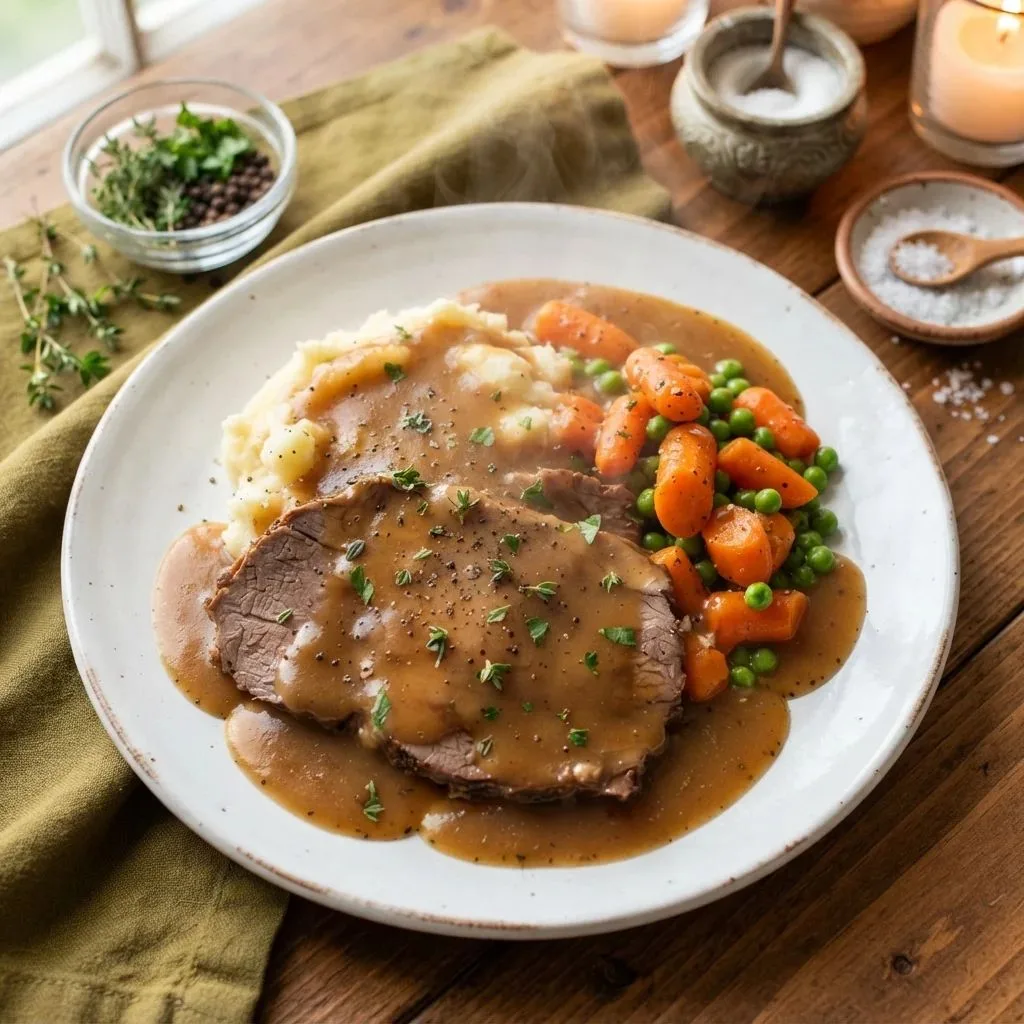
- Pour it over a mound of creamy mashed potatoes and make a small well in the center for the gravy to pool.
- Serve it warm in a small jug at the table so everyone can add their own.
- Spoon it over a pan-seared steak for a quick, simple steak gravy.
- Pour it over roast chicken, pork, lamb, or beef for a classic dinner.
- Drizzle it over steamed vegetables to turn plain greens into something special.
- Use it as a dip for fried chicken, warm bread rolls, or crispy wedges.
- Finish with a sprinkle of chopped fresh parsley and a crack of black pepper for color.
Variations
It’s easy to tweak this recipe to suit your diet or your taste. Here are some options I like.
- Gluten-free: Skip the flour and mix 2.5 tbsp cornflour (cornstarch) with 3 tbsp water. Stir it into the hot stock, then pour it into the melted butter. Make sure your stock cubes are gluten-free too.
- Lighter gravy: Use only a chicken cube for a paler, creamy-looking gravy. It makes a good base for a homemade white gravy style sauce, and a little dark soy sauce can darken it if you like.
- Lower calorie: Halve the butter to 2 tbsp. The mixture will look crumbly at first, but whisk it well and it will dissolve.
- Sugar-free: This recipe has no added sugar, so it works as is.
- Extra flavor: Add 1 tsp of dark soy sauce, or swap the onion powder for garlic powder.
- Dairy-free: Swap the butter for a plant-based butter that melts well.
Nutritional Information
Here is the approximate nutrition for one serving, just under 1/2 cup.
- Calories: 90 kcal
- Protein: 1 g
- Carbohydrates: 4 g
- Fat: 8 g
Make Ahead and Storage
This gravy keeps well, so you can make it ahead of busy meals.
Make Ahead
If you are serving soon, simply cover the saucepan with a lid and keep it warm. You can also make it earlier in the day and reheat it when dinner is ready. It tastes just as good.
Storage
Let the gravy cool, then pour it into an airtight container. Keep it in the fridge for up to 5 days. It will thicken and form a skin on top as it cools, which is normal.
Reheating
Warm the gravy in a saucepan over low heat. Add a splash of water, whisk in any skin, and stir until smooth. It will taste as good as new.
Freezing
Freeze the cooled gravy in a sealed container. When you are ready to use it, thaw it, reheat it gently, and give it a good mix. You will need to loosen it with a little water.
Why You’ll Love This Recipe?
This gravy is a real time-saver. Here is why I keep coming back to it.
- Ready in minutes: It takes only about 4 minutes from start to finish. There is no waiting for stock to reduce, and you can have it ready while the rest of dinner finishes.
- No drippings needed: You don’t need a roast or pan juices. This gravy works from scratch, so you can make it any night of the week.
- Budget friendly: It uses just a few cheap pantry items. That makes it a great way to stretch a simple meal.
- Works with everything: Poured over mashed potatoes, steak, chops, sausages, or veggies, it tastes great. It suits both white meats and red meats.
- Easy to customize: You can make it gluten-free, lower in calories, or add extra flavor. A few small swaps let you suit the recipe to your table.
FAQs
Can I use liquid stock instead of stock cubes?
You can, but cubes give a stronger, more concentrated flavor in a from-scratch gravy. Liquid stock works better when you also have pan drippings to add flavor.
How do I make gravy with flour and water?
Cook flour in melted butter to make a roux, then whisk in hot water mixed with stock cubes. Water alone would taste bland, so the cubes are important.
How do I fix gravy that is too thick or too thin?
If it is too thick, whisk in a little hot water until it loosens. If it is too thin, keep it on the heat for another minute or two and it will thicken.
Can I use this gravy with mashed potatoes?
Yes, it is a perfect match. Spoon it over creamy mashed potatoes, and it tastes a lot like the classic fast-food potato and gravy.
What if I don’t have onion powder?
Garlic powder is a good swap, or you can leave it out. It only adds a small hint of flavor.