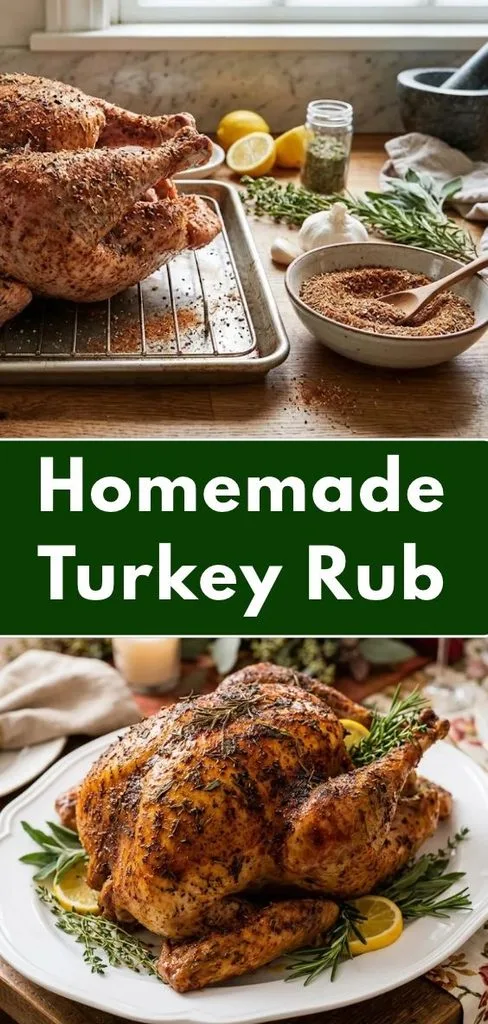
Homemade Turkey Rub Recipe for a Juicy, Golden Thanksgiving Bird!

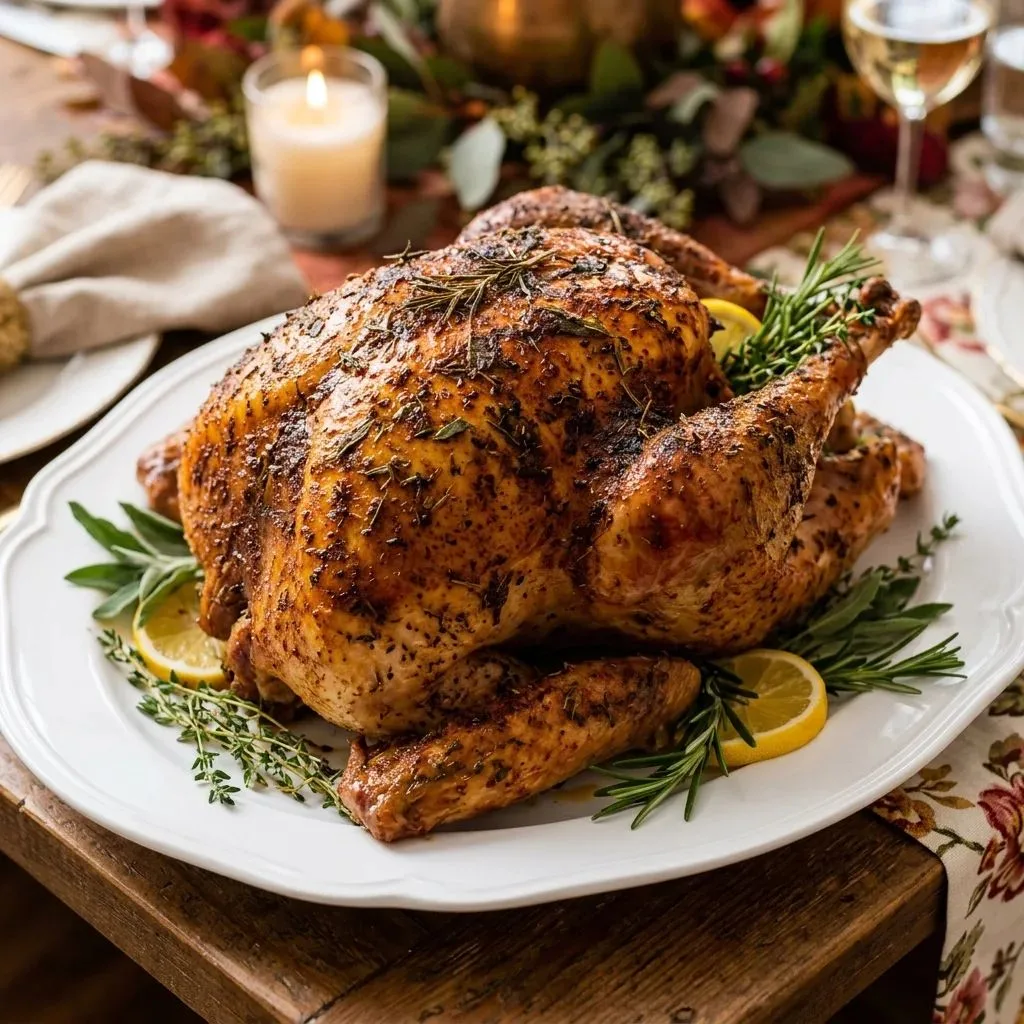
I made this homemade Turkey Rub Recipe for the first time last Thanksgiving, and I will never go back to store-bought packets. It took me five minutes and a small bowl. The herbs smelled amazing the second I stirred them together. My turkey came out golden, savory, and full of flavor all the way to the bone. Everyone at the table asked me what I put on it.
Cooking Time
This rub is quick to put together because it is mixed, not cooked. The roasting time depends on the size of your turkey, so follow the guidance for your bird.
- Prep Time: 5 minutes
- Cooking Time: 1 minute (just to stir and combine)
- Total Time: 6 minutes
Ingredients for Homemade Turkey Rub
This is a simple pantry blend of salt, sugar, herbs, and spices. It is sized for one 10 to 12 pound turkey. Every ingredient has a small job to do.
- 1 tablespoon kosher salt: seasons the meat deeply, so skip table salt.
- 1 tablespoon brown sugar: helps the skin turn golden and adds a hint of sweetness.
- 1 teaspoon paprika: gives warm color and mild, earthy flavor.
- 1 teaspoon black pepper: adds gentle heat and a little bite.
- 1½ teaspoons dried thyme: brings the classic holiday herb flavor.
- 1½ teaspoons dried rosemary: adds a piney, fragrant note; crush it slightly first.
- 1 teaspoon dried sage: gives that cozy Thanksgiving taste.
- ½ teaspoon garlic powder: adds savory depth without burning like fresh garlic.
- ½ teaspoon onion powder: rounds out the flavor with mellow sweetness.
Note: serves several (about 8 servings, enough for a 10 to 12 pound turkey).
Equipment You Need
You do not need anything fancy for this recipe. A few basic kitchen items will do the job.
- Small mixing bowl: holds and blends all the spices evenly.
- Measuring spoons: keep the salt and herbs balanced.
- Spoon or small whisk: breaks up clumps of brown sugar.
- Airtight container or jar: stores any extra rub.
- Plastic wrap: covers the seasoned turkey in the fridge.
How to Make Homemade Turkey Rub Recipe?
This recipe has only a few steps, and each one is easy to follow. The real trick is getting the seasoning under the skin and onto the meat. Here is exactly how I do it every time.
Measure the Ingredients
Set out your kosher salt, brown sugar, paprika, black pepper, thyme, rosemary, sage, garlic powder, and onion powder. Measure each one carefully with proper measuring spoons. Level the spoons so the flavors stay balanced.
Mix the Rub
Add everything to a small bowl and stir until the color looks even. Press any lumps of brown sugar against the side of the bowl to break them up. The blend should smell herby, sweet, and savory.
Prep the Turkey
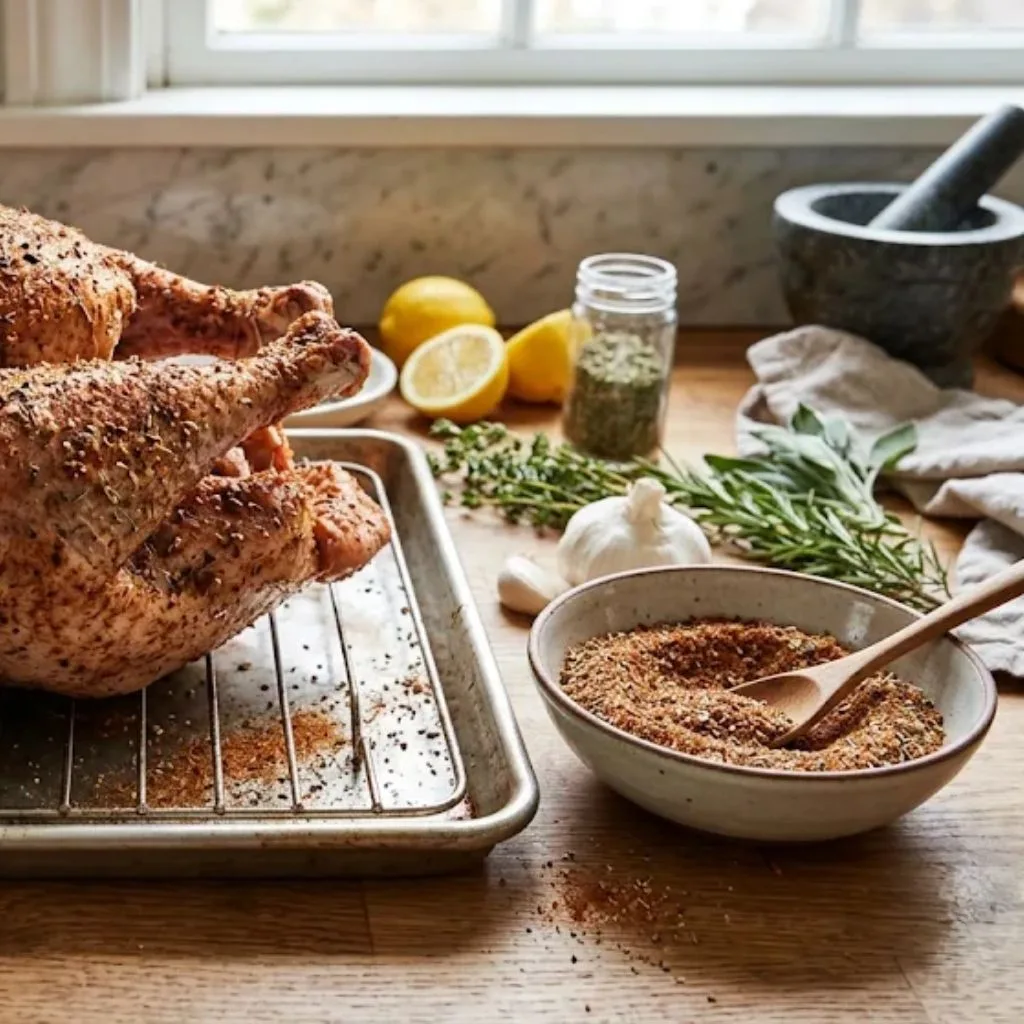
Take the turkey out of its packaging and pat it dry with paper towels. Dry skin takes seasoning better and browns nicely in the oven. Place the bird on a tray or pan so the rub stays contained.
Loosen the Skin
Gently slide your fingers between the skin and the meat on the breast and thighs. Go slowly so the skin does not tear. This creates little pockets where the seasoning can reach the meat directly.
Rub It All Over
Sprinkle the seasoning generously over the entire turkey. Massage it into the skin, then push some of it under the skin against the meat. Do not forget the sides, back, and legs.
Chill for Extra Flavor
For the best flavor, cover the turkey loosely with plastic wrap and refrigerate it for up to 24 hours. The salt and herbs soak in and season the meat while it rests. If you are short on time, you can cook it right away.
Cook and Serve
Roast, smoke, or cook your turkey the way you normally do. The brown sugar helps build a rich, golden crust as it cooks. Let the turkey rest before slicing so the juices stay in the meat.
Additional Tips for Making This Recipe Better
A few small habits make a big difference with a dry rub. These are the things I have learned from using this blend again and again.
- I always use kosher salt because its coarse texture seasons evenly and does not taste harsh.
- I rub some seasoning under the skin every time, since that is where the flavor really reaches the meat.
- I season the turkey the night before, and the next day the meat tastes juicier and more flavorful.
- I use fresh herbs sometimes, but I triple the amount because dried herbs are more concentrated.
- I crush the rosemary between my fingers first so I never get a sharp, woody bite.
- I double the recipe when I cook a bird bigger than 12 pounds so every part gets coated.
- I pat the turkey very dry before rubbing, which helps the skin brown better.
Common Mistakes to Avoid
Even a simple rub can go wrong if you rush it. I have made most of these mistakes myself, so here is what to watch for.
- Using table salt: I once swapped it in and the turkey tasted too salty. Stick with kosher salt for a gentler, more even flavor.
- Skipping the skin pockets: Seasoning only the outside leaves the meat bland. I always loosen the skin and rub the meat directly.
- Using too little rub: A thin sprinkle gets lost on a big bird. I coat the turkey generously on every side.
- Rubbing a wet turkey: The spices turn pasty and slide off. I always pat the skin dry first.
- Forgetting to double the batch: One batch covers a 10 to 12 pound turkey only. For a bigger bird, I make two.
How to Serve Homemade Turkey Rub Recipe?
A beautifully seasoned turkey deserves a pretty presentation. Here are a few easy ways to make your platter look as good as it tastes.
- Place the whole turkey on a large wooden board or platter and let guests see the golden skin.
- Tuck fresh rosemary and thyme sprigs around the bird for a rustic holiday look.
- Add orange slices, cranberries, or lemon wedges around the platter for bright color.
- Slice the breast and fan the pieces on a warm plate so the herbs show.
- Serve it with sweet potato casserole and cranberry relish for a classic Thanksgiving table.
- Spoon warm pan juices over the sliced meat right before serving for a glossy finish.
Variations
This rub is easy to customize. Swap an ingredient or add a new one depending on what you like.
- Turkey rub no sugar: Leave out the brown sugar for a savory blend; the skin will just brown a bit less.
- Different sweeteners: Use maple sugar, muscovado, or coconut sugar instead of brown sugar.
- Turkey rub recipe with butter: Mix the spices with 2 tablespoons of melted butter to make a wet rub.
- Olive oil rub: Stir the spices with 2 tablespoons of olive oil for a dairy-free paste.
- Honey or maple glaze: Blend in honey, agave, or maple syrup for a sticky, sweet coating.
- Paprika turkey rub: Swap regular paprika for smoked paprika for a deeper, smoky flavor.
- Cajun turkey rub: Add cayenne, mustard powder, or chili powder for a spicy kick.
- Extra herbs: Stir in dried parsley, basil, marjoram, savory, or oregano.
- Turkey rub recipes for smoking: Use the same blend on a smoker; the smoky aroma pairs well with the herbs.
- Dry rub for turkey tenderloin: Use the same mix on smaller cuts like tenderloin, with less rub to match the size.
Nutritional Information
This is a seasoning blend, so it is very light on calories and fat. These numbers are per serving, based on 8 servings.
- Calories: 9 kcal
- Protein: 1 g
- Carbohydrates: 2 g
- Fat: 1 g
Make Ahead and Storage
You can prepare the rub ahead of time and keep it ready for the holidays. Here is how to store it and the seasoned turkey.
Make Ahead
You can mix this rub up to 2 months in advance. Keep it ready in your pantry so Thanksgiving prep feels easier. You can also season the turkey itself up to 24 hours before cooking.
Storage
Store the dry rub in an airtight container in a cool, dry place. Keep it away from heat and moisture so it stays fresh and does not clump. Cover a seasoned turkey loosely with plastic wrap and keep it in the fridge.
Reheating
Reheat leftover turkey gently, either covered in the oven or in a skillet over low heat. Add a splash of broth to keep the slices moist. Warm it just until heated through so it does not dry out.
Freezing
The dry rub is best kept in the pantry, so there is no need to freeze it. Leftover cooked turkey can be wrapped tightly and frozen. Thaw it in the fridge before reheating.
Why You’ll Love This Recipe?
This turkey seasoning recipe for Thanksgiving is simple, reliable, and full of flavor. Here are the top reasons I keep making it.
- Quick and easy: It takes just five minutes with basic pantry ingredients. You only need a bowl and a spoon, so there is no stress on a busy holiday.
- Big flavor: The herbs, garlic, onion, and paprika create a savory, well-rounded taste. The brown sugar adds a gorgeous golden crust to the skin.
- Better than packets: A homemade blend tastes fresher than a Butterball turkey seasoning recipe packet. You also control the salt and the ingredients.
- Easy to customize: You can make it spicy, smoky, sugar-free, or buttery. It works for roasting, smoking, and even smaller cuts.
- Make-ahead friendly: You can mix it weeks ahead and season the turkey a day early. That leaves more time for the rest of your meal.
FAQs
How much turkey rub should I use?
This recipe is made for a 10 to 12 pound turkey. Double it for a bigger bird so every part is well coated.
Can I season the turkey the night before?
Yes, you can season it up to 24 hours ahead. Cover it loosely with plastic wrap and refrigerate.
Can I use fresh herbs instead of dried?
Yes, you can. Use triple the amount of fresh herbs compared with dried ones.
Can I use this rub on other meats?
Yes, it also works well on chicken, pork, beef, and tenderloin. Use less rub for smaller cuts.
Can I use table salt instead of kosher salt?
I do not recommend it. Kosher salt is gentler and seasons more evenly, so the turkey will not taste too salty.