Reaching remote hot springs by car presents unique challenges that demand careful preparation and awareness. Limited road infrastructure, unpredictable weather, and minimal access to assistance heighten the importance of safe driving practices. This article provides essential safety guidelines for travelers venturing toward secluded geothermal destinations.
Remote hot springs often lie well beyond the reach of well-serviced tourist areas and city infrastructure, with route and vehicle considerations discussed in more at reykjavikrentacar.is. Navigating to these sites may involve travel along variable road surfaces, from narrow gravel tracks to rough paths that test both driver skill and vehicle suitability. Communications can be unreliable, and local services are typically few and far between, making it essential to plan thoroughly for both journey and arrival. Understanding the risks and how to address them is key for anyone seeking the solitude and beauty these memorable locations offer.
Planning ahead to stay prepared and avoid risks
Before setting out, review season-specific road advisories and access restrictions for your route. Some hot springs are only accessible during certain months when roads are clear of snow or flooding, while others may be impassable after heavy rain. Gathering up-to-date information from trusted sources can help you avoid surprises that could impede your trip.
Establish a realistic timeline that factors in available daylight, forecast weather, and the extra travel time required on unimproved roads. Remote areas often lack reliable lighting, and dusk can fall suddenly, especially in autumn and early spring. This can make it difficult to navigate challenging routes or spot hazards as you approach your destination.
Sharing your travel itinerary with a trusted contact should be standard procedure when venturing off the beaten path. Provide details such as your intended route, hot springs location, planned stops, and estimated arrival times. If you run into trouble or experience delays, someone will know when to raise the alarm and what route to check.
Vehicle selection is another crucial step. Choosing a car with enough ground clearance, all-wheel drive if necessary, and suitable tires increases your safety margin. Bringing a small group can provide help if difficulties arise and can maximize space for safety gear and warm clothing.
Matching vehicle and equipment to destination demands
Assess road condition summaries in advance and select the most appropriate vehicle for those surfaces. Some routes are paved for only part of the distance, turning into loose gravel or rutted tracks that smaller or low-clearance vehicles cannot manage safely. Opting for a car suited to rugged terrain can help prevent breakdowns or getting stuck far from help.
Pay special attention to load distribution inside your vehicle. Overloading with passengers, supplies, or wet gear can affect handling and braking ability, particularly on uneven surfaces. Store essential safety items like recovery gear, food, and dry clothing accessibly in case of emergency or sudden changes in route.
When planning your trip, remember that remote hot springs may be located in areas without reliable mobile coverage. Downloading offline navigation maps and route details in advance is a vital precaution, as GPS signals can struggle in narrow valleys or mountainous regions. Carry backup charging solutions for your devices, and for more isolated trips, a satellite communicator may offer additional peace of mind if you run into unexpected problems.
If you decide to carry additional equipment such as snow chains, traction mats, or extra water, pack these where they will be easy to reach. Preparing for a range of scenarios, including sudden weather changes or minor breakdowns, is a key part of safe hot spring travel.
Navigational tools and communication strategies for safety
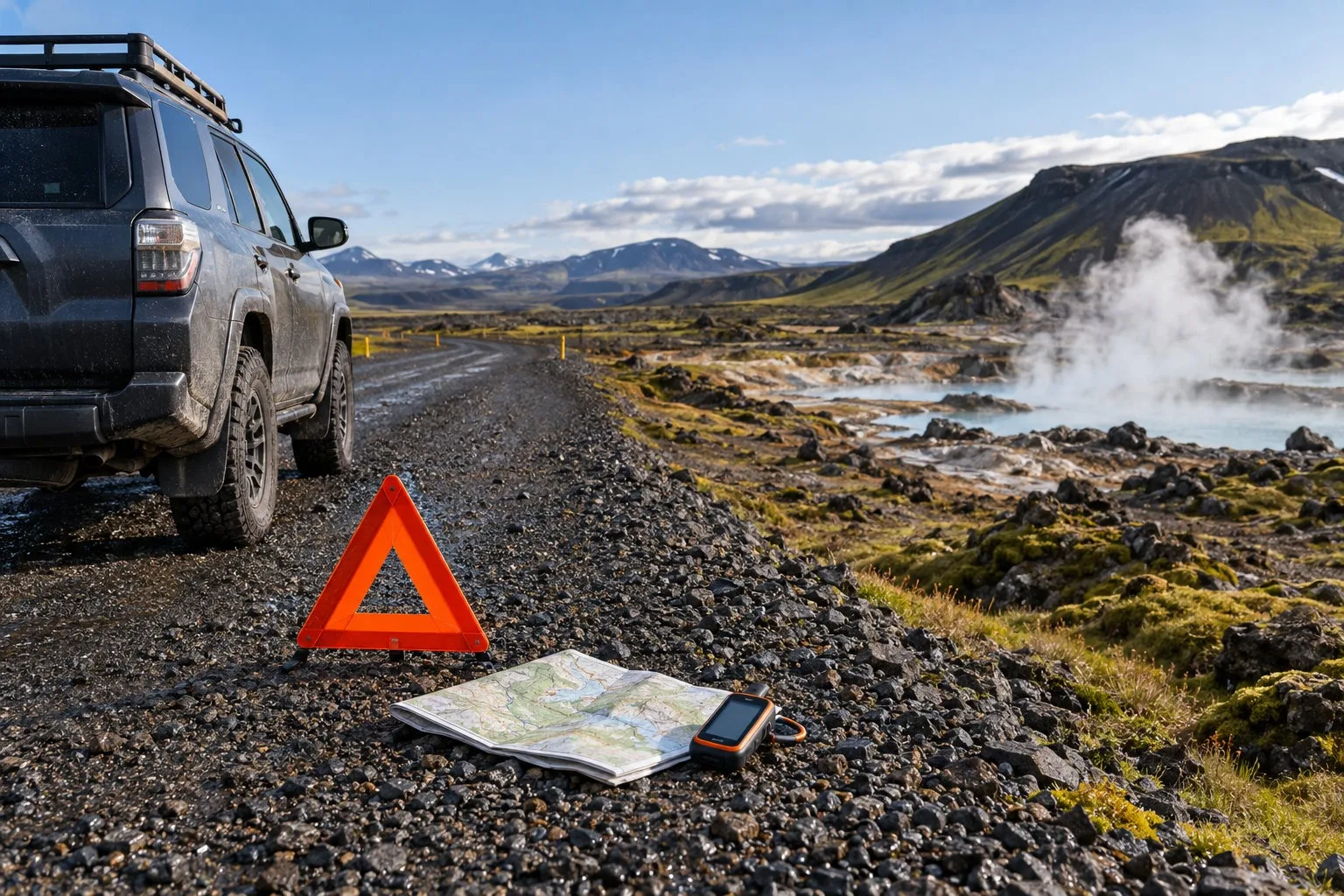
Reliable navigation is essential when venturing into regions with weak or nonexistent mobile service. Download offline maps of your destination and surrounding area before leaving a reliable data connection. Portable GPS units remain valuable in locations where phone-based mapping can lose accuracy or fail to update promptly due to poor signal.
Prepare for navigation limitations by bringing printed maps or detailed route descriptions as a secondary backup. If your route crosses river fords or traverses unsigned intersections, having physical directions helps you stay oriented, especially when landmarks or signage are sparse. These tools reduce the risk of taking wrong turns or becoming stranded off your intended path.
Battery conservation is critical, particularly during long trips in cold conditions that can rapidly drain power supplies. Consider a power bank that offers multiple device recharges and store it within easy reach for emergencies. For extended trips or especially isolated destinations, renting or borrowing a satellite communicator ensures you can request help even if conventional mobile networks are unavailable.
Share GPS coordinates or progress updates with a contact when possible, as this makes it easier for emergency responders to locate you in case of breakdown or delay. While these measures require extra preparation, they can improve security and peace of mind throughout your journey.
Driving techniques and on site safety awareness
Unfamiliar or degraded road surfaces require slower speeds and heightened attention to changing grip levels. On loose gravel or muddy stretches, increase following distances to account for longer stopping distances. Approach blind corners with care and keep to the right as far as possible to avoid oncoming traffic.
Avoid attempting river or stream crossings unless specifically permitted and conditions are clearly safe, as water depth and current can rise rapidly. Park in designated areas or well off the main roadway, making certain you do not obstruct traffic flow or emergency access routes while you stop.
On arrival, assess the terrain carefully for slip or trip hazards near geothermal pools or streams. Rocks can be slippery, and sudden changes in water temperature add another layer of risk. Respect posted warning signs and barriers, as these can mark hidden dangers or environmentally sensitive areas.
Keep keys, phone, and warm layers accessible at all times. Dropping personal items into hot pools or leaving them exposed to sudden temperature shifts can create safety issues, especially in locations where assistance is hours away.
Managing emergencies and essential gear for safety
Should your vehicle break down away from main roads, staying with the car is generally safer than setting out on foot, especially in poor weather or after dark. Make yourself visible, keep doors closed to preserve heat, and use hazard lights or reflective clothing if you need to attract attention.
Maintain a small reserve of drinking water, high-energy snacks, and thermal layers for all occupants, as waiting for recovery services can take longer in remote regions. A stocked first aid kit and a reliable flashlight are also essential, helping address minor injuries and visibility issues if conditions worsen.
Hot spring visits place particular demands on clothing and vehicle interiors. Use dry bags or waterproof containers for wet bathing suits, towels, and shoes, preventing moisture from causing discomfort or distracting the driver on the return leg. Seat protectors or large towels help avoid soaking upholstery and maintain a dry, warm passenger area.
If you anticipate needing to wait for help, conserve food, water, and fuel when safe to do so. Monitor weather changes closely and avoid leaving the vehicle unless conditions are safe. Staying calm and prepared supports better decision making in an emergency.