If you’re the kind of traveler who plans a long soak as a reward for a hard day outdoors, the Everest Base Camp trek will test that instinct like few trips can. This is roughly two weeks of walking through thin mountain air to the foot of the world’s highest peak, and by the end of each day your legs will be begging for heat and rest. We run treks out of Kathmandu, so here’s the straight version: what the route is really like, what it costs, when to come, and where you can actually warm up and recover once the walking stops. No sales pitch, just what we’d tell a friend!
What the Everest Base Camp trek actually is
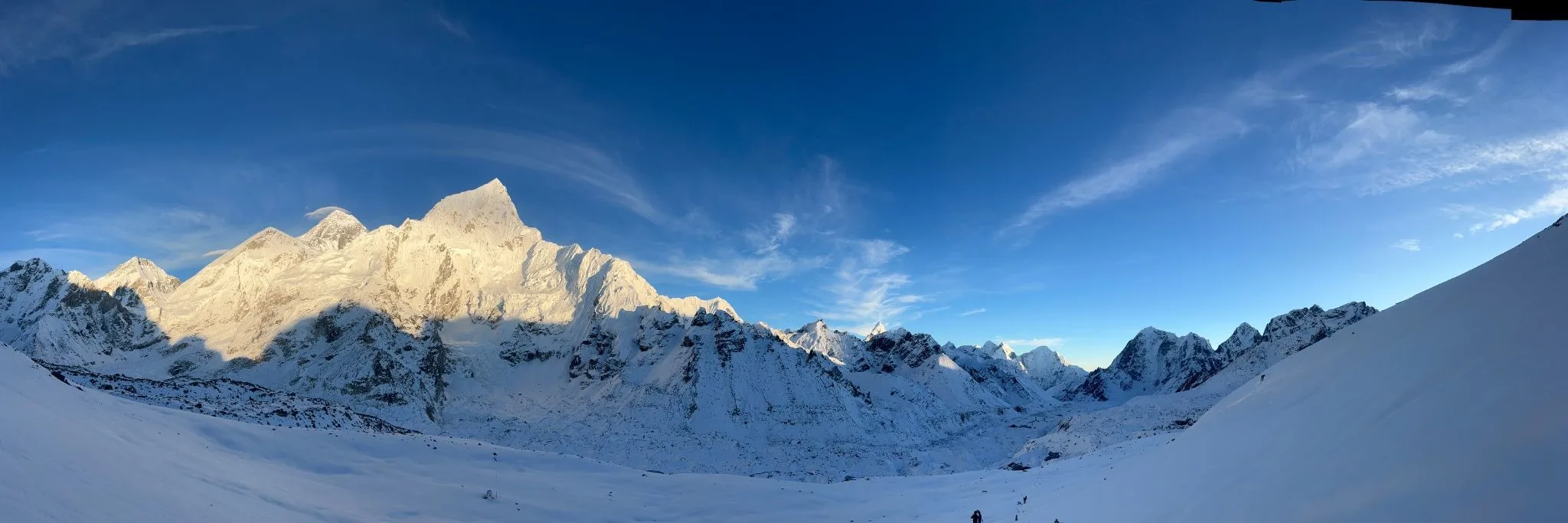
The trek sits in the Khumbu region of northeast Nepal, inside Sagarmatha National Park, a UNESCO World Heritage Site. You fly from Kathmandu to the tiny mountain airstrip at Lukla (2,840 m / 9,320 ft), then walk north through Sherpa villages, pine and rhododendron forest, and glacial valleys until you reach Everest Base Camp at 5,364 m (17,598 ft).
Most people also climb Kala Patthar (5,545 m / 18,192 ft) the next morning, because that’s where you get the clearest, closest view of Everest itself. The round trip from Lukla covers about 130 km (80 miles), and the classic itinerary runs 12 to 14 days of trekking. Add your Kathmandu arrival and departure days and you’re looking at 16 to 18 days total.
You don’t climb anything technical. There are no ropes, no ice axes, no mountaineering skills involved. It’s a walking trek. What makes it hard is something else entirely.
How hard is it, really?
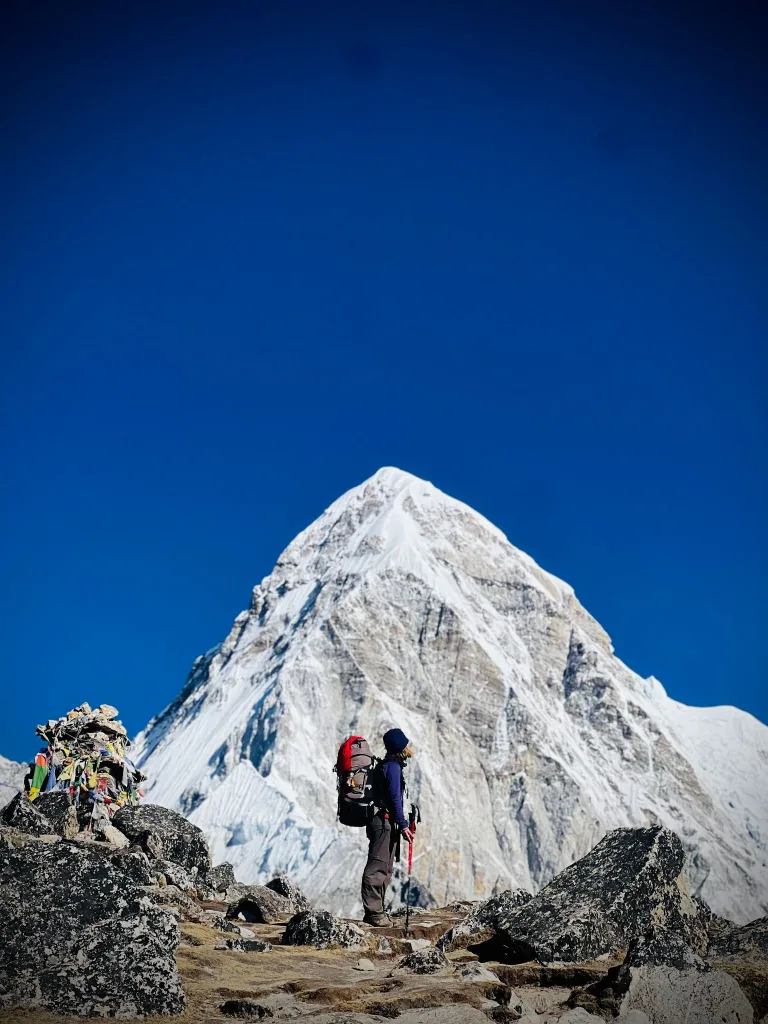
The honest answer: moderate to challenging, and the difficulty is almost all about altitude, not the trail.
For most of the route you’re walking above 3,500 m, where the air holds around 60 percent of the oxygen you get at sea level. That makes a gentle slope feel steep and a normal day feel long. You’ll walk 5 to 8 hours daily, carrying a light daypack while a porter or yak handles the heavy bag.
Altitude sickness is the real risk. By most estimates it touches 30 to 40 percent of trekkers in some form, from a mild headache to serious conditions. The Himalayan Rescue Association runs an aid post at Pheriche (4,243 m) precisely because this stretch is where trouble shows up. The fixes are simple but non-negotiable: climb slowly, drink 3 to 4 litres of water a day, never push higher with clear symptoms, and take your acclimatization days. Good itineraries build in rest days at Namche Bazaar (3,440 m) and Dingboche, and you should never skip them, no matter how strong you feel that morning.
A blunt truth we share with clients: the fittest people sometimes struggle most, because they move too fast and give altitude a foothold. Slow wins here.
The soak question, answered honestly
Since you found this on a site about hot springs, let’s deal with the thing most EBC guides skip entirely.
There are no natural hot springs on the Everest Base Camp trail. The upper route is high glacial and alpine terrain, cold and rocky, far above where geothermal pools sit. Anyone promising you a Himalayan soak with Everest in the background on this particular trek is selling a fantasy.
What you do get is a hot shower at the teahouses, usually gas or solar heated, for about USD 2 to 8 a time. Lower down they’re easy to find. The higher you climb, the scarcer and pricier they become, and water can run cold at the top of the route. So pack patience and a quick-dry towel, and treat a warm wash as a small daily luxury rather than a guarantee.
If real soaking matters to you, the good news is that Nepal has you covered. You just plan it as a separate leg, which we’ll get to below.
Best time to go
Two seasons stand out.
Autumn, from late September through November, brings stable weather and the clearest mountain views of the year. It’s our top pick for first-timers. Spring, from March to May, is warmer, the rhododendrons bloom lower down, and April is when Everest climbers gather at Base Camp, which adds a buzz to the place. April is also the busiest month, so trails and teahouses fill up.
Winter trekking is doable for the well-prepared, with quiet trails and crisp views, but nights are bitter and some high lodges close. The summer monsoon, June to August, is the weakest window. Expect cloud, rain, leeches in the forest sections, and frequent flight delays.
One operator tip many guides bury: in peak spring and autumn, Lukla flights often leave from Ramechhap (Manthali) airport instead of Kathmandu, which means a 4 to 5 hour drive before you even board. Build buffer days into your plan either way, because Lukla weather closes the airstrip more often than anyone likes.
What it costs
Prices swing widely with your travel style, group size, and season. A realistic 2026 range is USD 1,200 to 4,500 per person.
A budget trip with a local guide and basic teahouses sits near the lower end. A mid-range package, the most common choice, runs roughly USD 1,500 to 2,500. Comfort and luxury options with better lodges or a helicopter leg from Gorak Shep climb toward the top.
The pieces that make up the cost:
- Lukla flights: around USD 360 to 450 round trip, and the price moves with the season.
- Permits: the Sagarmatha National Park entry permit (about NPR 3,000, near USD 25) and the Khumbu Pasang Lhamu Rural Municipality permit (about NPR 2,000, near USD 18).
- Guide: roughly USD 25 to 30 a day, including their food and lodging.
- Porter: roughly USD 20 to 25 a day, carrying up to 20 to 25 kg, often shared between two trekkers.
- Insurance: a policy that covers trekking and helicopter evacuation up to at least 6,000 m, usually USD 100 to 300. This is not optional. Standard travel cover that stops at 3,000 m is useless here.
Pre-booking a full package through a reputable Kathmandu agency often works out cheaper than arranging everything piece by piece, once you add up guide fees, logistics, and the time you’d spend sorting it yourself.
Permits and guides, without the confusion
You’ll see old blogs telling you to buy a TIMS card for Everest. In the Khumbu region that’s out of date. The TIMS card was replaced here by the local rural municipality permit, so the two documents you actually need are the Sagarmatha National Park permit and the Khumbu Pasang Lhamu permit. Both are easy to arrange in Kathmandu or on the way in, and any decent operator handles them for you.
On guides: Nepal now expects most trekkers to walk with a licensed guide, and in the Everest region hiring one is the sensible norm. Beyond the rules, a good guide reads altitude symptoms early, arranges a rescue if it’s ever needed, and turns the cultural side of the trek into something far richer. We’d recommend a guide here even if no rule existed.
How to prepare
Give yourself 8 to 12 weeks of focused training, longer if you’re starting from scratch. You don’t need a gym or a marathon habit. You need legs and lungs that can handle long, repeated days of walking uphill with a pack.
Build the plan around four things: cardio endurance (hiking, stair climbing, cycling), leg strength (squats, lunges, step-ups), pack-carrying stamina (practice with a loaded daypack), and a few longer back-to-back hikes so your body knows what consecutive trekking days feel like. Consistency beats intensity. Four steady sessions a week for three months does more than two frantic weeks at the gym.
You can’t truly train for altitude at sea level, so arrive in the best shape you can and let the mountain do the rest, slowly.
Where to actually recover and soak in Nepal
Here’s the part built for travelers who care about warm water and tired muscles.
Since the EBC trail has no springs, the move is to bookend or follow your trek with a proper recovery leg on the western side of the country, where Nepal’s geothermal pools sit.
Tatopani, on the Annapurna side beside the Kali Gandaki River, is the classic trekker soak. The name means “hot water” in Nepali. The mineral-rich, slightly sulfuric pools are a long-standing reward for people coming off the Annapurna Circuit, and locals have used them for sore muscles and joints for generations.
Jhinu Danda, on the Annapurna Base Camp trail, has stone pools beside the Modi Khola river, a short downhill walk from the village. It’s a favorite for easing legs after the climb to Annapurna Base Camp.
Chame, higher up in Manang on the Annapurna Circuit, stays quieter and cooler in mood, ringed by pine forest.
Reaching any of these from Everest means a separate trip. You’d typically fly back to Kathmandu, head west to Pokhara, then drive and walk into the Annapurna foothills. It’s a real add-on, not a detour, so plan the days if soaking is a priority.
If you’d rather not add another trek, Kathmandu and Pokhara both have good spas offering hot soaks, sauna, steam, and deep-tissue massage that work wonders on trek-worn calves. Many trekkers also slot in a few days of gentle yoga or meditation, which helps with both the muscle aches and the flat, slightly lost feeling that often hits once a big trek ends.
A quick day-by-day shape
Fly to Lukla, then walk to Phakding. On to Namche Bazaar, with a rest day to acclimatize. Continue past Tengboche, home to the region’s largest monastery, up to Dingboche for a second acclimatization day. Then Lobuche, Gorak Shep, and the push to Everest Base Camp. The next dawn you climb Kala Patthar for the headline view, then turn around and descend over several days back to Lukla for the flight out. The descent is faster, but the steep, uneven downhill is hard on the knees, so trekking poles earn their place.
Frequently asked questions
Can a beginner do the Everest Base Camp trek? Yes, with 8 to 12 weeks of training, basic fitness, and a slow, steady pace. You don’t need prior high-altitude experience, though a shorter multi-day hike beforehand helps.
How fit do I need to be? If you can comfortably walk 5 to 7 hours on hilly ground with a light pack, you’re on track. Endurance matters more than speed or raw strength.
How much does it cost? Most trekkers spend between USD 1,200 and 4,500, depending on style, season, and group size.
What’s the best month to trek? April and May in spring, or October and November in autumn. Autumn gives the most reliable clear views.
Is it dangerous? The trail itself isn’t technical. The main risk is altitude, and that’s well managed by acclimatizing properly, hydrating, walking slowly, and carrying insurance that covers helicopter rescue.
Are there hot springs at Everest Base Camp? No. The route is high glacial terrain with no natural springs. You get teahouse hot showers on the trail, and the nearest real soaking pools are on the Annapurna side, a separate trip away.
Do I need a guide? For the Everest region, a licensed guide is both the expected norm and a genuine safety asset. We recommend one regardless of the rules.
The honest last word
The Everest Base Camp trek isn’t a wellness retreat, and we won’t pretend otherwise. It’s a demanding high-altitude walk that asks for preparation and respect. But pair it with a few days of real recovery, whether that’s a soak in Tatopani, a riverside dip at Jhinu Danda, or a massage and some quiet yoga back in the valley, and you get the best of both worlds: the hardest, most rewarding walk of your year, followed by the warm water your body will have earned.