Most golfers who have done it will tell you the same thing: the distance nearly put them off, and the courses made them wish they had gone sooner. A golf trip to Australia is a serious undertaking. Averaging twenty-plus hours in the air, a time difference that takes several days to adjust to, and a budget that needs proper thought. None of that is a reason not to go. If anything, the commitment is part of what makes it worth doing.
Australia has produced more world-ranked courses per capita than almost anywhere else, concentrated in a way that makes itinerary planning unusually straightforward. You do not need to cover the whole country to have one of the best golf trips of your life. A well-planned fortnight, anchored around Melbourne with a side trip or two, will take in more top-50 calibre golf than most people play in a decade.
Why Melbourne Is the Starting Point
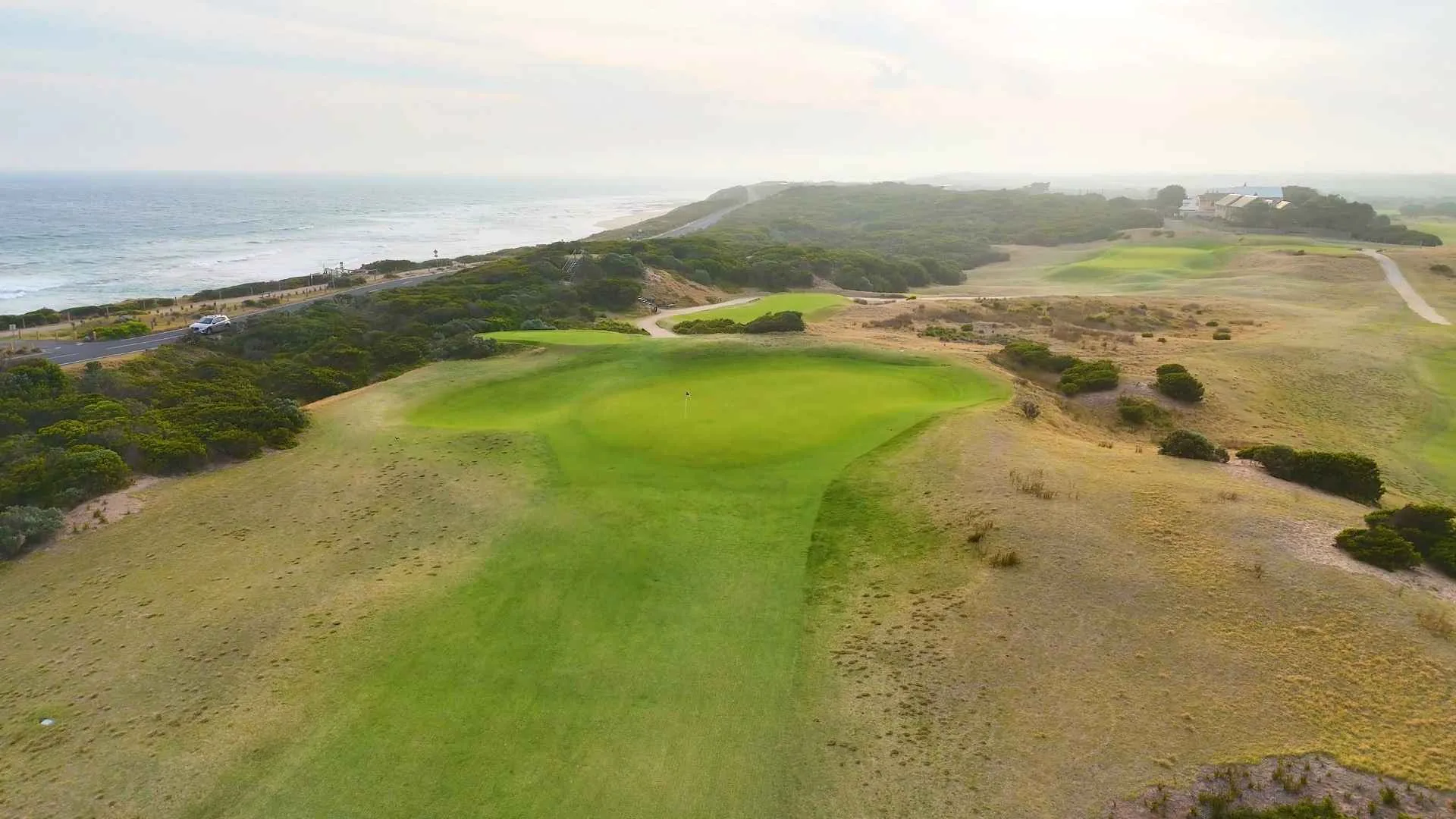
The Melbourne Sandbelt is the reason serious golfers make the journey. A stretch of sandy, links-like terrain running through the city’s south-eastern suburbs, it contains a concentration of quality that has no real parallel in the southern hemisphere.
Royal Melbourne is the headline act. Founded in 1891 and regularly ranked in the world’s top ten, it plays over two courses, the West and the East, both shaped by Alister MacKenzie, who later designed Augusta National. The West Course is among the most strategically demanding tracks in the world. The greens are fast, the bunkering is severe, and the routing uses a relatively modest piece of land with remarkable imagination.
Kingston Heath, a few minutes away, is frequently cited as the finest Sandbelt course that visiting golfers can actually access without a personal introduction. The MacKenzie bunkering and Dan Soutar greens combine to produce a course that rewards intelligence over distance. Commonwealth, Victoria, and Huntingdale add further depth to a region where five or six rounds would barely scratch the surface.
Access to Royal Melbourne is managed through reciprocal arrangements with other golf clubs. Your home membership may open the door so it is worth checking well before you travel.
Barnbougle and the Tasmanian Detour
Tasmania sits an hour’s flight south of Melbourne and contains two of Australia’s most celebrated modern courses. Barnbougle Dunes, opened in 2004, was built on old potato farmland along the Bass Strait coastline and entered the global top 50 almost immediately. Lost Farm, its neighbour, opened in 2010 and offers a slightly longer, more exposed test across the same stretch of wild coastal terrain.
The combination of both courses, with excellent on-site accommodation between them, is worth the detour on its own. Three nights in Tasmania, built around four rounds at Barnbougle and Lost Farm, fits naturally into a two-week Melbourne-based itinerary without feeling rushed.
Beyond the Sandbelt: Other Courses Worth Adding
The National Golf Club on the Mornington Peninsula, about an hour south of Melbourne, operates three courses: the Old, the Moonah, and the Ocean. The Moonah Course has hosted the Australian Masters and plays through dense, windswept scrubland in a way that feels nothing like the Sandbelt. If you have a spare day and access to a car, it is worth the drive.
Sydney has strong options too, particularly New South Wales Golf Club at La Perouse, overlooking Botany Bay with Pacific Ocean views that rival Pebble Beach for sheer drama. The course is genuinely world-class and typically accessible through reciprocal club arrangements.
Queensland adds further possibilities for those building in a few days around Brisbane or the Gold Coast, though the golf in the north of the country is secondary to the Melbourne Sandbelt in any honest ranking.
How Much Does Golf in Australia Cost?
Green fees vary considerably. At the top Sandbelt clubs, access through reciprocal arrangements typically means no fee beyond your home club membership. Barnbougle charges around AUD $280 per round, which works out at roughly £140 at current exchange rates. The National and New South Wales Golf Club fall in a similar bracket.
Accommodation is the bigger budget consideration. Melbourne has a wide range of hotels at different price points, and the Sandbelt clubs are accessible from the city centre in 30 to 40 minutes. Tasmania’s Barnbougle Lodge offers well-regarded on-site accommodation that keeps travel between rounds to a minimum.
A two-week trip combining Melbourne, Tasmania, and a few days elsewhere typically runs from $4,500 to $7,00 per person before international flights, depending on accommodation level and how many courses you add.
When to Go
Because Australia is in the Southern Hemisphere, its seasons are the opposite of those in the Northern Hemisphere. Summer runs from December through February, when temperatures in Melbourne can exceed 40°C and courses bake out noticeably. The autumn and spring months, March to May, and September to November, offer the most reliable playing conditions, with temperatures in the mid-teens to low twenties.
Winter in Melbourne (June to August) is mild by British standards, with temperatures rarely falling below 8°C. Courses stay green and playable, the crowds thin out, and some venues offer lower green fees during quieter periods. For golfers accustomed to playing through a UK winter, Australian conditions in June and July are very comfortable.
Building Your Itinerary
A workable two-week structure: fly into Melbourne, spend six or seven days playing the Sandbelt, take a short flight to Launceston and spend three nights at Barnbougle, then return to Melbourne for a couple of days before flying home or extending to Sydney. Tee times at the major clubs book out weeks in advance during peak months, so planning ahead matters.
For golfers who want the trip arranged properly with tee times secured, accommodation booked in the right sequence, and club access confirmed, a package from a dedicated golf tour operator can take the coordination out of your hands and ensure nothing gets missed.
A Country That Earns the Journey
The distance is real. So is the jet lag. But Australia’s golf landscape is genuinely unlike anywhere else. Sandbelt courses that would rank in any country’s top ten, coastal links in Tasmania that feel wild and remote, and a culture around the game that takes quality seriously without taking itself too seriously.
Most golfers who make the trip come back having played better golf than anywhere else in the world. Ultimately, all of this makes a fairly compelling case to go down under on your next trip.
If you are a keen golfer, take a look at this guide to Carson Hot Springs which is home to an impressive 18-hole golf course.