Traveling brings excitement and new experiences to your life. Unexpected mishaps sometimes occur that disrupt your plans. Taking the right steps after an injury protects your health and your future.
Staying calm helps you manage the situation effectively. Focus on gathering information and seeking care immediately. This approach keeps you in control during a stressful event.
Prioritize Your Immediate Safety And Health
Find a safe location immediately after an accident happens. Assess your body for any pain or visible wounds. The quick check helps you identify hidden issues before they get worse.
Call for emergency services if the situation looks serious. Many countries use different numbers for police and ambulance services. You need professional help when a wound is deep or a bone feels broken.
Do not try to walk off a significant injury. Getting checked by a medical professional provides a record of your condition. Documents are helpful later for insurance or legal needs.
Seeking Professional Legal Guidance
Legal systems vary greatly depending on where your accident took place. You might face language barriers or unfamiliar court procedures. The factors make it hard to protect yourself alone.
Legal professionals help navigate the complexities of filing a claim from another location. Speaking with a personal injury attorney provides clarity on your rights during a difficult time. They offer the support you need to handle paperwork correctly.
Collecting contact information from witnesses helps your legal team later. Written statements or phone numbers are valuable assets for your case. People who saw the event can provide neutral accounts of what happened.
Documenting The Scene And Your Injuries
Take photographs of the area where the incident occurred. Visual evidence captures details that might be forgotten as time passes. Clear pictures show the exact conditions of the environment.
A well-known travel publication mentioned that road accidents are the primary cause of non-natural deaths for healthy travelers. This highlights the frequency of transportation risks during international trips. Staying aware of risks helps you stay cautious on the road.
Note the weather conditions and any hazards present at the time. Small details like a wet floor or a broken step make a big difference. Write down the time of day and the lighting in the area.
Handling Communication With Local Authorities
File an official report with the police or property management. The document serves as an objective account of the event. It creates a formal paper trail of the incident.
Stick to the facts when describing what happened to the officers. Avoid admitting fault or guessing about details you do not remember clearly. Clear communication prevents misunderstandings in the report.
Ask for a copy of the report before you leave the scene. Having a physical or digital copy prevents delays in your recovery process. You might need the paper for your insurance company later.
Navigating Medical Expenses Abroad
Hospital bills in foreign countries can reach high amounts quickly. Understanding the potential costs helps you prepare for the financial impact. You should know what your current insurance covers before you pay.
An analysis by a financial advisor site found that medical evacuations can cost between $100,000 and $200,000. Prices fluctuate based on the seriousness of your condition and your location. Emergency flights are one of the most expensive parts of travel care.
Keep track of every expense related to your treatment:
- Emergency room fees
- Prescription medications
- Transportation to the clinic
- Follow-up appointments
- Medical equipment like crutches
Dealing With Travel Insurance Providers
Contact your insurance carrier as soon as you are stable. They provide guidance on which hospitals are within their network. Early communication helps you follow their specific rules.
A popular lifestyle magazine suggests keeping all original receipts for medical treatments to prevent processing delays. Organizing papers makes the reimbursement process much smoother. Digital scans of receipts act as a great backup.
Follow the specific filing instructions provided by your policy. Missing a deadline or a required form can lead to a denied claim. Read the fine print to understand what documents they require.
Returning Home For Continued Care
Your recovery might continue long after you return to your house. Schedule an appointment with your primary doctor to review foreign medical records. They can assess if you need more treatment or specialized therapy.
Managing the transition back home requires careful planning and attention. Focus on the steps to stay organized during your recovery:
- Translate medical documents if needed.
- Update your local physical therapist.
- Track your symptoms daily.
- Request copies of all diagnostic scans.
Share all findings from the trip with your local healthcare team. They need a complete picture of your treatment to provide effective care. The practice keeps your local records up to date and accurate.
Understanding Liability And Local Laws
Rules regarding negligence change when you cross a border. Some regions follow strict liability while others use a comparative fault system. Knowing the difference helps you set realistic expectations for your case.
Researching local laws helps you understand if you have a valid claim. Every jurisdiction has its own set of statutes and limitations. Some places have very short windows for filing a lawsuit.
Consult with experts who understand the legal landscape of the destination. Professional advice prevents you from making mistakes that hurt your case. They know how to interpret complex foreign regulations.
Preserving Your Evidence For The Future
Save copies of your boarding passes and hotel reservations. Documents prove you were at the location when the injury happened. They establish your presence at the time of the incident.
Back up your photos to a cloud service or an external drive. Losing your phone could mean losing the most important evidence you have. Digital security is a key part of managing your claim.
Maintain a journal of how the injury affects your daily life. Recording your pain levels and limitations provides a personal perspective on the impact. This record shows how the accident changed your routine.
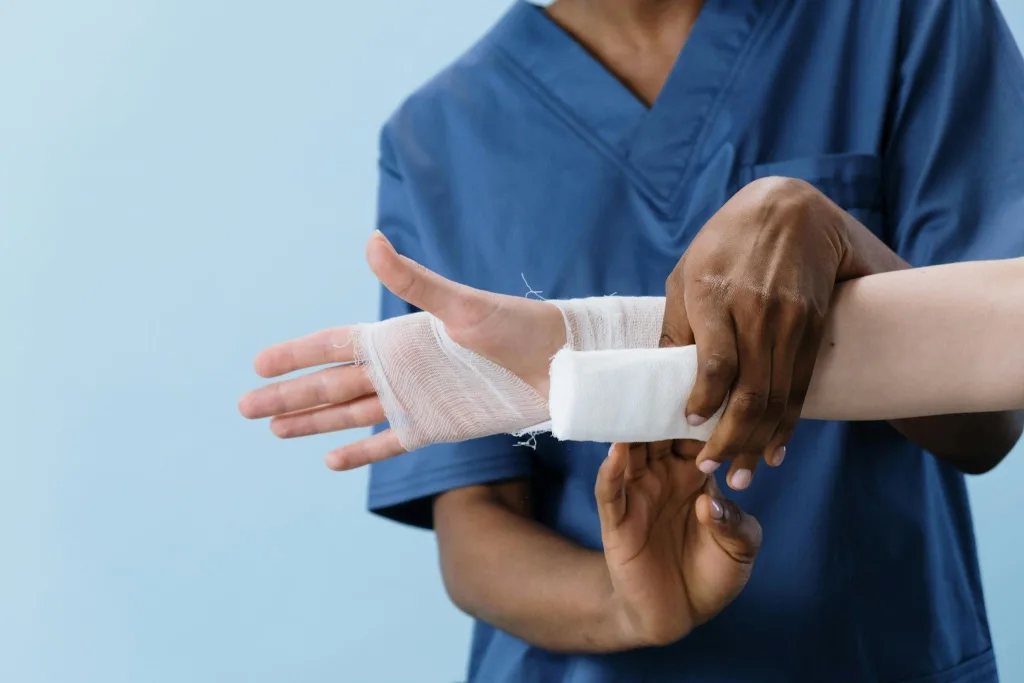
Image source: https://www.pexels.com/photo/a-person-getting-his-hand-bandaged-5721555/
Recovering from a travel injury takes time and patience. Focus on your health while you handle the administrative side of the accident.
Moving forward with a clear plan helps you regain control. You can eventually get back to enjoying your favorite destinations with peace of mind.