TSA Real ID Requirements for Air Travel: The Complete 2026 Guide

Airport security has changed for good. If you have booked a domestic flight anywhere in the United States, understanding the TSA Real ID Requirements for Air Travel is no longer optional — it is the difference between breezing through the checkpoint and getting stopped before you even reach the security line. After two decades of delays, the federal government has fully enforced these rules, and travelers who show up unprepared are now facing extra steps, extra time, and in some cases, extra fees.
This guide breaks down everything you need to know, straight from official sources, so you can walk into any U.S. airport with confidence.
What Is REAL ID and Why Does It Matter for Air Travel
The REAL ID Act was passed by Congress in 2005 following a recommendation from the 9/11 Commission to strengthen how states issue identification documents. The goal was simple: create a consistent, verifiable national standard for driver’s licenses and state ID cards so that federal agencies, including the TSA, could trust the identity of anyone entering a secure area.
After multiple postponed deadlines, enforcement finally began at U.S. airports on May 7, 2025, under the Department of Homeland Security. Since then, adult travelers flying domestically have been required to present a REAL ID-compliant license or an approved alternative document.
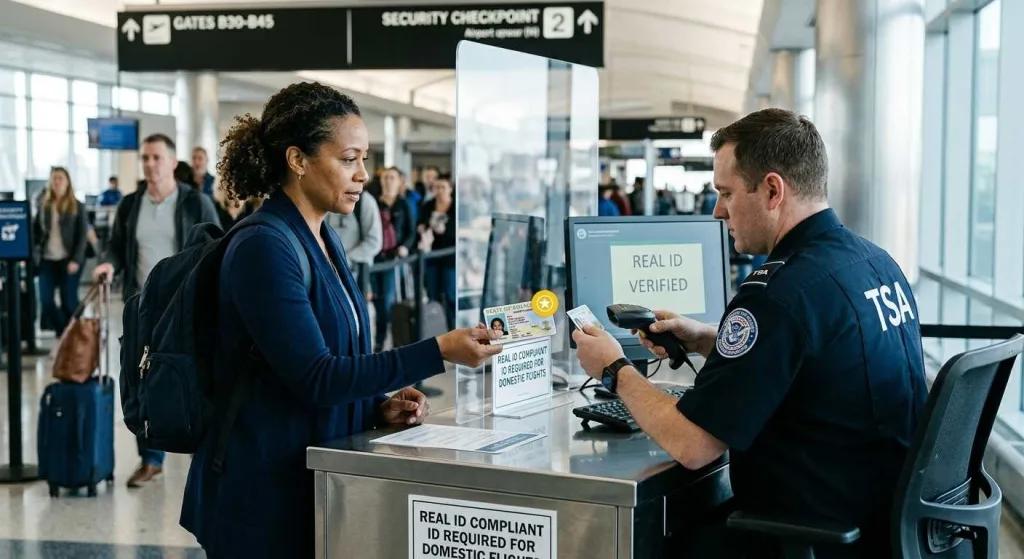
Why This Rule Exists
Standardized identification reduces the risk of fraudulent documents being used to bypass identity checks at airports, and it aligns checkpoint procedures with the same verification standards already used at military bases and other federal facilities.
TSA Real ID Requirements for Air Travel: Current Enforcement Timeline
Understanding the timeline helps explain why so many travelers are still catching up:
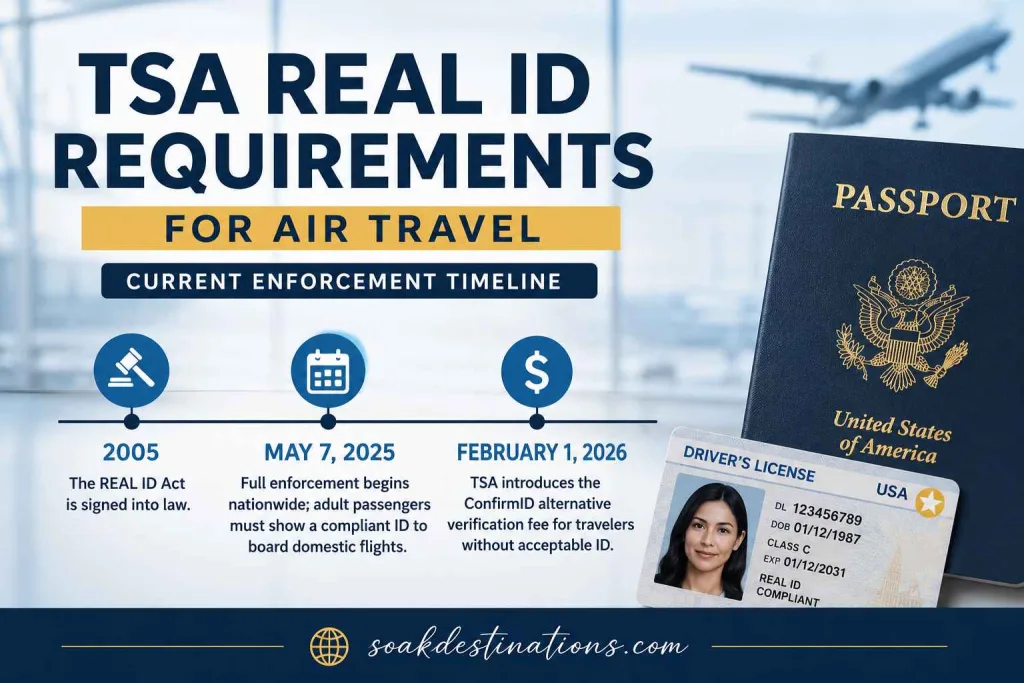
- 2005: The REAL ID Act is signed into law.
- May 7, 2025: Full enforcement begins nationwide; adult passengers must show a compliant ID to board domestic flights.
- February 1, 2026: TSA introduces the ConfirmID alternative verification fee for travelers who still arrive without acceptable identification.
Even with enforcement active, the TSA has noted that a small percentage of travelers still show up without compliant documents each day, which is why the agency built a fallback process rather than turning people away outright.
Acceptable Forms of ID Under TSA Real ID Requirements for Air Travel
Not everyone needs a brand-new license. According to the official TSA identification guidelines, the following documents are accepted at the checkpoint:
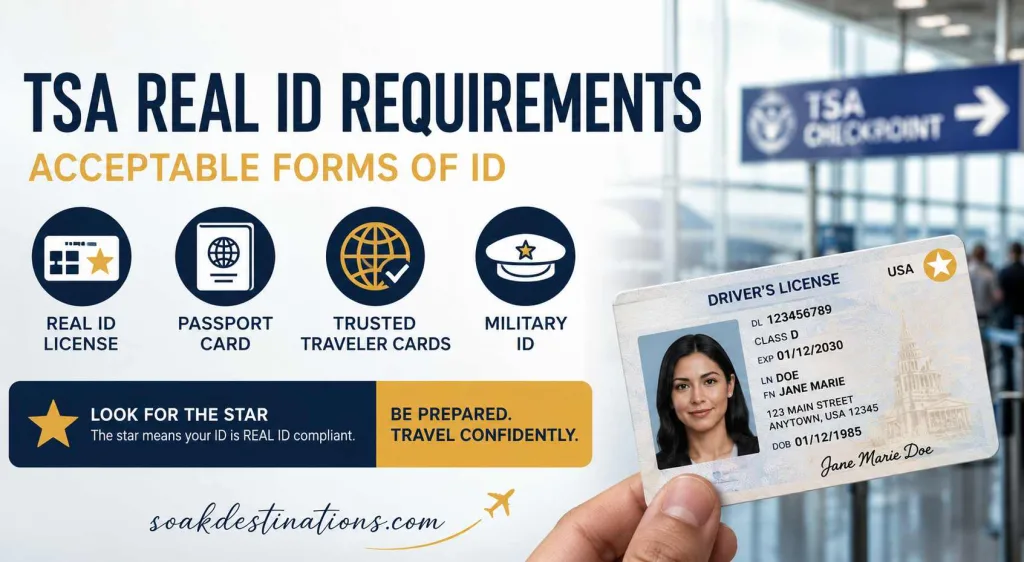
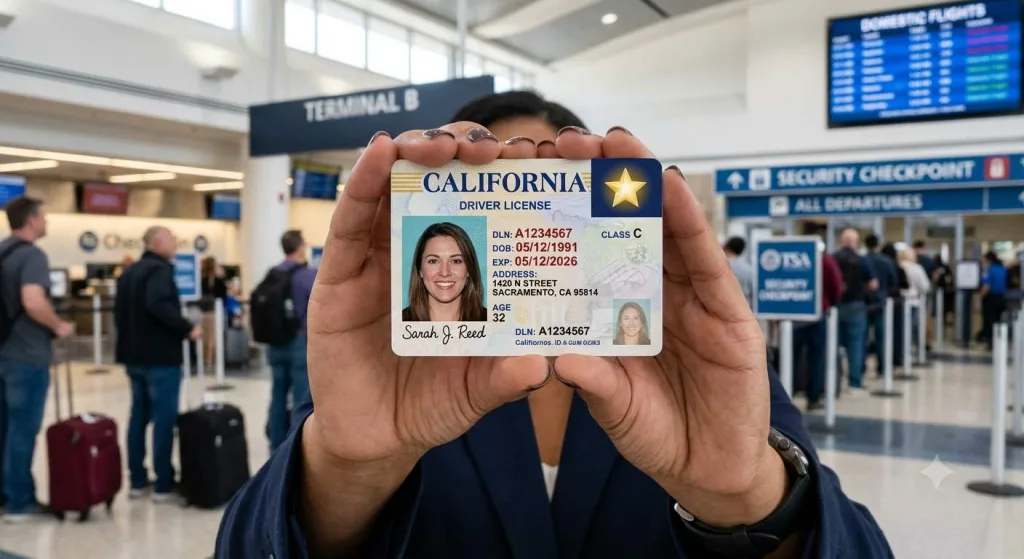
- State-issued REAL ID-compliant driver’s license or identification card (look for a star in the upper corner)
- State-issued Enhanced Driver’s License (EDL) or Enhanced ID Card (marked with a flag symbol)
- U.S. passport or passport card
- DHS Trusted Traveler cards (Global Entry, NEXUS, SENTRI, FAST)
- U.S. military or Department of Defense ID
- Permanent Resident Card
- Foreign government-issued passport
- Approved Mobile Driver’s Licenses (mDLs) from participating states, provided they are based on a REAL ID, EDL, or EID
Expired IDs are generally accepted for up to two years past the expiration date for these categories, though TSA recommends checking the current list before every trip since acceptable forms can change without notice.
Why the Star Symbol Matters
A star in the upper right-hand corner is the fastest way to confirm compliance without contacting your state DMV. If your card only shows a standard design with no star or flag, it is not accepted as sole identification for domestic flights.
What Happens If You Don’t Have a REAL ID? TSA ConfirmID Explained
Travelers who arrive without a compliant ID or an acceptable alternative are not automatically denied boarding. Instead, TSA offers a program called ConfirmID.
How ConfirmID Works
ConfirmID is an identity verification process that lets travelers pay a fee to confirm who they are when their ID does not meet REAL ID standards. It is optional, but skipping it without another acceptable document means you may not be permitted through security.
- The fee is $45 per verification
- Verification is valid for a 10-day travel window
- The process can take 30 minutes or longer, so early arrival is essential
- Payment can be made online in advance or at the airport, depending on availability at that location
- There is no guarantee that TSA can successfully verify identity, so this should never replace carrying a proper ID
TSA strongly encourages travelers to avoid this route altogether by updating their identification well before their travel date.
How to Get a REAL ID Before Your Next Trip
Getting compliant is a one-time process handled through your state’s Department of Motor Vehicles or equivalent agency. Generally, you will need to bring:
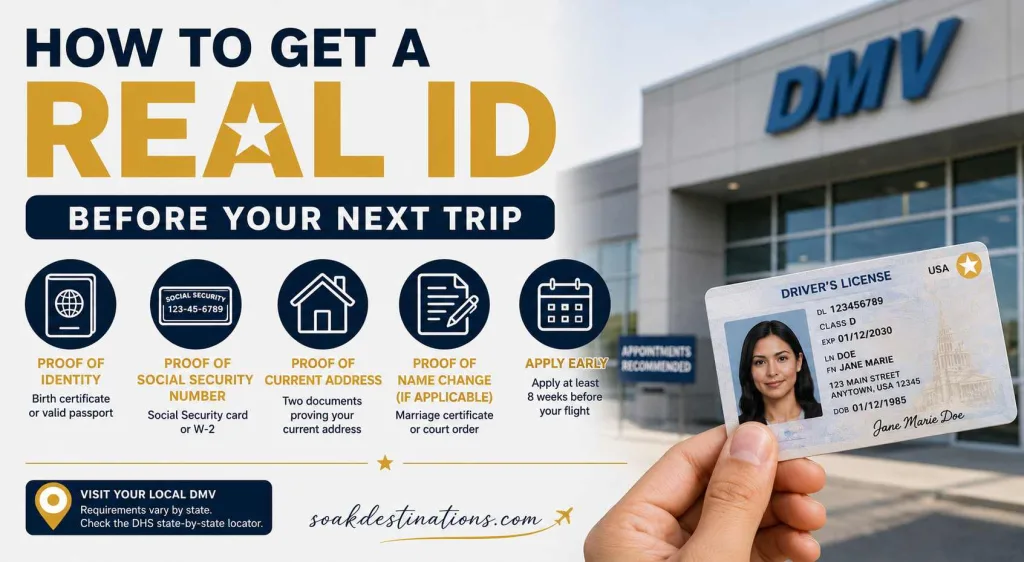
- Proof of identity (birth certificate or valid passport)
- Proof of Social Security number (Social Security card or W-2)
- Two documents proving your current address
- Proof of any legal name change, such as a marriage certificate or court order, if applicable
Since some DMV offices require appointments and processing can take several weeks, TSA advises applying at least 8 weeks before a planned flight. You can use the DHS state-by-state locator to find your local DMV’s specific document requirements, since they vary slightly from state to state.
Special Cases: Minors, Military Members, and Digital IDs
The rules are not identical for every traveler. A few exceptions are worth knowing:
- Children under 18 are not required to show ID when flying domestically with an adult, though unaccompanied minors enrolled in TSA PreCheck do need to present acceptable identification.
- Active military and DoD ID holders can use their military identification in place of a REAL ID at the checkpoint.
- Mobile Driver’s Licenses (mDLs), including certain state-approved digital ID apps, are being accepted at a growing number of airports, though only if issued by a participating state and based on a REAL ID.
- TSA PreCheck members are not exempt — PreCheck speeds up screening, but it does not replace the ID requirement.
Tips to Avoid Delays Under TSA Real ID Requirements for Air Travel
A little preparation goes a long way at the checkpoint. Keep these practical tips in mind:
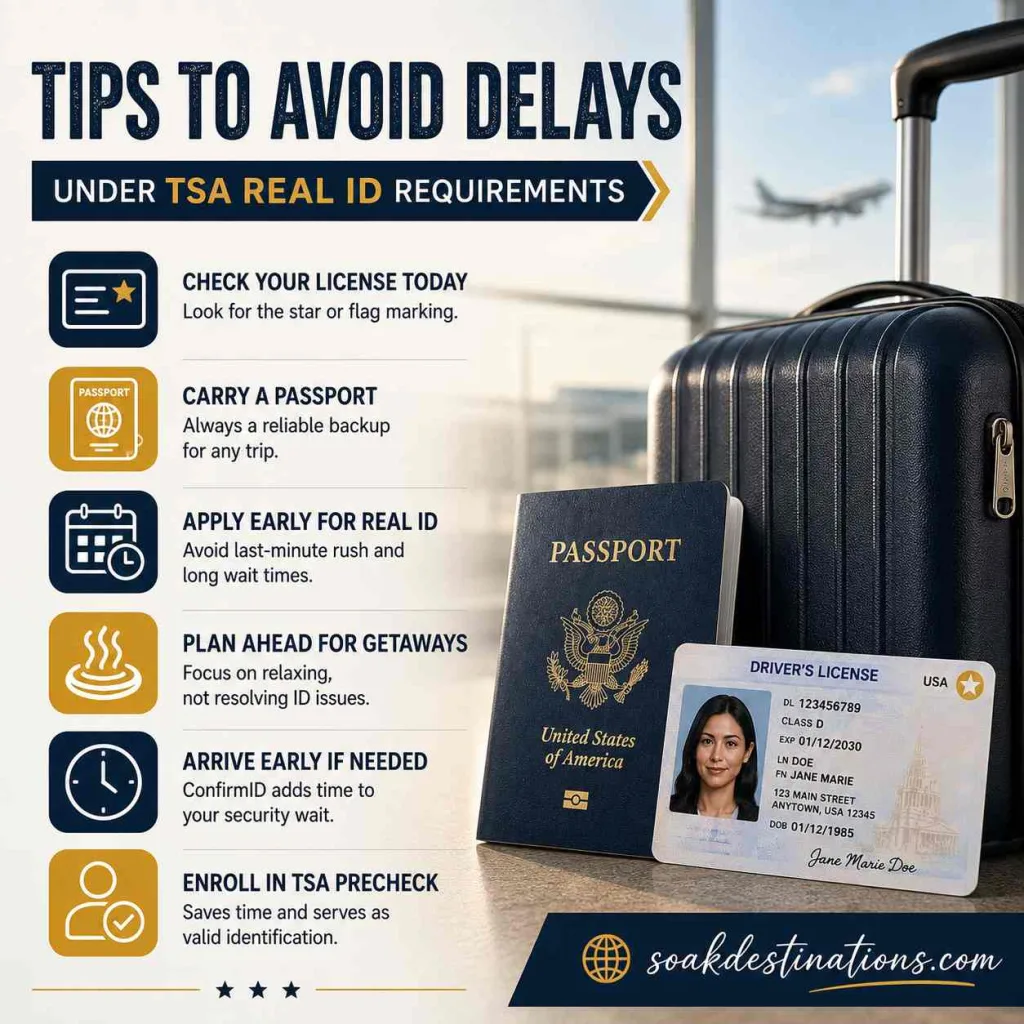
- Check your driver’s license today for the star or flag marking — it takes only a few seconds
- Carry a passport as backup, even for short domestic trips, since it is always an acceptable alternative
- Apply for your REAL ID well ahead of any planned travel, especially around peak vacation seasons
- If your travel plans include a relaxing getaway, such as a weekend soak at a natural hot springs resort through a site like Soak Destinations, sort your ID situation out early so a paperwork issue doesn’t derail a trip meant for unwinding
- Arrive earlier than usual if you anticipate needing ConfirmID, since the process adds real time to your security wait
- Sign up for TSA PreCheck or a Trusted Traveler program if you fly often, since these cards double as acceptable identification
Hot springs trips in particular tend to involve remote destinations with limited flight options, so a missed connection due to an ID issue can be costly. Planning identification alongside your itinerary is just as important as booking the flight itself.
Final Thoughts
The TSA Real ID Requirements for Air Travel are now a permanent part of flying within the United States, and the rollout of the ConfirmID fee in 2026 has made the stakes even clearer for travelers who haven’t updated their documents. The good news is that compliance is straightforward: check your ID for the star marking, carry an accepted alternative like a passport, and give yourself enough lead time before your trip if you need to visit the DMV.