BBQ Chicken Foil Packets Recipe: An Easy 5-Ingredient Dinner

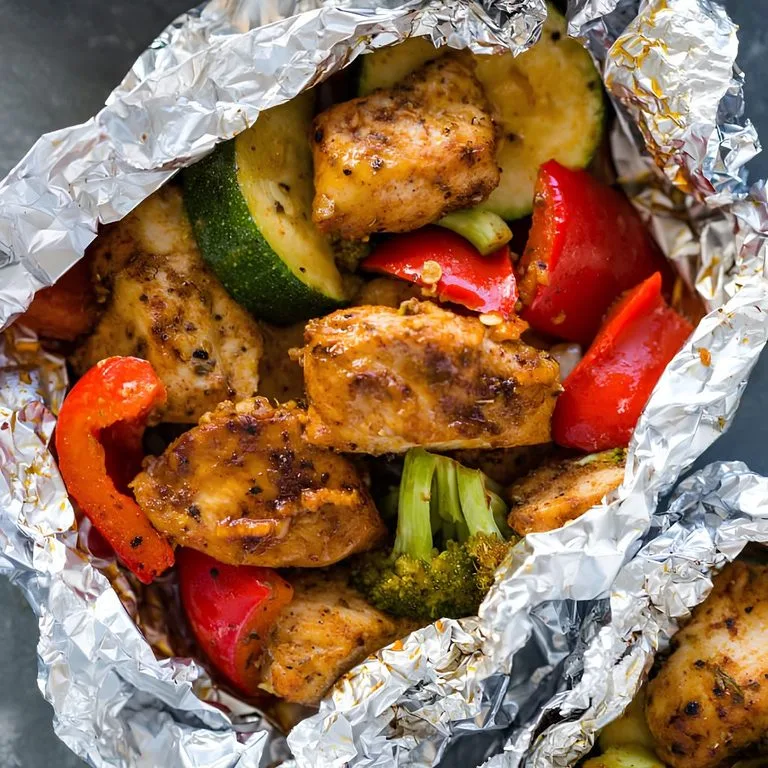
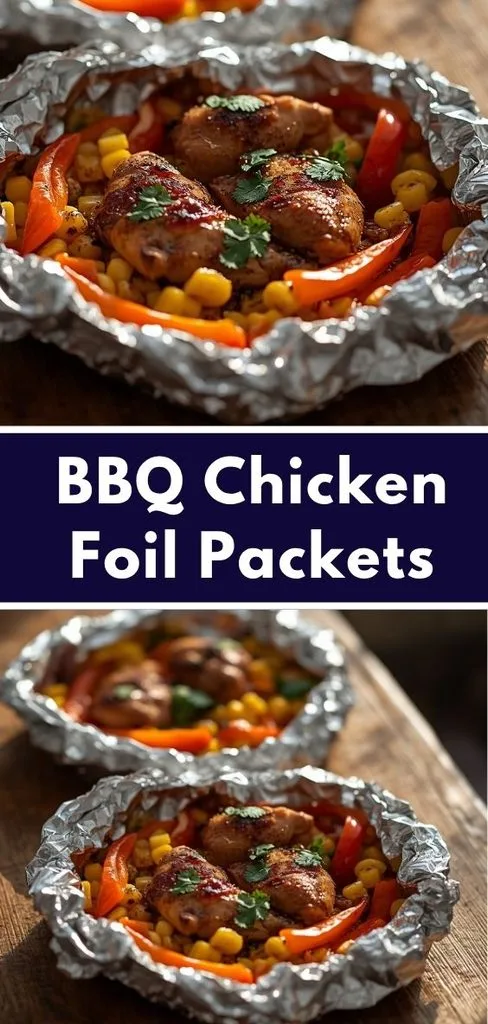
I still remember the first time I made this BBQ Chicken Foil Packets Recipe on a weeknight when I had zero energy left to cook. I tossed everything into foil, popped it in the oven, and forty minutes later I had a full meal with barely any cleanup. The chicken came out so juicy and packed with flavor that I couldn’t believe how little effort it took.
Ever since that night, this has become one of my go-to dinners whenever I want something easy but still impressive. If you’re looking for a fuss-free recipe that tastes like you spent hours on it, this one is for you.
Cooking Time
Here’s how long you’ll need to set aside for this recipe from start to finish.
- Prep Time: 15 minutes
- Cooking Time: 50 to 55 minutes
- Total Time: About 1 hour 10 minutes
Ingredients
These are the simple ingredients you’ll need to pull this recipe together, along with a quick note on why each one matters.
- 4 chicken drumsticks – these stay moist and tender inside the sealed foil, so they’re a great pick here
- 4 chicken thighs, bone-in – the bone and skin add flavor while the foil locks in the juices
- 1 teaspoon salt – balances and brings out the natural flavor of the chicken
- 1 teaspoon garlic powder – adds a savory depth without any chopping
- 1 teaspoon smoked paprika – gives the chicken a warm, slightly smoky BBQ flavor
- 1 cup BBQ sauce, divided – pick your favorite brand or a homemade one for the best flavor
- 3 cups frozen mixed vegetables – no need to thaw them, they cook perfectly in the steam
- Fresh parsley, chopped, for garnish – adds a pop of color and freshness at the end
Note: This recipe serves 4 people, with one foil packet per person.
Equipment You’ll Need
A quick look at the tools that make this recipe come together without any hassle.
- Heavy-duty aluminum foil – holds up to heat and keeps the packets sealed tight
- Baking sheet – makes it easy to slide the packets in and out of the oven
- Basting brush – helps you spread the BBQ sauce evenly over the chicken
- Instant-read meat thermometer – checks that the chicken has hit a safe internal temperature
- Tongs – useful for handling the hot foil packets safely
How to Make BBQ Chicken Foil Packets Recipe?
I promise this recipe is as simple as it sounds. Once you season the chicken and load up your foil, the oven or grill does all the real work for you. Here’s exactly how I put mine together every time.
Preheat and Prep Your Station
I always start by preheating my oven to 425°F, or heating my grill to medium-high if I’m cooking outside. While that heats up, I lay out four large sheets of heavy-duty foil on my counter. Having everything ready before I touch the chicken keeps the whole process quick and mess-free.
Season the Chicken
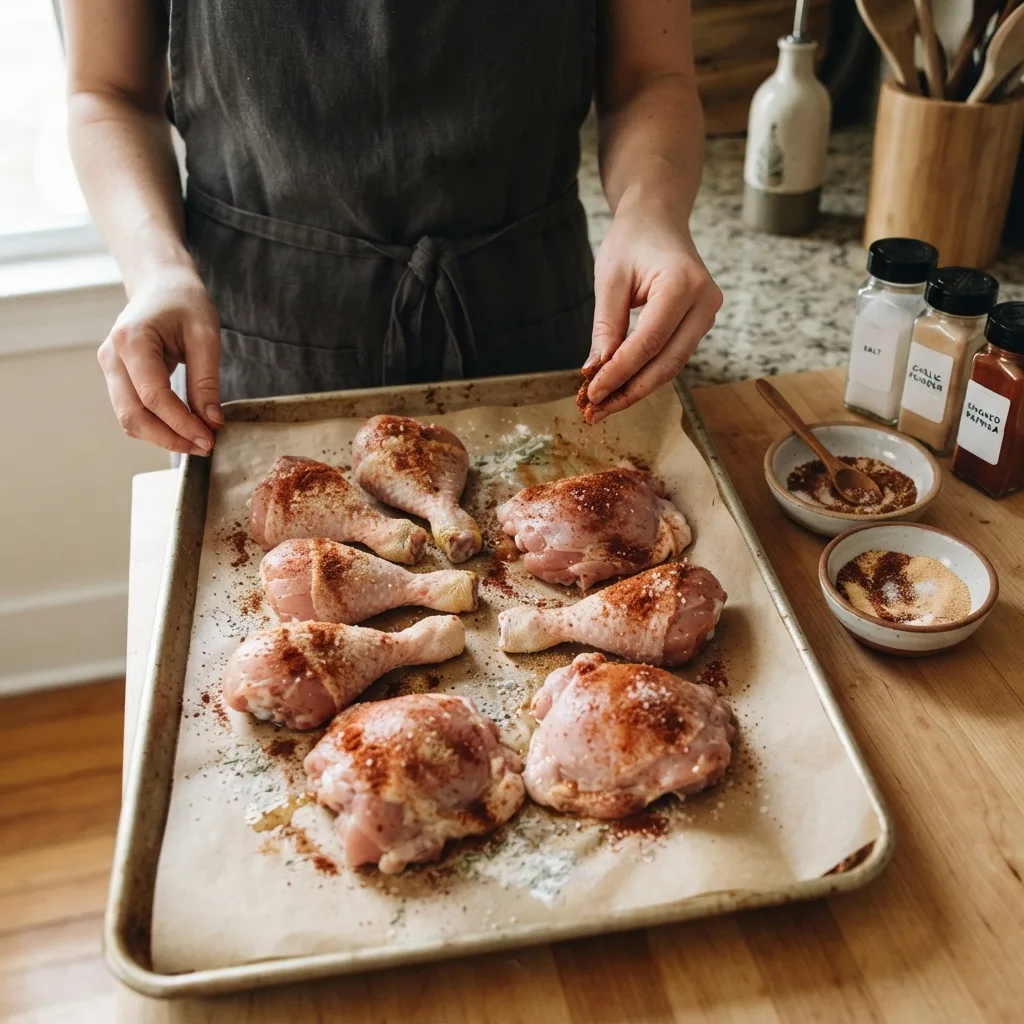
Next, I pat the chicken pieces dry and season both sides with salt, garlic powder, and smoked paprika. Drying the chicken first helps the seasoning stick better and gives the skin a nicer texture once it cooks. I like to do this step right on a sheet pan to keep my counter clean.
Add the Vegetables
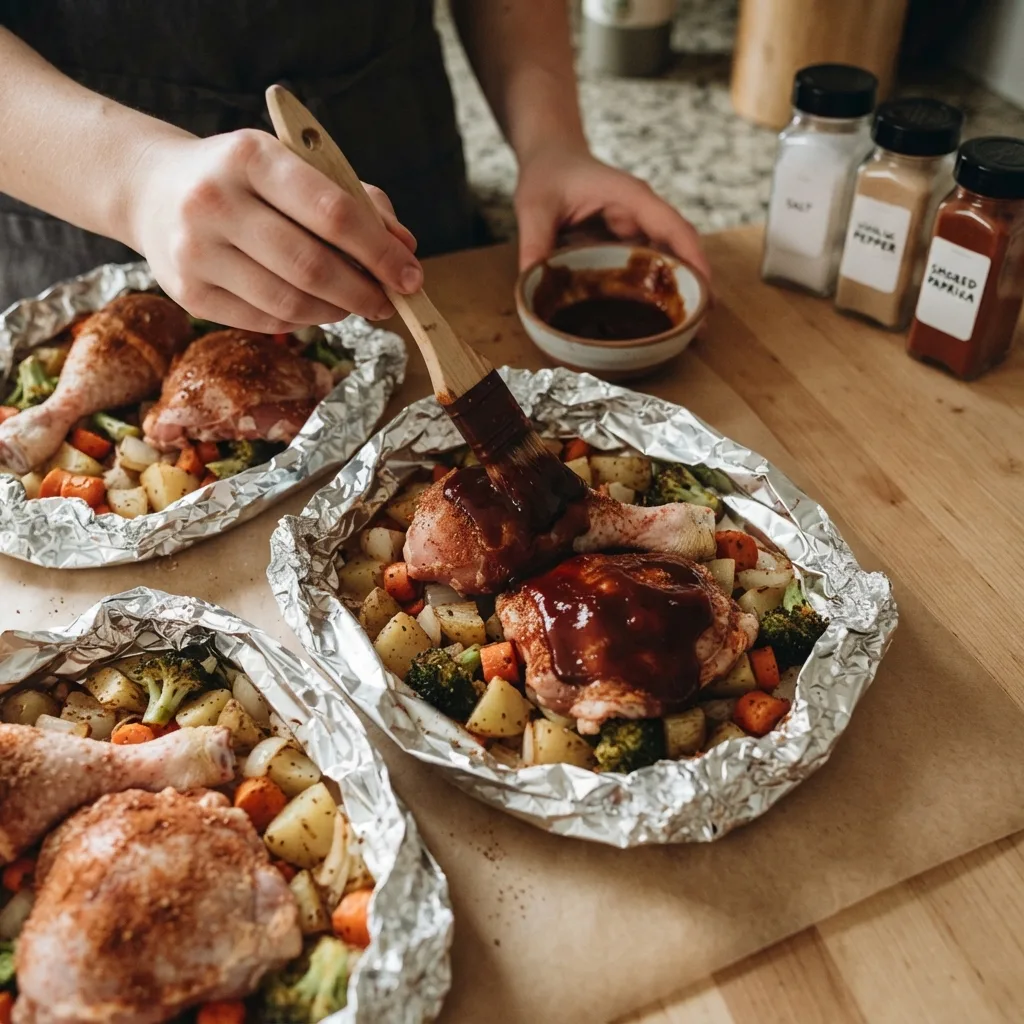
I place about three-quarters of a cup of frozen mixed vegetables in the center of each piece of foil. There’s no need to thaw them first, since they’ll cook right along with the chicken and soak up all that BBQ flavor. This is also where you could swap in your own favorite veggie mix.
Top With Chicken and Sauce
I set one drumstick and one thigh on top of the vegetables in each packet, then brush both sides generously with BBQ sauce using my basting brush. I like to save a little extra sauce to add later, since that finishing touch really boosts the flavor at the end.
Seal the Foil Packets
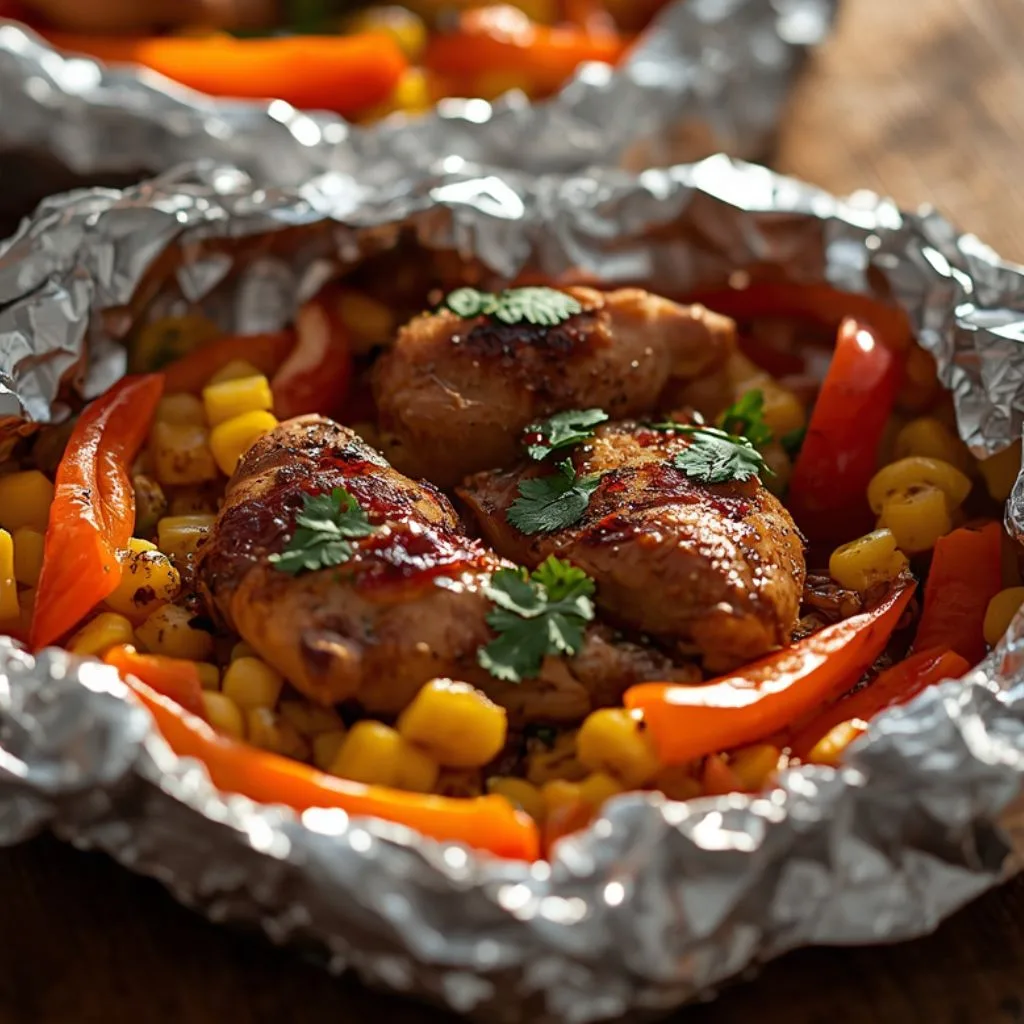
I bring up the long sides of the foil so the ends meet above the food, then fold them over twice to seal. After that, I fold in the two short ends the same way, leaving a little room inside for heat and steam to circulate. This step is what keeps everything so juicy.
Bake or Grill
If I’m using the oven, I place the packets on a baking sheet and bake for 50 to 55 minutes. On the grill, I set them over indirect heat, covered, for about the same amount of time. Either way, I check that the chicken has reached 165°F before pulling them out.
Finish and Serve
Once the chicken is done, I carefully open the packets, since hot steam will escape, and brush on the reserved BBQ sauce. I sprinkle fresh parsley over the top for a little color, then serve each packet straight from the foil for the easiest cleanup possible.
Additional Tips for Making This Recipe Better
Over the many times I’ve made this, I’ve picked up a few small tricks that make a real difference.
- I always use heavy-duty foil instead of the regular kind, since it holds up much better to the heat and doesn’t tear as easily.
- I like to double up the foil on the bottom of each packet, just for extra insurance against leaks.
- I’ve found that letting the chicken sit at room temperature for about 10 minutes before cooking helps it cook more evenly.
- I always save some BBQ sauce to brush on after cooking, since the sauce that cooks the whole time can lose some of its brightness.
- I like opening the packets away from my face, since the steam that comes out is surprisingly hot.
Common Mistakes to Avoid
I’ve made a few missteps with this recipe myself, so here’s what I’d tell you to watch out for.
- I once didn’t seal my packet tightly enough, and it leaked juice all over my baking sheet, so now I always double-fold every seam.
- I’ve learned not to skip the meat thermometer, since chicken thighs and drumsticks can look done on the outside before they’re fully cooked inside.
- I made the mistake of overcrowding one packet with too much chicken, which meant it didn’t cook evenly, so now I stick to two pieces per packet.
- I used to add all the BBQ sauce before cooking, but it turns out saving some for the end gives a much fresher, richer flavor.
- I’ve opened packets too quickly right out of the oven before, and the steam caught me off guard, so I always let them rest a minute or two first.
How to Serve BBQ Chicken Foil Packets
I love serving these packets right at the table, letting everyone open their own for a fun, casual dinner. A simple side of rice or crusty bread is great for soaking up any extra BBQ sauce left in the foil.
For presentation, I like to scatter a little extra chopped parsley or sliced green onion over the top just before serving. If I’m hosting, I’ll set the packets on a wooden board so people can help themselves, which always feels a bit more special than plating everything separately.
Variations
This recipe is easy to adjust based on what you have on hand or what you’re in the mood for.
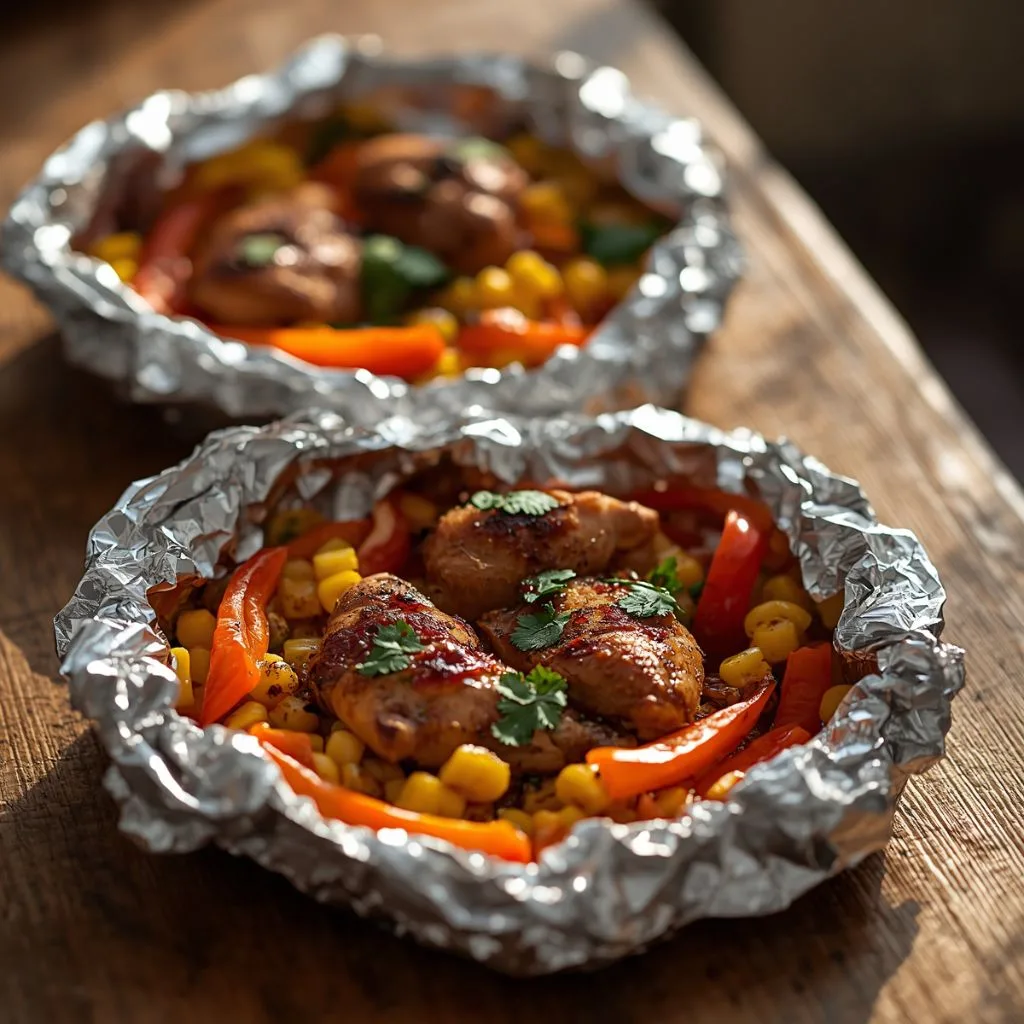
- Swap the frozen mixed vegetables for a combination of corn, bell peppers, and onions for a different flavor profile.
- Use boneless, skinless chicken breasts instead of thighs and drumsticks for a leaner option, adjusting the cooking time down slightly.
- Try a sugar-free or low-sugar BBQ sauce if you’re watching your sugar intake.
- Add sliced potatoes to the packet for a heartier, all-in-one meal.
- Stir in a pinch of cayenne or a few dashes of hot sauce if you like a spicier kick.
- Use a dairy-free BBQ sauce if you need this dish to be fully dairy-free, since some brands add butter or cream.
Nutritional Information
Here’s a general idea of what you can expect per serving, though this will vary slightly depending on the BBQ sauce and vegetables you use.
- Calories: Around 345 per serving
- Protein: Around 39 grams per serving
- Carbohydrates: Around 33 grams per serving
- Fat: Around 5 grams per serving
Make Ahead and Storage
Wondering how to plan this recipe ahead of time or handle leftovers? Here’s what I’ve learned.
Make Ahead: I often assemble the foil packets a day in advance and keep them in the fridge until I’m ready to cook. This makes weeknight dinners even faster, since all I have to do is pop them straight into the oven or onto the grill.
Refrigerating: Leftovers keep well in an airtight container in the fridge for up to 3 to 4 days. I like to remove the chicken and vegetables from the foil before storing them, since the foil isn’t ideal for long-term storage.
Freezing: You can freeze the cooked chicken and vegetables in a freezer-safe container for up to 2 months. I always let everything cool completely first, so it doesn’t create excess ice crystals in the freezer.
Reheating: I reheat leftovers in the oven at 350°F until warmed through, which keeps the chicken from drying out. A quick reheat in the microwave works too if I’m short on time, though the texture is slightly softer.
Why You’ll Love This Recipe?
There are so many reasons this has become one of my regular dinners, and I think you’ll feel the same way once you try it.
- It’s incredibly easy: With just a handful of ingredients and minimal prep, I can get this into the oven in about 15 minutes flat.
- Cleanup is a breeze: Since everything cooks inside the foil, there’s barely anything to scrub afterward, which I appreciate on busy nights.
- It’s a complete meal: With protein and vegetables cooked together in one packet, I don’t need to worry about making separate side dishes.
- It’s endlessly customizable: I can switch up the vegetables, sauce, or seasoning depending on what I’m craving or what I have in the fridge.
- It’s great for outdoor cooking too: Whether I’m at home or camping, these packets work just as well on the grill as they do in the oven.
FAQs
Can I use chicken breasts instead of thighs and drumsticks?
Yes, boneless chicken breasts work well, though I’d recommend checking them a few minutes earlier since they can cook faster than bone-in pieces.
Can I make these foil packets on the grill instead of the oven?
Absolutely, I place mine over indirect medium-high heat with the lid closed for about the same amount of time as baking.
Do I need to thaw the frozen vegetables first?
No, I use them straight from the freezer, and they cook perfectly alongside the chicken without any extra prep.
How do I know when the chicken is fully cooked?
I always use an instant-read thermometer and look for an internal temperature of 165°F before taking the packets off the heat.
Can I prep these ahead of time?
Yes, I often assemble the packets the night before and store them in the fridge, so all I have to do the next day is cook them.